Change or rekey · Toronto
Vintage Mortise Lock Service
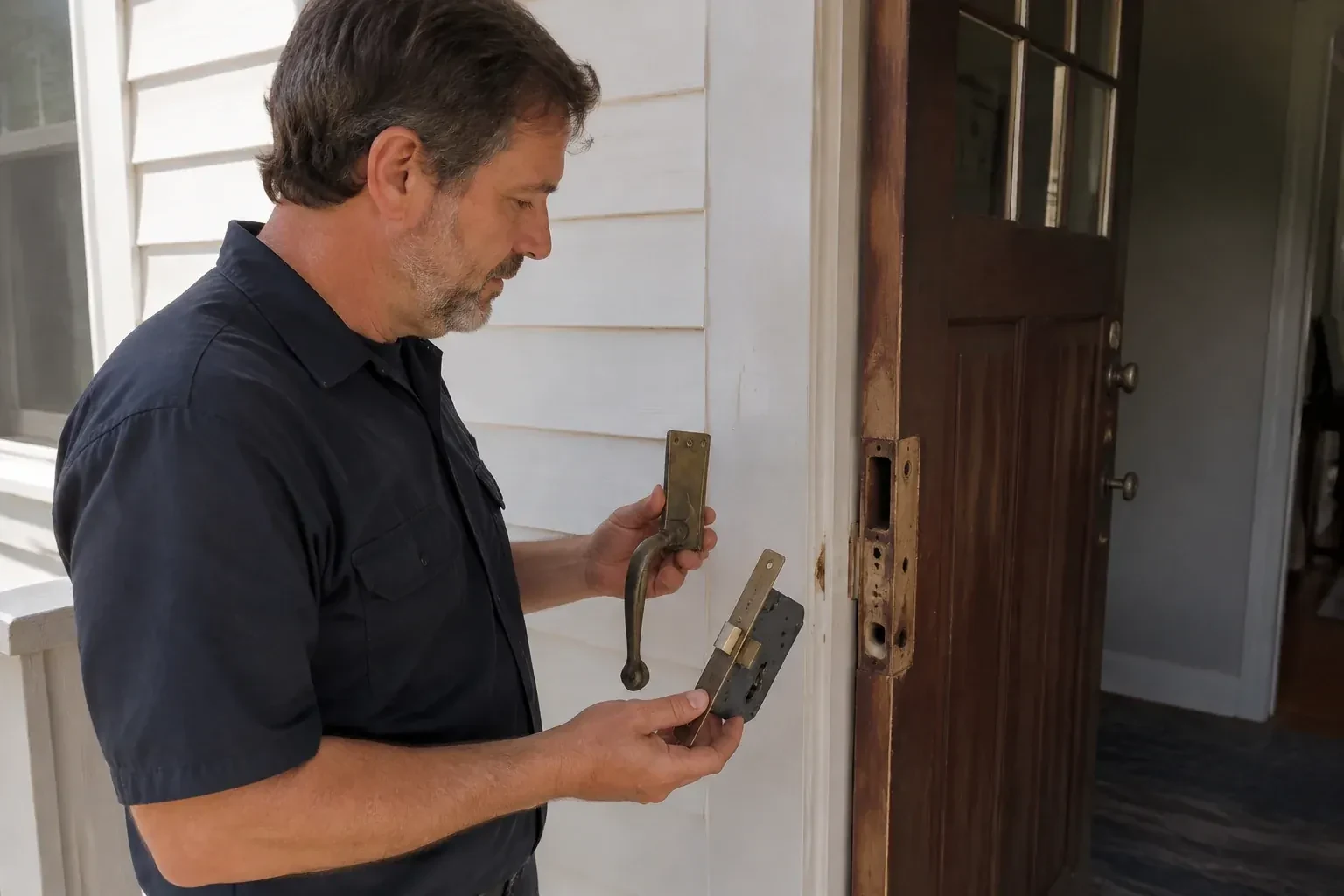
Someone painted the door years ago without removing the hardware.
In plain words
Interior doors are as much a part of this work as the entry. Bedroom, bathroom and closet doors in an older home usually carry a lighter mortise latch with a privacy turn button, and after decades without lubrication they stop catching or the turn button seizes. These small cases are short jobs on the bench: a clean, a spring, a new turn button spindle where the old one has sheared. Sets of interior locks are often serviced in one visit, and a bit key can be cut that operates all of them, which is how they were originally supplied when the house was built.
How the visit goesThe brass knob on the front door of your century home turns, but nothing happens on the other side. The latch stays tucked in, the door swings free, and the only thing holding it shut is the deadbolt and a bit key that has worn down to a nub.
Vintage Mortise Lock Service
How the visit goes
How the knob and key actually behave
A short conversation with the hardware comes next. The knob is turned and released: does it return smartly, sag back, or not return at all? Is there free play before the latch moves? The key is tried in the deadbolt with the door open: does the bolt throw fully, catch part way, or ignore the key while the key turns? The thumb-turn gets the same test. Each answer points somewhere different inside the case, a latch spring, a hub spring, a worn hub square, a deadbolt lever, a cylinder cam, and the locksmith is building a short list of likely parts before the cover ever comes off.
Springs, levers and followers
Springs are the usual culprits and the easiest fix. Broken coil and flat springs are matched from stock by length, wire gauge and shape, and fitted so the latch snaps out and the knob returns to level. A worn or cracked lever is matched from a donor case where one exists; where it does not, a replacement is filed from stock to the original's profile, which is slow, careful bench work rather than magic. A rounded hub is replaced or bushed. When every part moves as it should, the case is closed and cycled by hand with the cover on until the action is smooth and even in both directions.
The interior doors in step
Where a set of interior mortise latches was serviced together, you leave with bedroom and bathroom doors that close and stay closed, privacy turns that actually lock, and, if you wanted it, a single bit key that operates every interior lock the way the builder intended. A note of which key fits which door goes into the house file. Interior cases need almost no care beyond a drop of oil every couple of years and a check that a turn button has not been painted over. A child who locks a bathroom and cannot reopen it is released from outside with the bit key, so keep it somewhere the adults can reach.
Vintage Mortise Lock Service
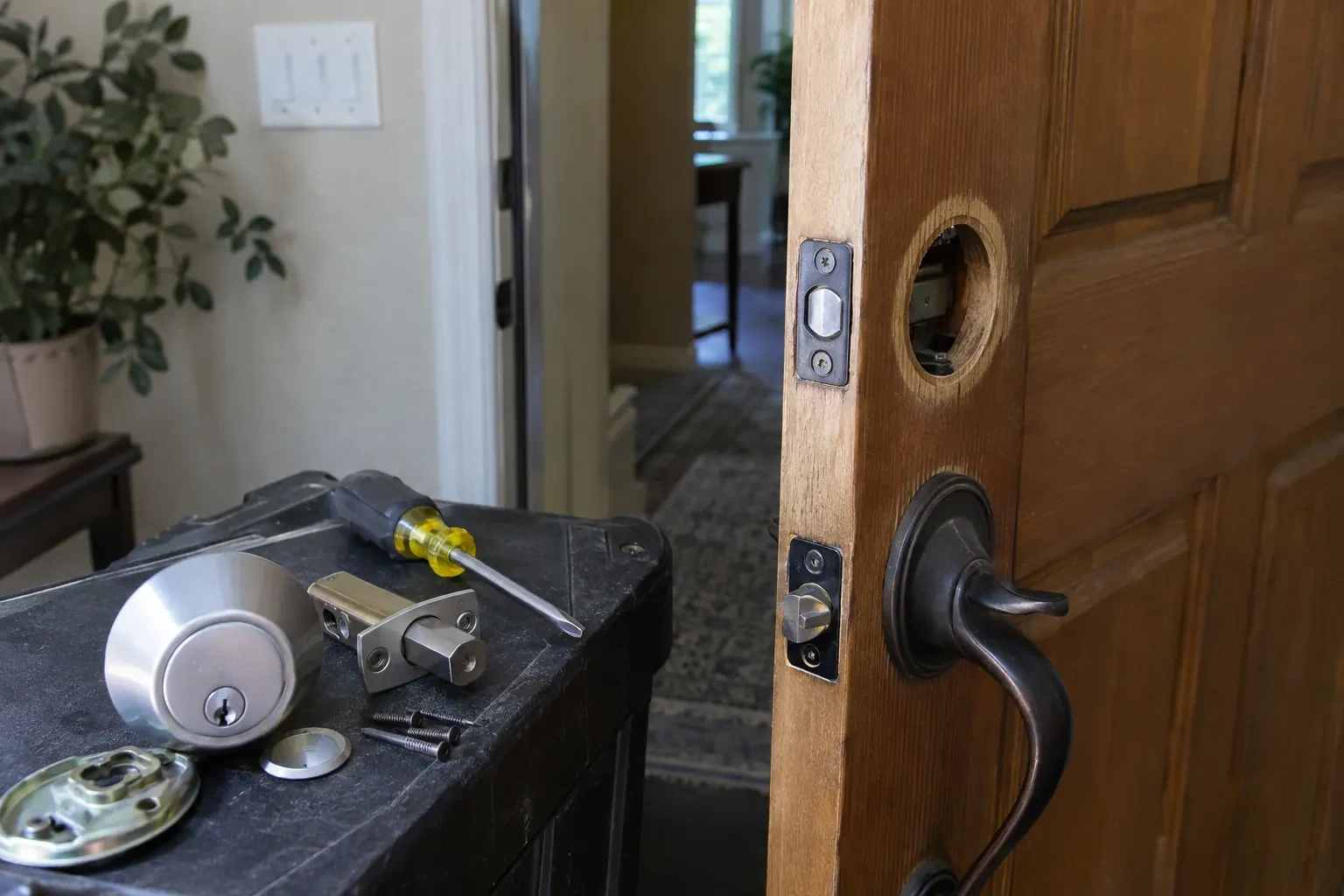
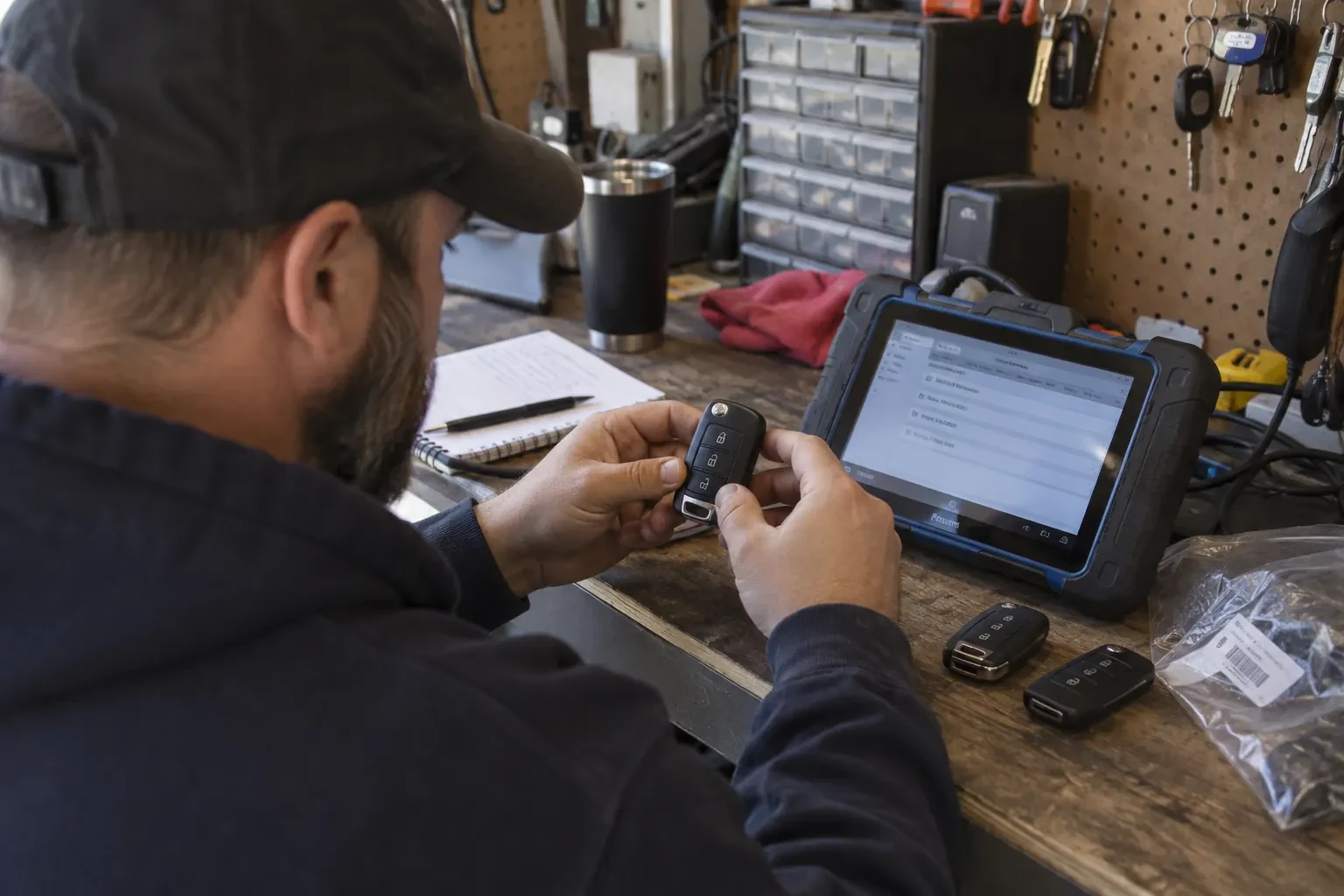
In the van
Warding files
Mortise cylinder and cam
Hub followers and lever packs
Hardwood dowel and wood glue
Deadbolt lever springs
Vintage Mortise Lock Service
What affects the quote
Making the inside key-free
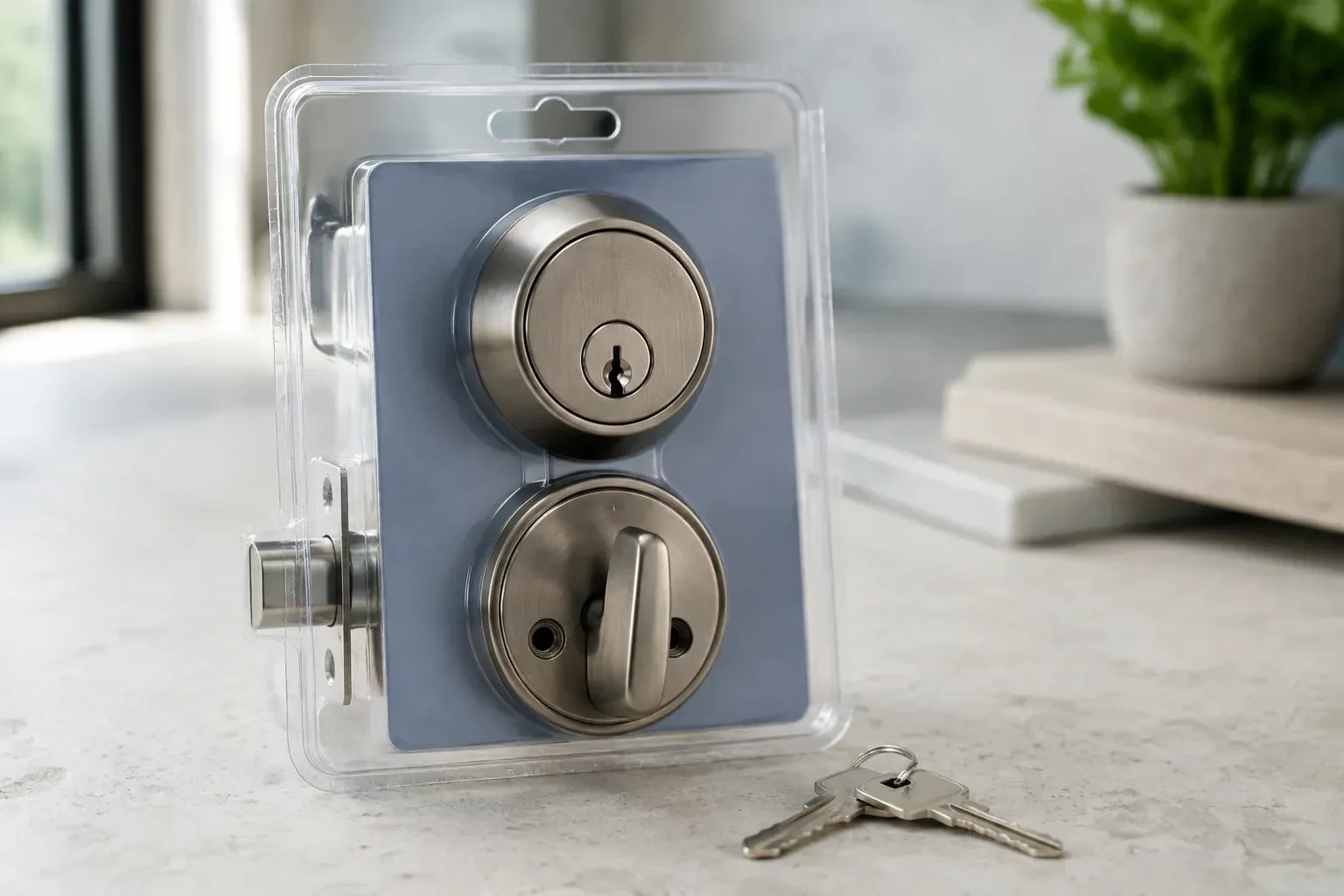
Fitting a thumb-turn or interior release to a deadbolt that was keyed on both sides is its own small item, and one most owners of an entry door choose to include.
Replacement cylinder
When a pin-tumbler cylinder is past rekeying, a new mortise cylinder of the right thread and cam is fitted. A standard cylinder and a high-security one are different hardware and are quoted as such.
Extras you choose on the day
A high-security cylinder, a lockbox for a spare bit key or a separate modern deadbolt above the original are optional additions. None is required to make the old lock work, and each is priced as its own line.
What to have ready
- How many keys would you like to have afterwards?
- Can you send a photo of the plate in the door edge and one of the keyhole?
- How many keys do you have, and do any of them work?
Vintage Mortise Lock Service: questions
QuestionsWhat if the case is too worn to repair?
Then a replacement case goes into the existing pocket. Reproduction mortise cases are made in the common vintage sizes and backsets, and a modern mortise case with a cylinder fits many old pockets with minor trimming. The locksmith measures the case height, depth, backset and trim spacing before ordering, aiming for the new case to drop in with the original knobs and plates going back on, though a small pocket trim or fixing change is sometimes needed. Cutting the door for a different kind of lock is the last choice.
Can the lock be made more secure while keeping it original?
Yes, within reason. A later mortise case can take a modern high-security cylinder of the right thread and cam, chosen for its pick resistance; stopping casual key copying is a separate question, answered by fitting a restricted or patented key system alongside it. Longer screws into the strike and a properly seated deadbolt add more than most people expect. For a bit-key lock, the practical gains are a full-throw deadbolt and a good strike; if more is wanted, a separate modern deadbolt above it leaves the original lock untouched.
Can you match a missing knob, plate or thumb-turn?
Often, yes. Locksmiths who work on older hardware keep salvage and reproduction trim in the common patterns and finishes, and a knob, rosette or escutcheon can usually be found close enough that the pair on one door match. Where nothing suitable exists, the trim from a less visible door can be moved to the entry and the reproduction fitted where it is seen less. Bring or photograph the surviving piece so it can be matched.
Related services
- Deadbolt InstallationThe front door has a handsome lever and a keyed knob, and that is all.
- Lock Replacement & UpgradeThe century home's original mortise lock takes a key the size of a spoon, sticks in humid weather and has worn its strike to a groove.
- Smart Lock InstallationYour mother still lives on her own, and the personal support worker, the pharmacy delivery and two siblings all need to get in on different days.