Commercial · Toronto
Commercial-Grade Lock Replacement
A new tenant moved into the unit next door, and the property manager just found three different cylinders on three doors, none of them cut to the same key.
In plain words
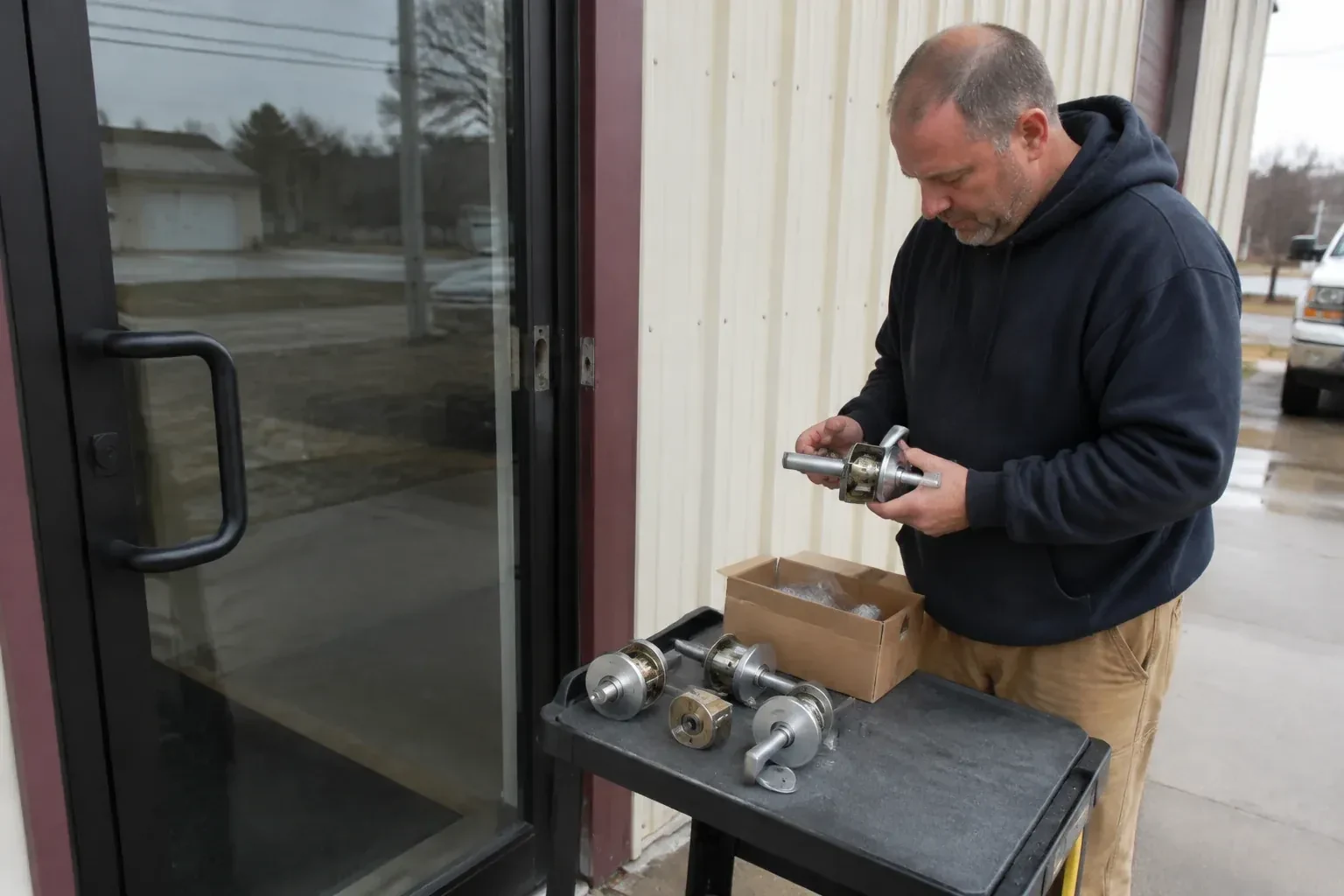
For a business running several locations, this service is often less about one broken lock and more about bringing every door onto a single, manageable key or interchangeable-core system. The locksmith surveys what is currently on each door, works out a keying structure the business can actually administer, from a single master down to individual change keys, and replaces mismatched hardware with cylinders built to accept that structure. Keys are cut and logged against the new system, and any hardware still under a fire or egress rule is checked and matched to that rule at the same time.
How the visit goesThe key to the office entrance turns with almost no resistance now, and some mornings the deadbolt does not fully retract until someone jiggles the handle and tries the key again.
Commercial-Grade Lock Replacement
How the visit goes
Assessing damage from a break-in or forced entry
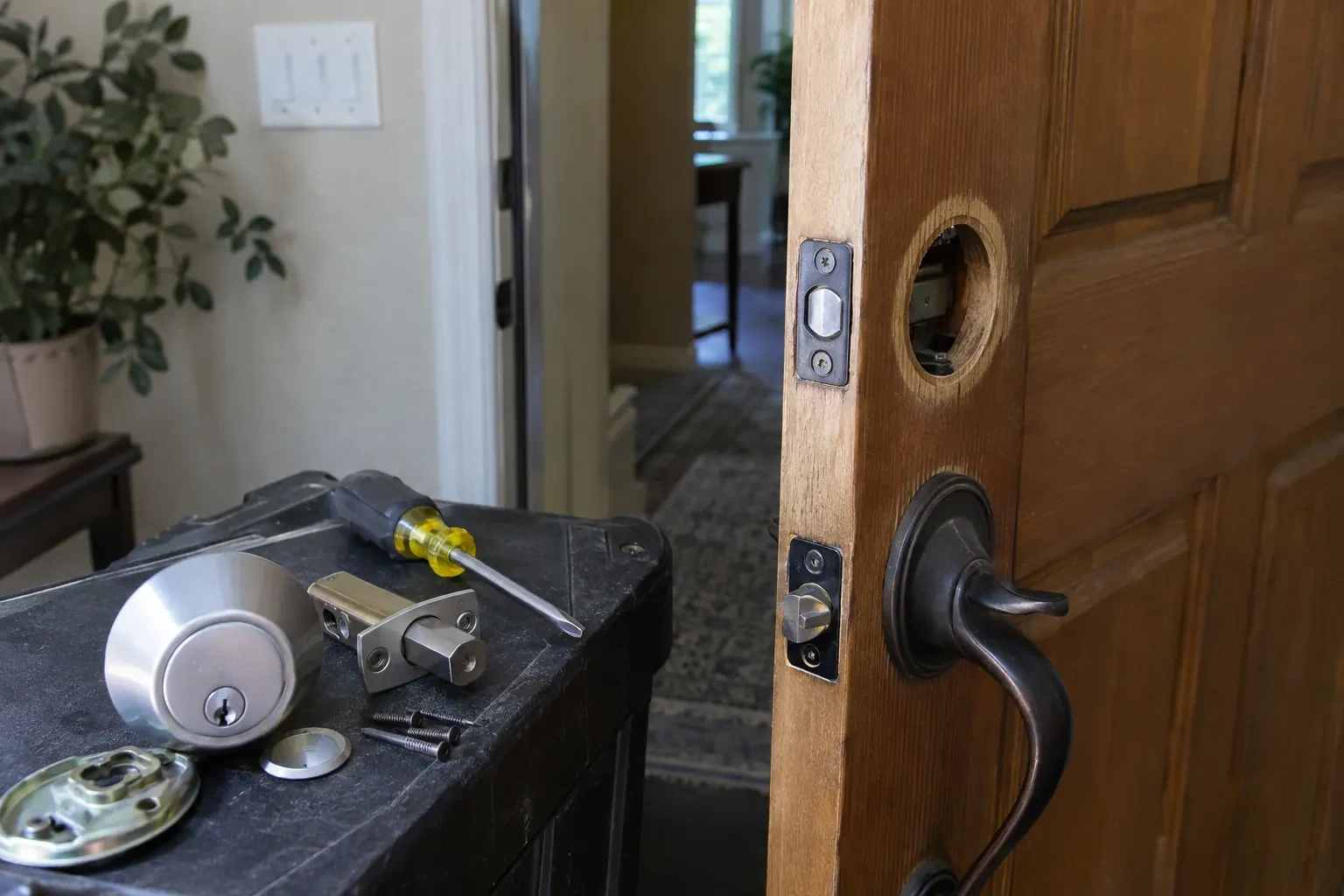
When the reason for the call is a forced door, the locksmith treats the assessment a little differently: documenting a scarred cylinder, a bent strike or a cracked frame for the business's own records or insurance purposes before removing anything. The door and frame are checked for structural damage beyond the lock itself, since a replacement lock fitted into a damaged strike pocket or a split frame will not hold the way new hardware should. Anything beyond the lock itself is noted as its own repair.
Testing under real conditions before signing off
The finished hardware is cycled from both sides, under the door's normal swing and closing force, and by more than one person where staff are on site to try it, since a lock that operates cleanly for one hand may bind for another depending on height and grip. Any electric strike or reader tie-in is triggered several times to confirm consistent release. Only once the hardware performs the same way on repeated tries is the work considered finished rather than merely installed.
Ready for the next security decision
With current hardware and an accurate key-control record in place, the business is better positioned for whatever comes next: adding a location to the master key system, upgrading a single door to an interchangeable core so staff can rekey it without a service call, or answering an insurer's or landlord's question about what security is on a given door. None of that requires starting from scratch, because the replacement visit leaves behind hardware and documentation that a future decision can build on directly.
Commercial-Grade Lock Replacement
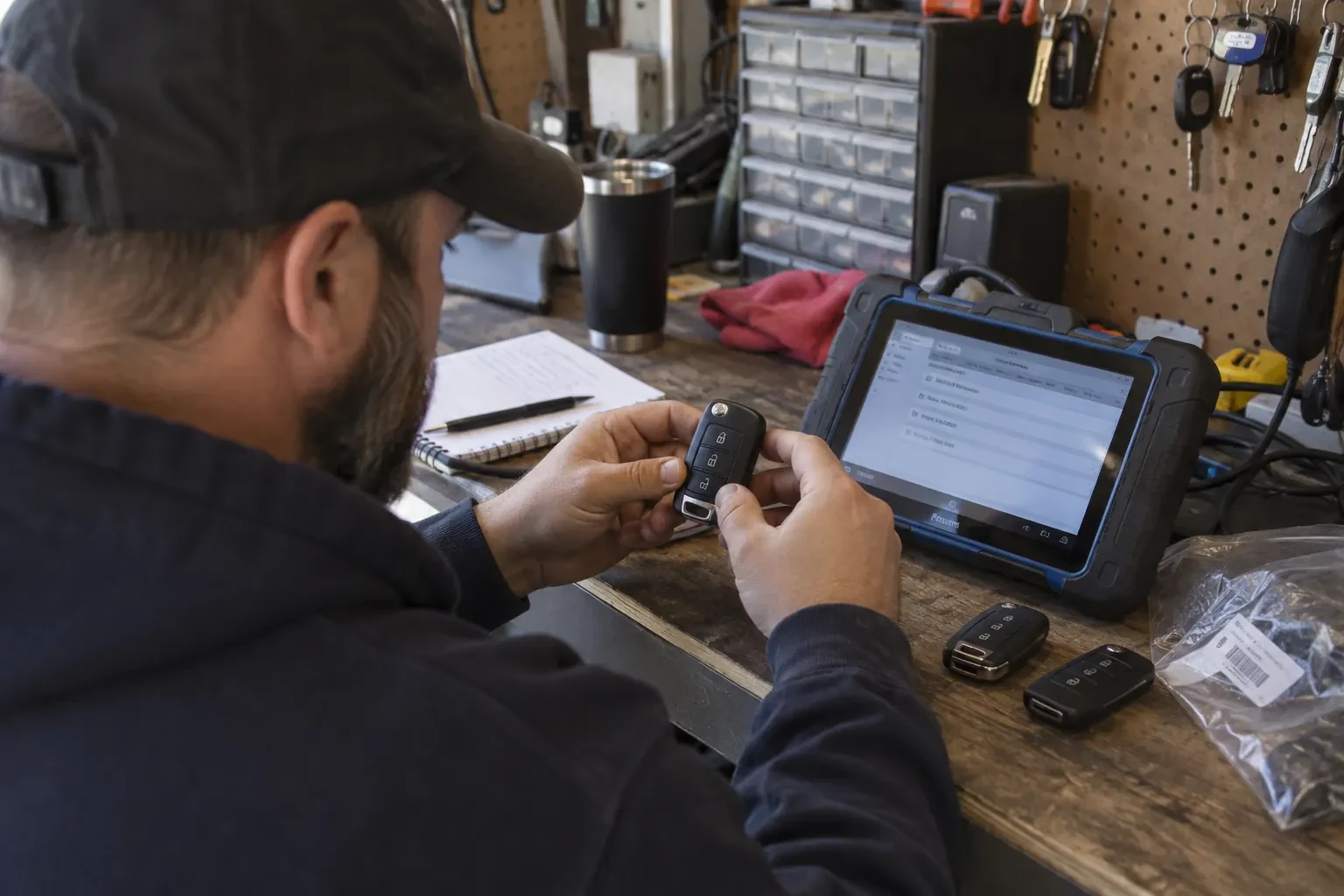
In the van
Hookbolt and deadlatch hardware
Electric strike
Strike plates and keepers
Heavy-duty cylindrical lockset
Key-control log and tags
Commercial-Grade Lock Replacement
What affects the quote
Condition of the existing door and frame
A door and frame in good condition accept new hardware into the existing prep with little extra work. Damage from a break-in, a cracked frame or a previously mis-cut mortise pocket adds repair time the quote accounts for separately.
Site access and building type
A ground-floor storefront is the simplest case to reach and work on. A unit inside a larger building with its own access rules, or a site requiring coordination with building management, can add steps the quote takes into account.
Timing relative to a lease or renovation
Work scheduled around a tenant turnover, a renovation, or a building-wide upgrade across several units can be planned and quoted as a coordinated project rather than a series of separate calls.
What to have ready
- Who can authorize the work and sign for new keys?
- Do you want a master key system, an interchangeable core, or a stand-alone lock?
- What is currently installed: a knob, a deadbolt, a mortise lock, or an exit device?
Commercial-Grade Lock Replacement: questions
QuestionsWhy would my business need panic or exit hardware?
Once a space holds enough people, or handles a high enough hazard, its exit doors need to open with a single motion and no key, which is what panic or exit hardware provides. It is not a preference; it is a function tied to how many people the space is built to hold and what is happening in it.
How long does commercial-grade lock hardware typically last under heavy use?
It depends heavily on cycle count and how the door is treated day to day, but hardware graded for commercial duty is built to outlast the internal wear that sinks a residential lock on the same door. A delivery door opened hundreds of times a shift will still wear its hardware faster than a quiet office entrance, so grade and use should be matched from the start rather than assumed.
Do you handle interchangeable-core (IC) cylinders?
Yes. An interchangeable-core cylinder lets an authorized key holder pull the core and swap in a new one when a key needs retiring, without removing the whole lock from the door. Businesses with regular staff turnover often move to this system because it turns a rekey into a short in-house task rather than a full service call every time.
Related services
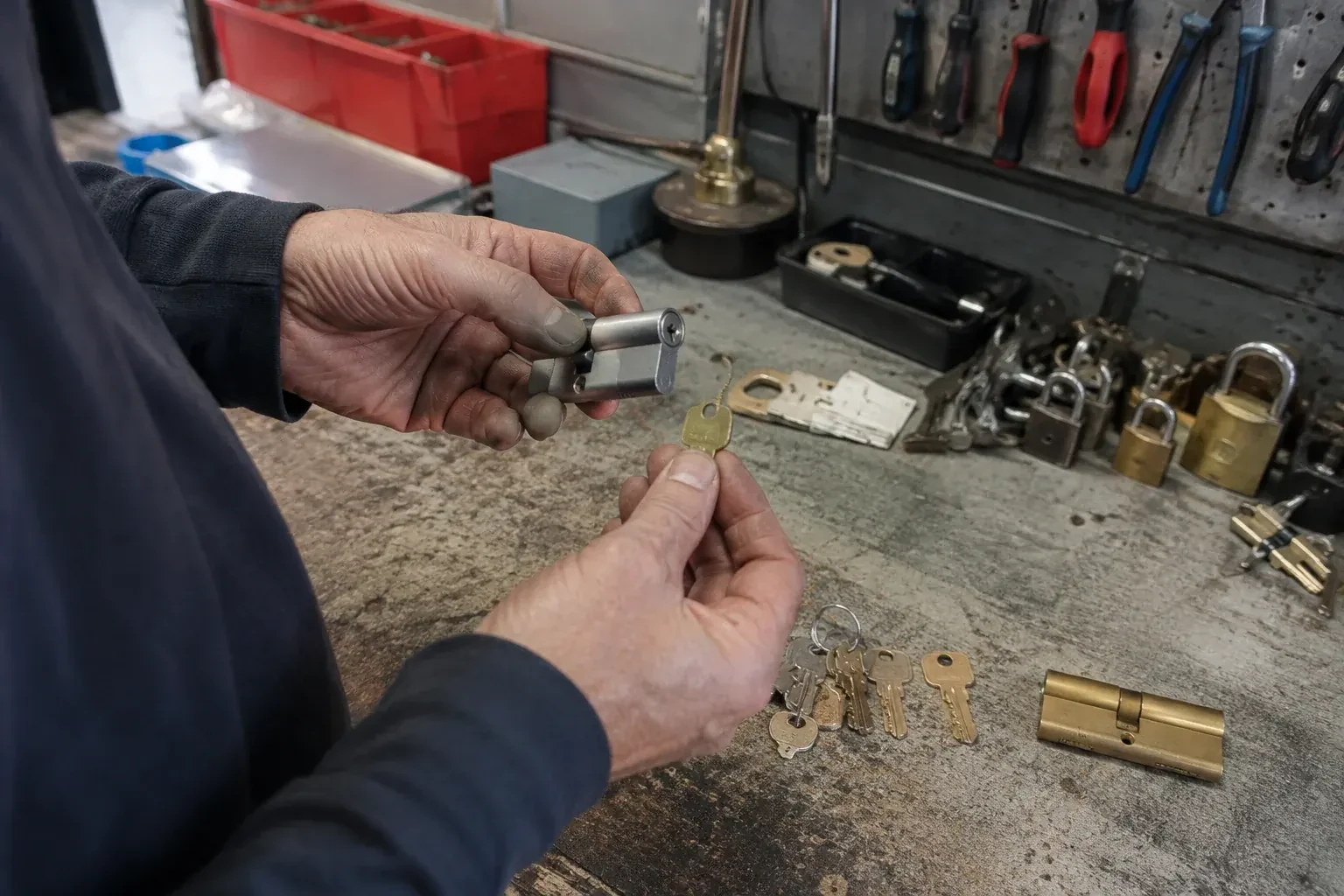
- Master Key System DesignA self-storage operator wants the office, the tenant gate and the equipment shed on three different levels of access for staff, but every lock on the property currently answers to the same handful of interchangeable keys handed out over the years.
- Access Control InstallationSomething went missing from the storeroom over a weekend, and when you ask who was in the building, the honest answer is anyone with a key.
- Panic & Exit HardwareThe daycare wants the yard gate and the classroom door alarmed so a staff member hears the moment it opens, without turning either into something a child could be shut behind.