Locksmith
Useful things to know
Advice is only useful when it fits your door, so we have kept these notes practical and specific. Real situations, real hardware, what to check and what to leave alone. Read what applies today and come back when the next question turns up.
Curious about the process?
Is a double-cylinder deadbolt a good idea after a lockout?
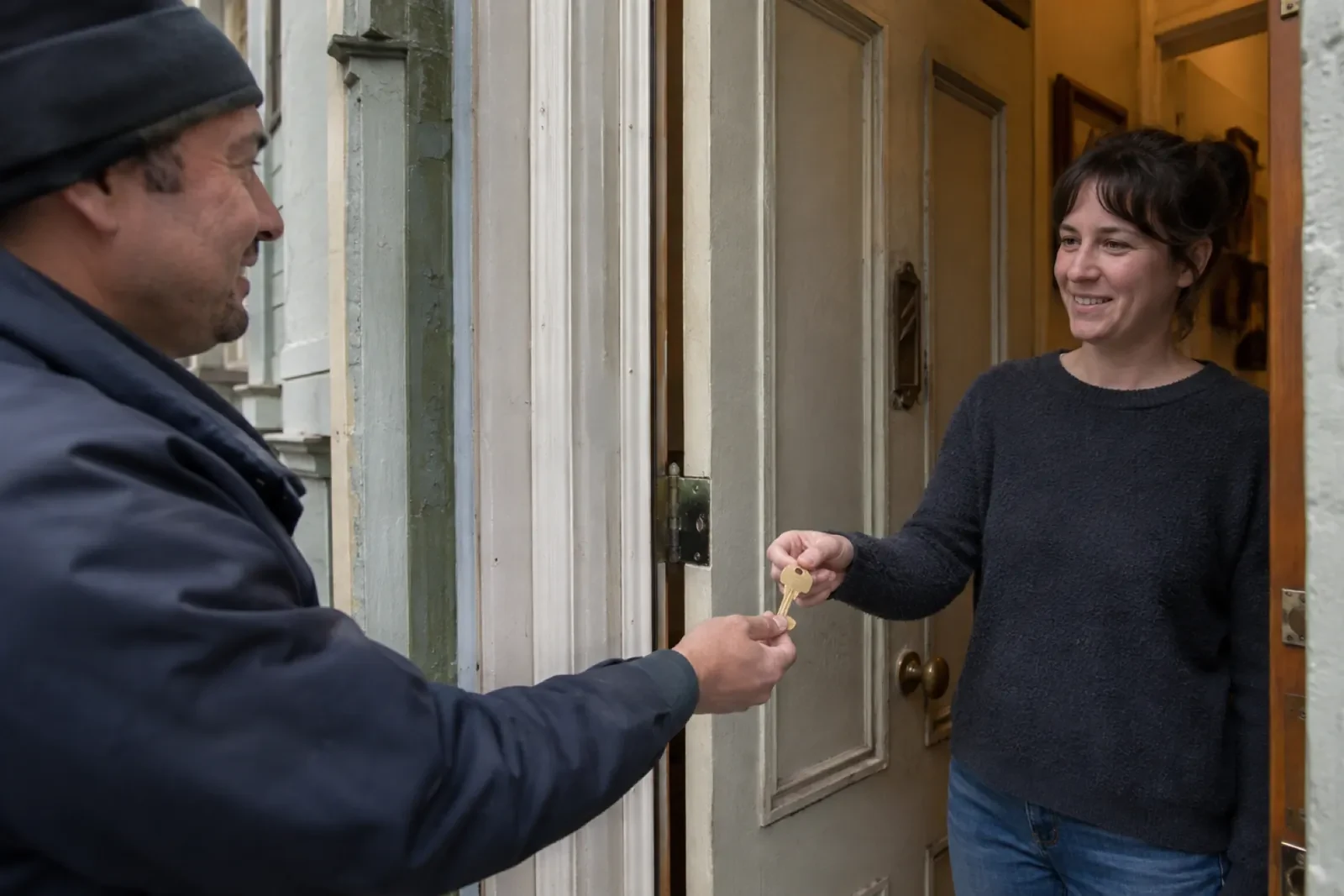
A deadbolt keyed on both sides is sometimes suggested for doors with glass beside them, but on a main escape door it means finding a key to get out. A door people use to leave the home should open from the inside without a key or special knowledge, especially in an emergency. A single-cylinder deadbolt with a thumb-turn, paired with a reinforced strike and a proper glass film if needed, keeps both security and a clear way out.
We have just taken over a unit and have no keys for the old locks. Is that a lockout?
It is treated as one, with the same authority check: your new lease and identification settle it. The locksmith opens the previous occupant's locks, then rekeys or replaces them so keys still floating around from the last tenant stop working. It is also the moment to decide how the unit will be keyed: one key for every door, separate keys for the cash office and stockroom, or cores that suit a growing staff.
How long does the extraction usually take?
It depends on how the piece is sitting. A protruding fragment in a plug at rest can be out in moments. A deep piece behind lifted pins takes patient work with hooks and spirals. A glued or corroded fragment may mean removing the cylinder and freeing it from behind. Cutting and testing the new key, and any door adjustment, add their own time. The locksmith gives a sense of it after the first look.
Will my door be boarded up, or can it be made to lock tonight?
Most forced doors lock again during the visit. If the slab and frame are sound, a new lockset goes in and the strike is reinforced. If the jamb is split, a repair plate or a boxed strike screwed into the stud usually holds it. Boarding is reserved for openings where the frame or the door itself is destroyed, and even then it is fitted so the household can get out from inside without a key.
My key is worn. Would a new copy have prevented this?
Possibly, if the key was part of the cause. A worn or bent key lifts the pins short of the shear line, so the plug binds even in a healthy cylinder, and a copy made from that key repeats the wear. A key cut from the code or from a crisp original is the fix. If the lock was also gritty or the door had moved, the new key would have eased things without settling them, which is why the locksmith checks all three.
Can all my doors work on one key afterwards?
Usually, yes. Cylinders that share a keyway family accept the same blank, so they can be pinned to one combination during the rekey. The front door, back door, garage entry and a gate padlock of the same family become a single key. Where a door uses a different family, the locksmith can swap its cylinder for a compatible one in the same visit, or you can choose to keep two keys for that door.
Can all my doors be made to work with one key?
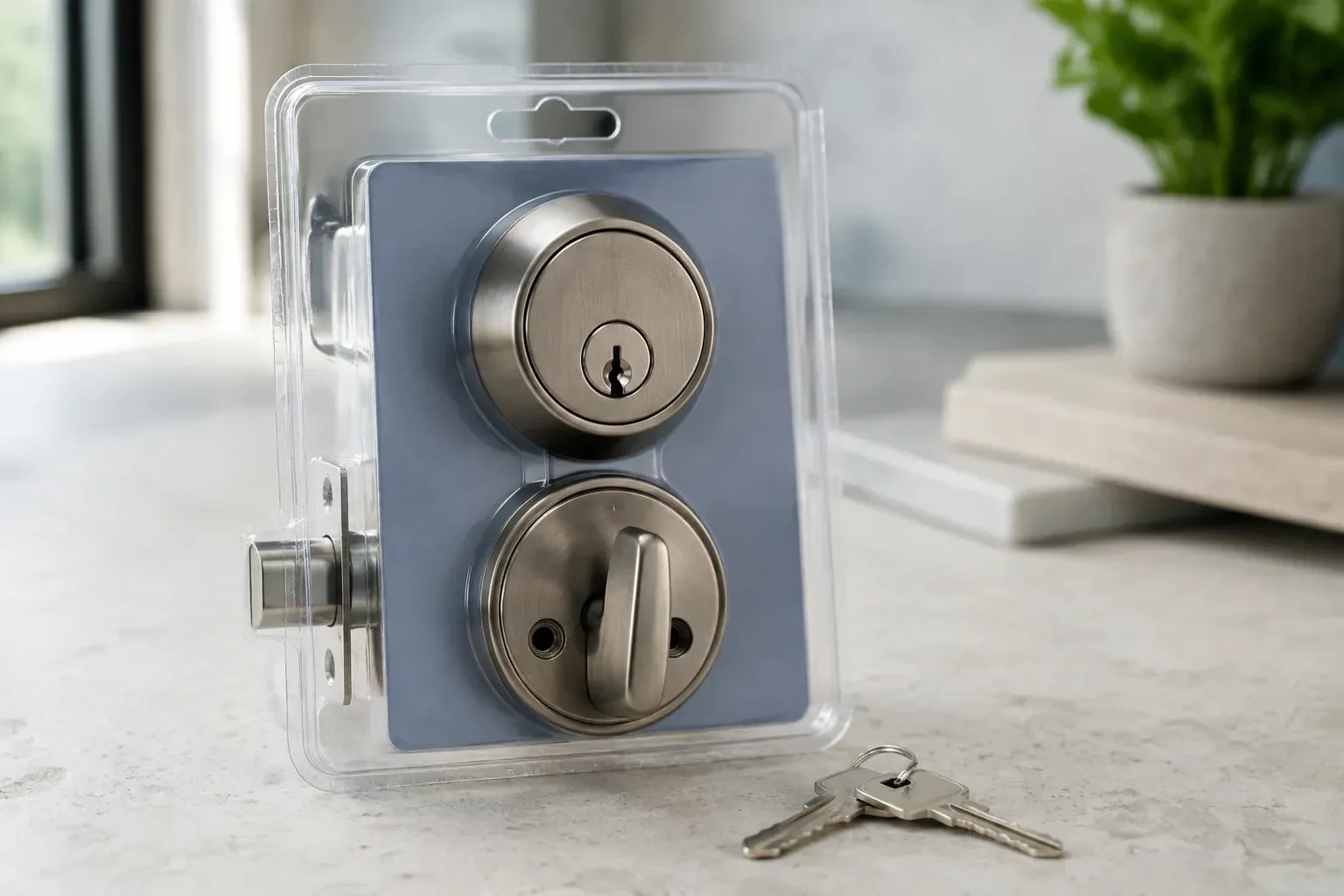
Usually, yes. Where the cylinders accept the same style of key blank, each can be pinned to one new combination, so a single key runs the front, back, side and garage doors. A lock from a different keyway family is brought into the group by exchanging its cylinder for a compatible one in the same finish. During the first walk around the property the locksmith reads every keyway and tells you up front which doors can be keyed alike.
Does a deadbolt work with a storm door or screen door?
It does, with one check: the thumb-turn and the outside cylinder have to clear the storm door when it closes. Most storm doors leave enough depth, but a low-profile deadbolt trim is chosen where the gap is tight. The storm door's own latch is separate and does not replace a bolt on the main door, since a screen frame gives little resistance on its own.
I have just bought a house. What should I do about the locks?
Assume that copies of the old keys exist somewhere and act on the day you take possession. Walk every exterior door with the locksmith, keep hardware that is sound and have it rekeyed to a new key, replace hardware that is worn or too light, and add a deadbolt to any door that lacks one. Ask for everything to be keyed alike so you leave with one key and a known number of copies.
What if the case is too worn to repair?
Then a replacement case goes into the existing pocket. Reproduction mortise cases are made in the common vintage sizes and backsets, and a modern mortise case with a cylinder fits many old pockets with minor trimming. The locksmith measures the case height, depth, backset and trim spacing before ordering, aiming for the new case to drop in with the original knobs and plates going back on, though a small pocket trim or fixing change is sometimes needed. Cutting the door for a different kind of lock is the last choice.
Can someone hack a smart lock?
Reputable models encrypt what passes between the lock, the phone and the maker's servers, and the ordinary risks are more mundane: a code shared too widely, a default code never changed, or an account with a weak password. The installation addresses those directly by deleting factory codes, giving each person their own, and setting up your account with a strong password and two-step sign-in where offered. Firmware updates from the app close gaps as they are found, so accept them.
Can a gate that slams shut be fixed without replacing the whole closer?
Often, yes. A closer that slams is frequently just out of adjustment rather than worn out, and bringing its closing speed and final latching action back into a sensible range solves the problem on its own. Replacement becomes the answer when the arm, seals or internal fluid have genuinely failed, which the locksmith checks for directly rather than assuming from the symptom alone. Either way, the gate is tested through several full cycles before the visit is called finished.
How many keys do I get when the lock is changed?
Two keys is standard, cut from blanks matched to the new lock and tested in the door before the visit ends. Additional keys for another household member, or for someone who collects mail while you travel, are cut on the spot if you ask, rather than needing a separate stop at a hardware store afterward.
I bought the safe secondhand and have no idea of the combination. Can it still be opened?
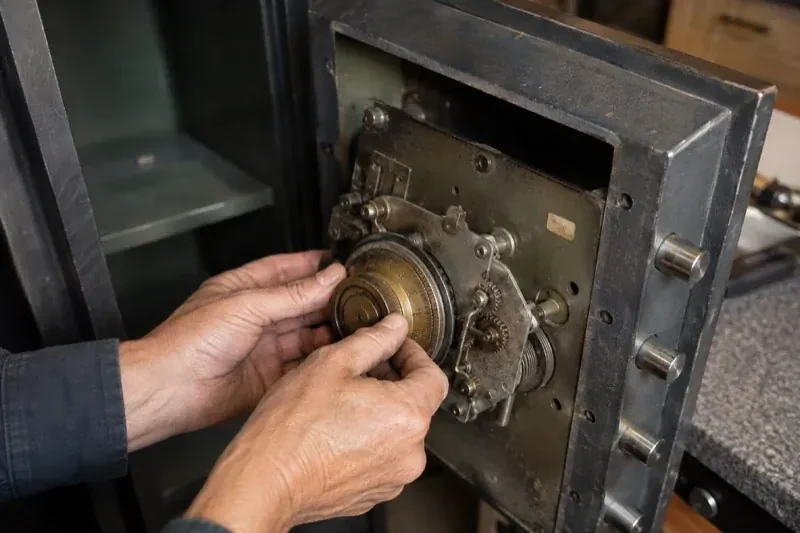
Yes. A safe with no known history is treated as an unknown from the start: the locksmith identifies the make, model and lock type directly from the hardware and works through the same manipulation, decoding or reset options used on any other safe. Proof of the purchase or transfer establishes your authority to have it opened, and the process afterward does not depend on any prior record existing.
Can you install a safe I already bought somewhere else?
Yes. Bringing your own unit is common, and the installation itself does not depend on where the safe came from. The locksmith still needs to check its weight, its footprint, and its anchor points against the floor or wall it will sit on, and looks over the lock before calling the job complete, since a new-to-you safe occasionally arrives with a stiff mechanism or a combination still set from the factory.
Will the new cylinder fit my existing locks?
Usually. High security cylinders are made in the common formats: key-in-knob and lever, rim, mortise and interchangeable core, and many are designed to drop into popular residential and commercial locks. The locksmith identifies your format and confirms fit before ordering. Where a lock is an odd size or in poor shape, a matching lock body is fitted instead, and the door preparation is reused wherever it is standard.
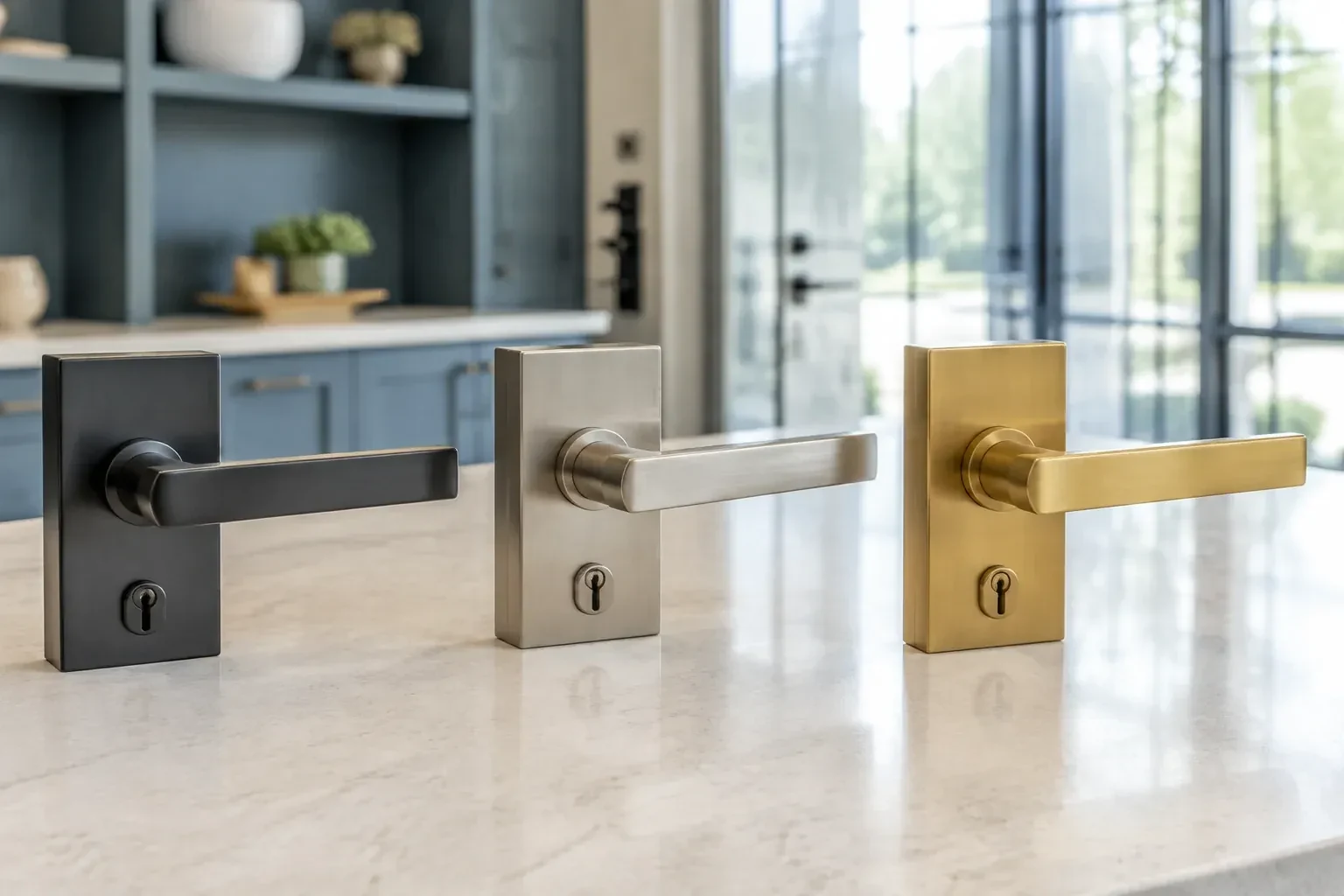
Does stamping keys 'do not duplicate' stop people copying them?
Not reliably. The stamp is a request, and any key on a standard blank can be copied by anyone with the blank and a machine. What does work is controlling the blank itself through a restricted keyway, or controlling access to the lock through interchangeable cores and a tight register. Stamping still has a place: a serial code on each key, instead of the business name, lets you track it without telling a finder where it fits.
Can my existing locks be used, or do I need all new hardware?
Many existing cylinders can join a new hierarchy as they are, once their keyway and condition are confirmed compatible. Others, particularly older or mismatched hardware, are replaced so the whole system pins cleanly without cross-keying. The assessment identifies which doors fall into each group before any work begins, so the plan reflects what is actually on the property rather than assuming everything needs to change.
Can a person's access change automatically by time of day or day of the week?
Yes. Access levels can be set to change automatically by time of day or day of the week, so a credential that opens a door during a shift can be denied outside it without anyone having to remember to switch it off manually. This is set up once in the schedule and then runs on its own from that point forward.
Does a retrofit into an older building work the same way as new construction?
The device and trim choices are the same, but a retrofit usually has to work with a door and frame that already carry someone else's old hardware preparation. Reading what holes and reinforcement already exist, and choosing a device that can use or cleanly replace them, is a bigger part of a retrofit than of a new opening built with the hardware in mind from the start.
Why would my business need panic or exit hardware?
Once a space holds enough people, or handles a high enough hazard, its exit doors need to open with a single motion and no key, which is what panic or exit hardware provides. It is not a preference; it is a function tied to how many people the space is built to hold and what is happening in it.
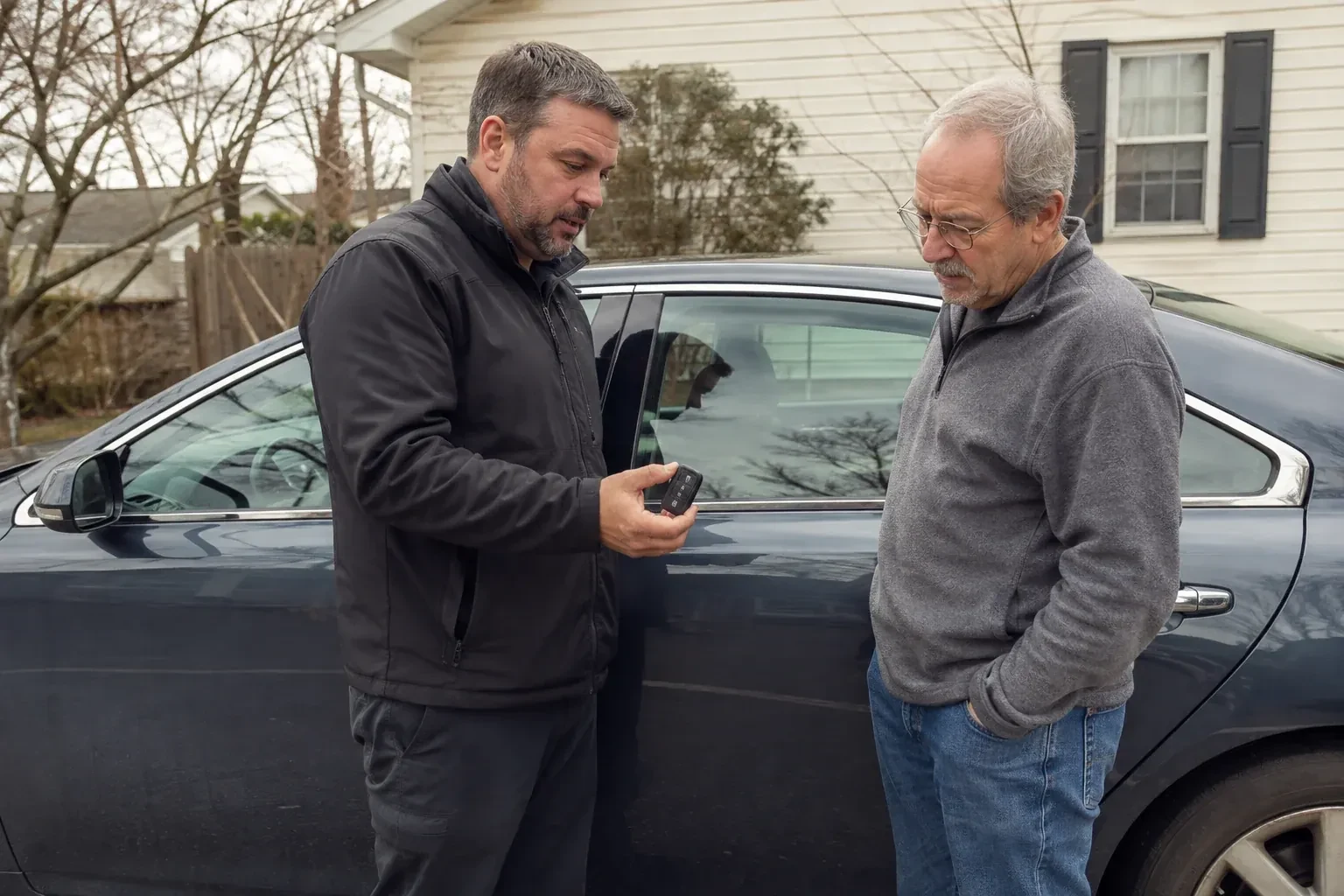
My fob is not working. Is that a lockout?
It is, and usually a simple one. A fob that lights up but the car ignores is diagnosed rather than assumed weak, since interference or fob damage can look the same. Once confirmed, many vehicles have a mechanical blade hidden in the fob and a driver's door cylinder for it, sometimes under a small cap, though some models use a different backup method. The locksmith opens that cylinder, fits a fresh battery, and shows you where a dead fob is held so a push-button car will still start.
What is the difference between adding a spare and replacing all keys?
Adding a spare uses an existing working key as the reference: the new blade is cut and checked against it, and the immobilizer is asked to accept one more key alongside the old. Replacing all keys starts with nothing: the lock is decoded for a blade, and the immobilizer is reset to forget every previous key before new ones are stored. The second job is longer and sometimes needs manufacturer data, one more reason to keep a spare.
How should I store the spare once I have it?
Somewhere other than inside the vehicle, since a spare kept in the glovebox solves little if it is the vehicle itself that becomes inaccessible. A bag that travels separately, a drawer at home, or a trusted family member all work. A passive proximity spare also benefits from a signal-blocking pouch during storage, since that kind of fob keeps broadcasting even sitting untouched in a drawer; a standard button-operated remote does not need the same pouch.
I bought a used car with only one fob. What are my options?
Ownership of the vehicle is confirmed first, since a fob is only added for someone who can show they now hold the vehicle. From there, an additional fob is sourced and registered alongside the one you have, or, if you would rather not rely on a single fob at all, a second and third can be added in the same visit.
Does the fob need a new battery every time a key is programmed?
Not necessarily, but it is checked every time regardless. A battery that is already weak is often easier to replace during the same visit than to leave for another call later, and a marginal battery can make a freshly programmed fob look like it has a fault when the chip itself is working exactly as intended.
How do I keep my ignition and keys in good shape going forward?
A little attention goes a long way: whatever lubricant the vehicle's own service information calls for worked into the keyway, keys wiped free of grit before use, and a worn or bent key retired in favour of a fresh cut from a crisp original. Catching a barrel that has started needing a wiggle early keeps it an easy fix rather than a stuck ignition later on.
Can a locksmith work on a leased or company vehicle?
Yes, provided the person requesting the work can show a connection to the vehicle, such as a lease agreement, a fleet authorization letter, or documentation from the company that holds the registration, matched against the vehicle's identification number.
Do you need the vehicle's VIN to make a key?
It helps but is not always required. The VIN can confirm the exact model and sometimes points to a factory key code on file, which speeds up cutting a key without reading the lock from scratch. Where the VIN is not available or does not lead anywhere useful, the locksmith works directly from the lock or an existing key instead, so a missing VIN slows the process rather than stopping it.