Lockouts · Toronto
Seized & Jammed Lock Opening
The key slides all the way in, exactly as it has for years, and then refuses to turn in either direction.
In plain words
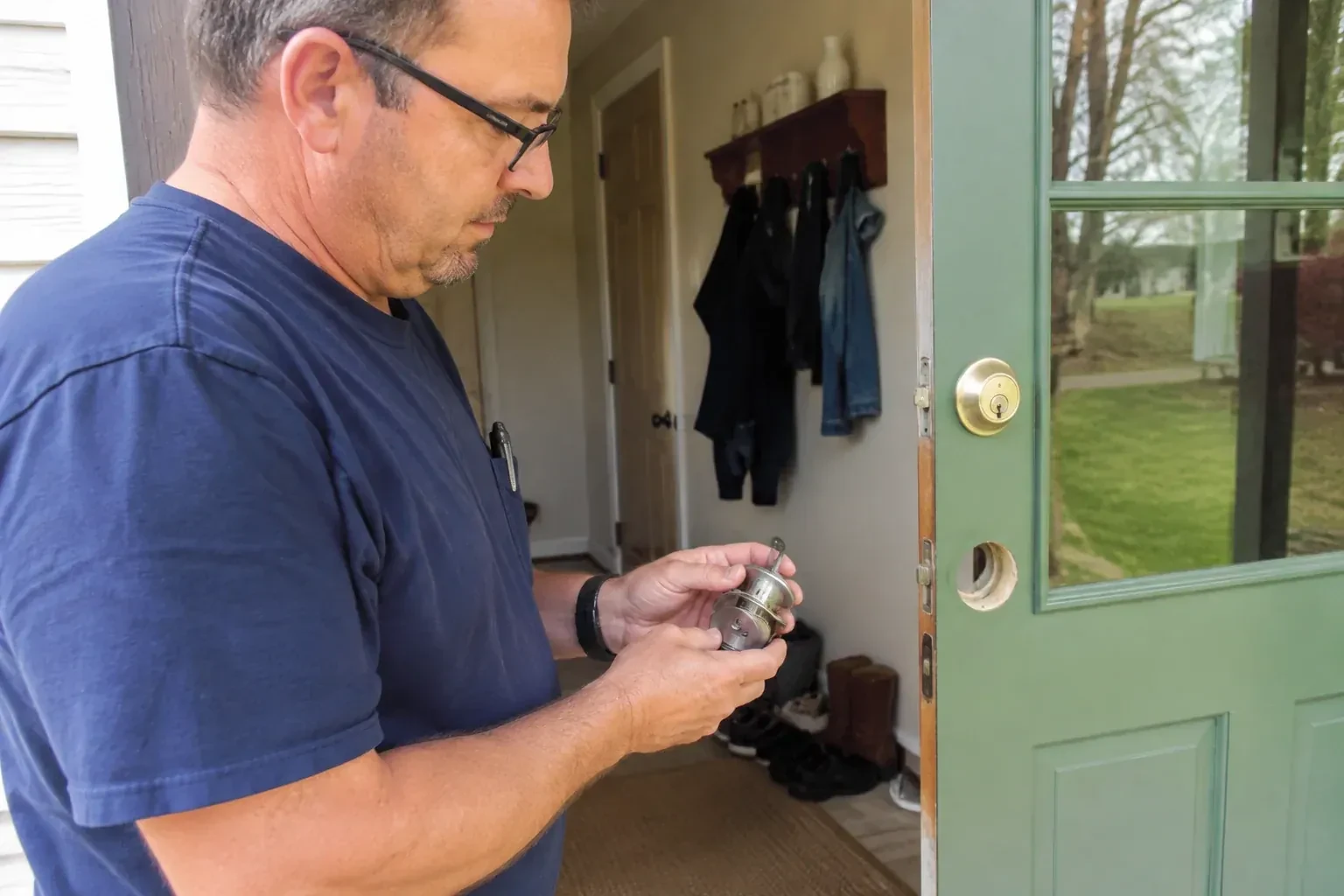
When the cylinder is the part that has seized, the work is about cleaning rather than force. Keyways collect dust, salt spray, metal filings and residue from sprays never meant for locks, and over time the pins stop lifting cleanly. The locksmith flushes the plug with a contact cleaner, applies a penetrating lubricant, and works the key in small movements until the plug turns. With the door open the cylinder comes out, is stripped and cleaned, gets fresh springs or pins where worn, and is dressed with the lubricant specified for that cylinder. A plug or shell that is worn, damaged or eaten through by corrosion is what gets replaced.
How the visit goesYou are inside, the deadbolt is thrown, and the thumb-turn will not budge. It moved a little last week with some effort. Now the door you walk through every day is a wall, and you need it open.
Seized & Jammed Lock Opening
How the visit goes
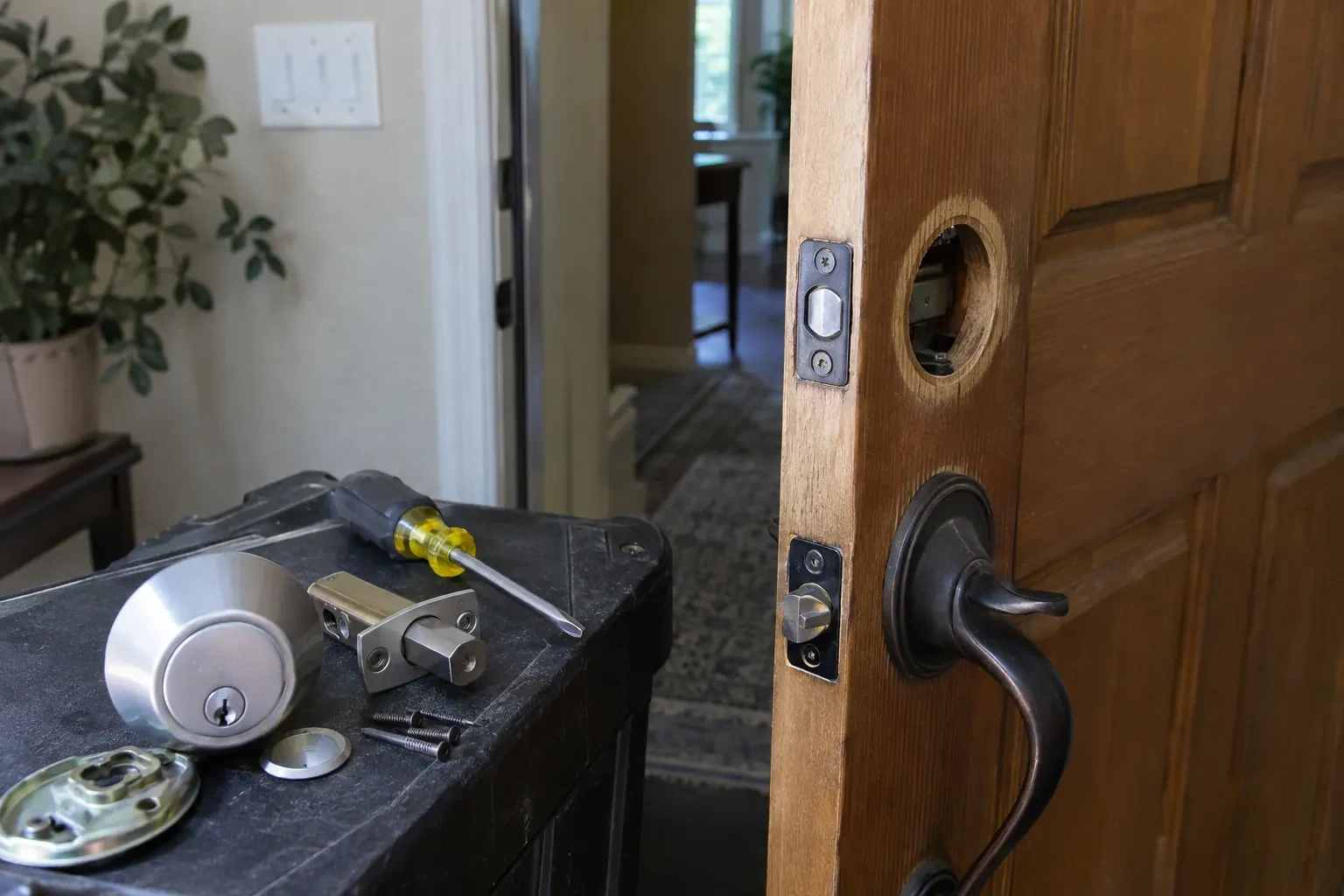
Levers, thumb-turns and mortise cases
Lever handles and mortise locks add parts that a plain deadbolt does not have, and each can jam on its own. A lever that drops without retracting the latch can have a tired return spring or a worn hub inside the case, though latch engagement, linkage, or the spindle can produce the same symptom. A thumb-turn that will not move can be a bent spindle, a stripped drive or a bolt pinned by the frame. On older houses and commercial doors the mortise case itself may be packed with decades of dust and dried grease. The locksmith works the lever, key and thumb-turn separately and feels where resistance starts, which locates the fault before the case is opened.
When corrosion has taken the core
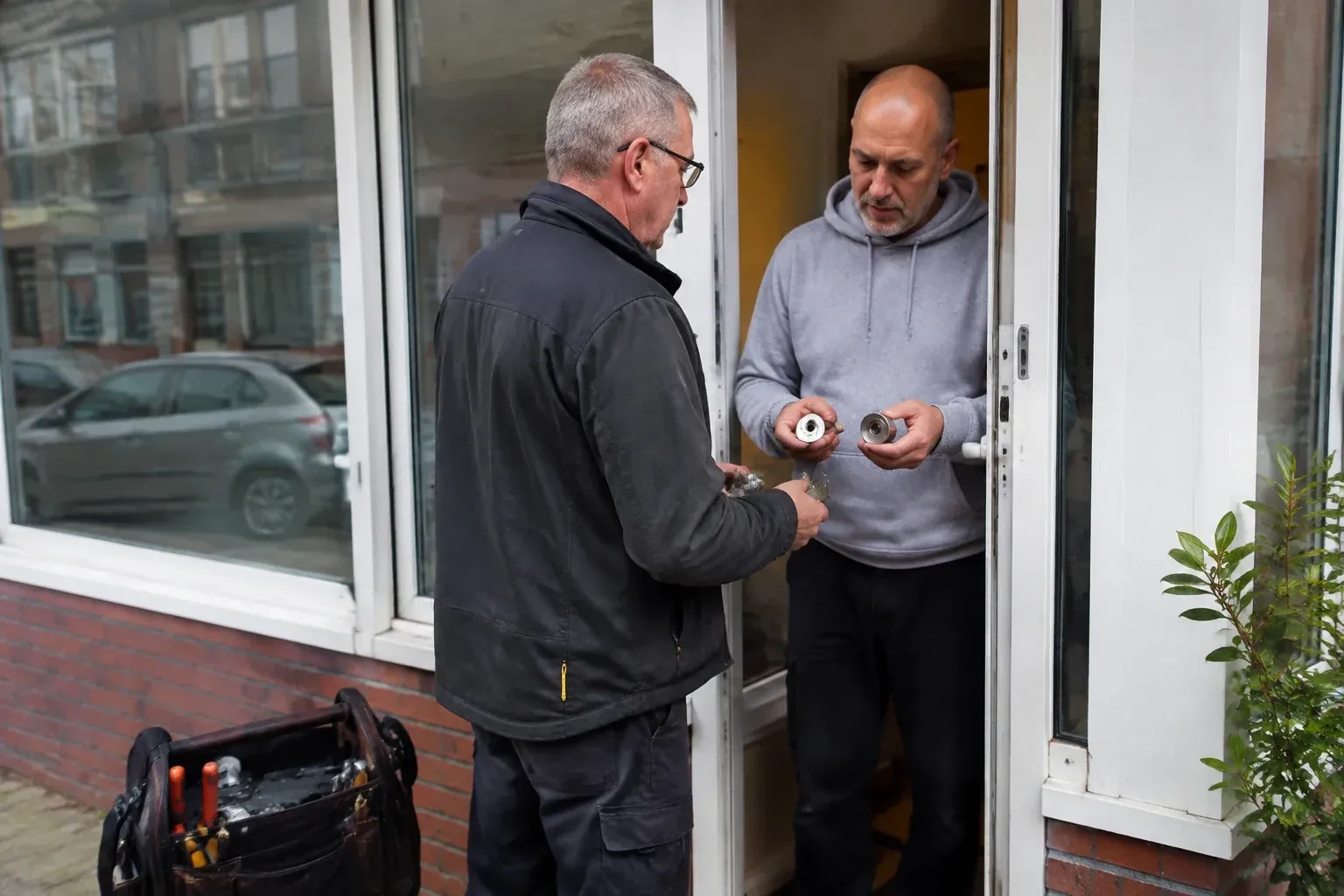
Occasionally the plug or shell has rusted or pitted past the point of cleaning, or an earlier forcing has twisted the plug in the shell. Then the cylinder is replaced rather than rebuilt. The locksmith matches the keyway and finish so the new part looks like the old one, and where the keyway allows, pins the new cylinder to the key already on your ring so nothing else in the house changes. If the whole lockset is tired, a replacement deadbolt or lever set goes on in the same visit, with the strike checked to suit it. The old parts are handed over so you can see exactly what failed.
Keeping the cylinder clean and dry
A serviced cylinder stays that way with very little effort. At the interval and with the product that cylinder's maker specifies, a short burst of lock lubricant into the keyway followed by a few turns of the key is enough; stay with that one product, since mixing lubricants makes a paste. Household oils, penetrating sprays and silicone meant for hinges belong nowhere near the pins, because they thicken and attract grit. Wipe the key before it goes in on a muddy or salty day. If the lock ever starts to drag, a puff of lubricant is the first response, and a call is the second.
Seized & Jammed Lock Opening
In the van
Plug follower and repinning kit
Mortise case spring and hub
Long hinge screws
Strike plate and hinge shims
Electronic contact cleaner
Seized & Jammed Lock Opening
What affects the quote
Mortise and commercial hardware
Drawing a mortise case, replacing a hub or spring and regreasing the contact points is more involved than a cylinder service, and storefront and exit hardware are quoted accordingly.
How many locks are affected
One seized side door is the simplest case; a front and back door that both drag, or a storefront with two leaves, adds hardware and time to the visit.
Cutting fresh keys
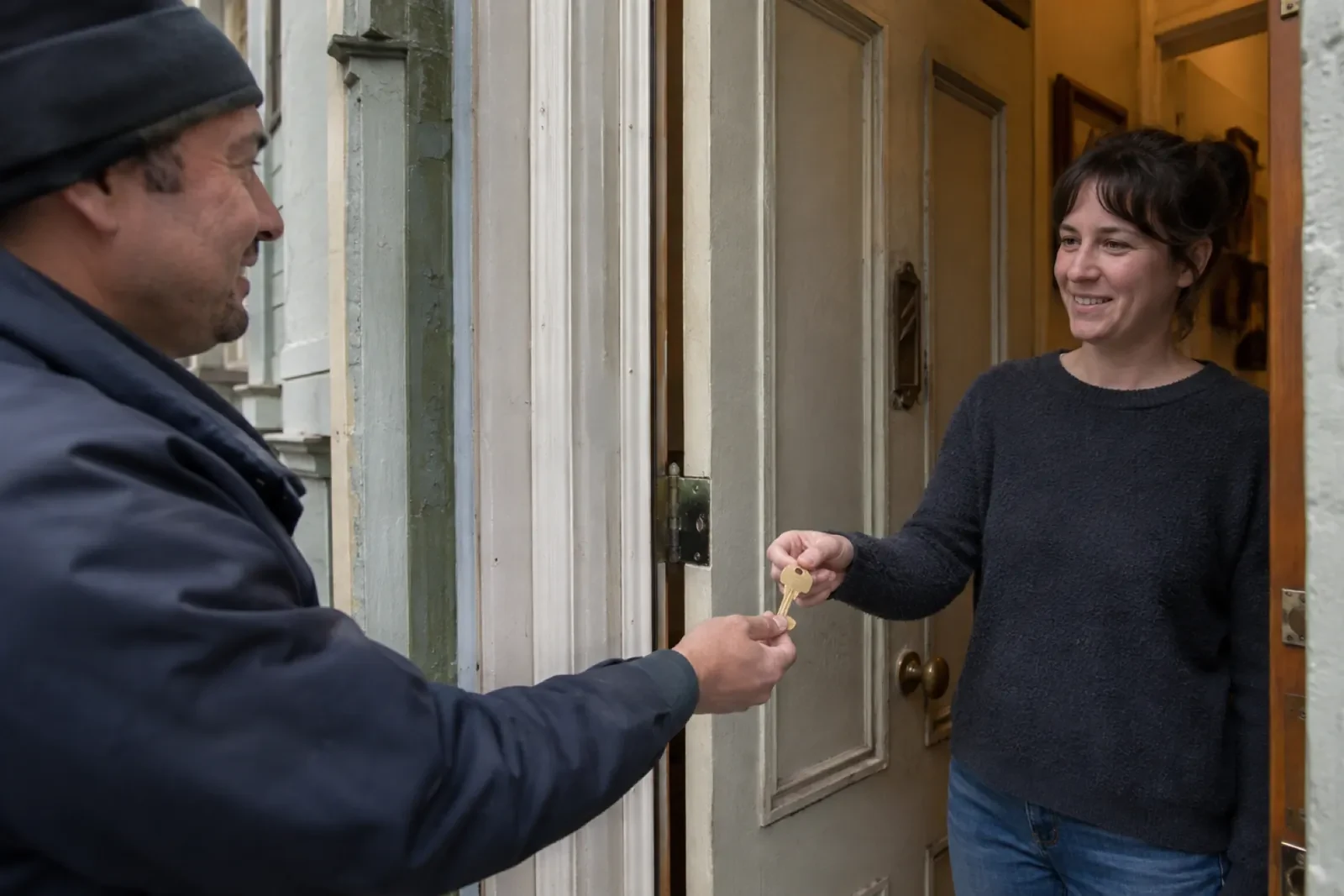
If a worn key was part of the trouble, keys cut from the code or a fresh master are counted individually, so say how many the household or staff need.
What to have ready
- Do you have identification, a lease or a management contact for the property?
- Is there another door you can use in the meantime?
- Which side of the building does the door face, and is it near a salted driveway?
Seized & Jammed Lock Opening: questions
QuestionsMy key is worn. Would a new copy have prevented this?
Possibly, if the key was part of the cause. A worn or bent key lifts the pins short of the shear line, so the plug binds even in a healthy cylinder, and a copy made from that key repeats the wear. A key cut from the code or from a crisp original is the fix. If the lock was also gritty or the door had moved, the new key would have eased things without settling them, which is why the locksmith checks all three.
What is a tailpiece, and why does it matter here?
The tailpiece is the flat bar that sticks out of the back of a deadbolt cylinder and turns the bolt mechanism when the key turns; on a knob or lever set the equivalent part is a cam or spindle. It carries all the twisting effort, so a bent, worn or broken one is the reason a key can turn without anything happening. It is a small part to replace, it comes in several lengths, and the right length matters.
The lever on our shop door goes down but the latch does not pull back. Is that a lock problem?
It usually points to the mortise case rather than the cylinder, and it is a common complaint on commercial doors. Inside the case a return spring, a worn hub, or another part of the latch's drive path can have failed, so the lever moves without driving the latch. The locksmith gets the door open, draws the case out of the door edge, replaces the worn part, cleans and greases the contact points and refits everything, then tests lever, key and thumb-turn together.