Locksmith in Toronto, OntarioLock trouble in Toronto?Talk to a person.
You ring, a locksmith answers, and you describe what the door is doing. From there the visit is planned around your day, whether that is a shop that opens at seven or a house in Toronto where everyone is home after dinner. No call centre, no script, one company from first ring to finished door.
You ring, a locksmith answers, and you describe what the door is doing. From there the visit is planned around your day, whether that is a shop that opens at seven or a house in Toronto where everyone is home after dinner. No call centre, no script, one company from first ring to finished door.
Local locksmiths who explain their work.
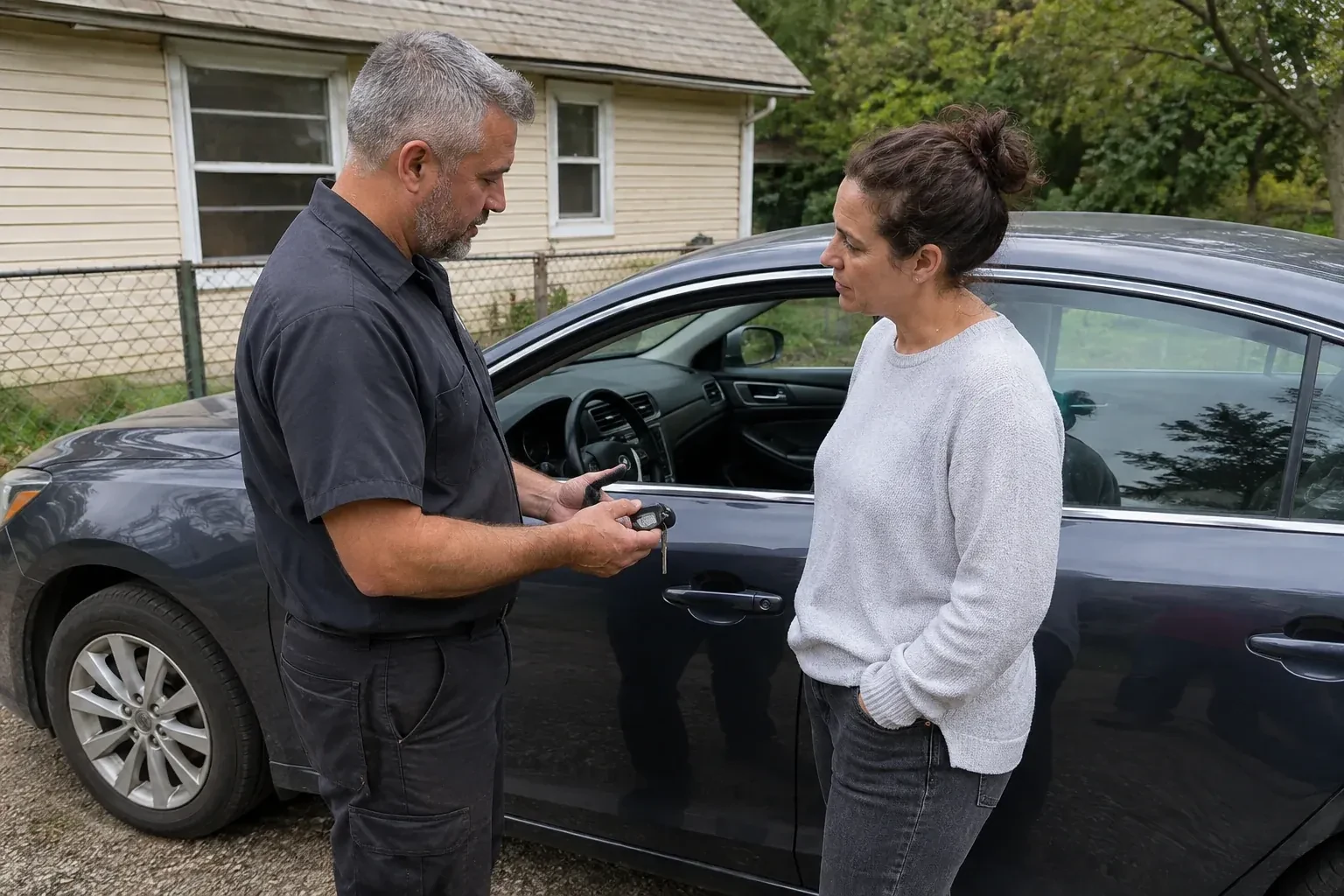
We plan visits around how people in Toronto live. A shop wants the work done before opening or after close. A family wants a time when someone is home and the dog is put away. A landlord wants the unit done between tenants. Tell us the window that suits you and we build the day around it, then call when the van is on its way.
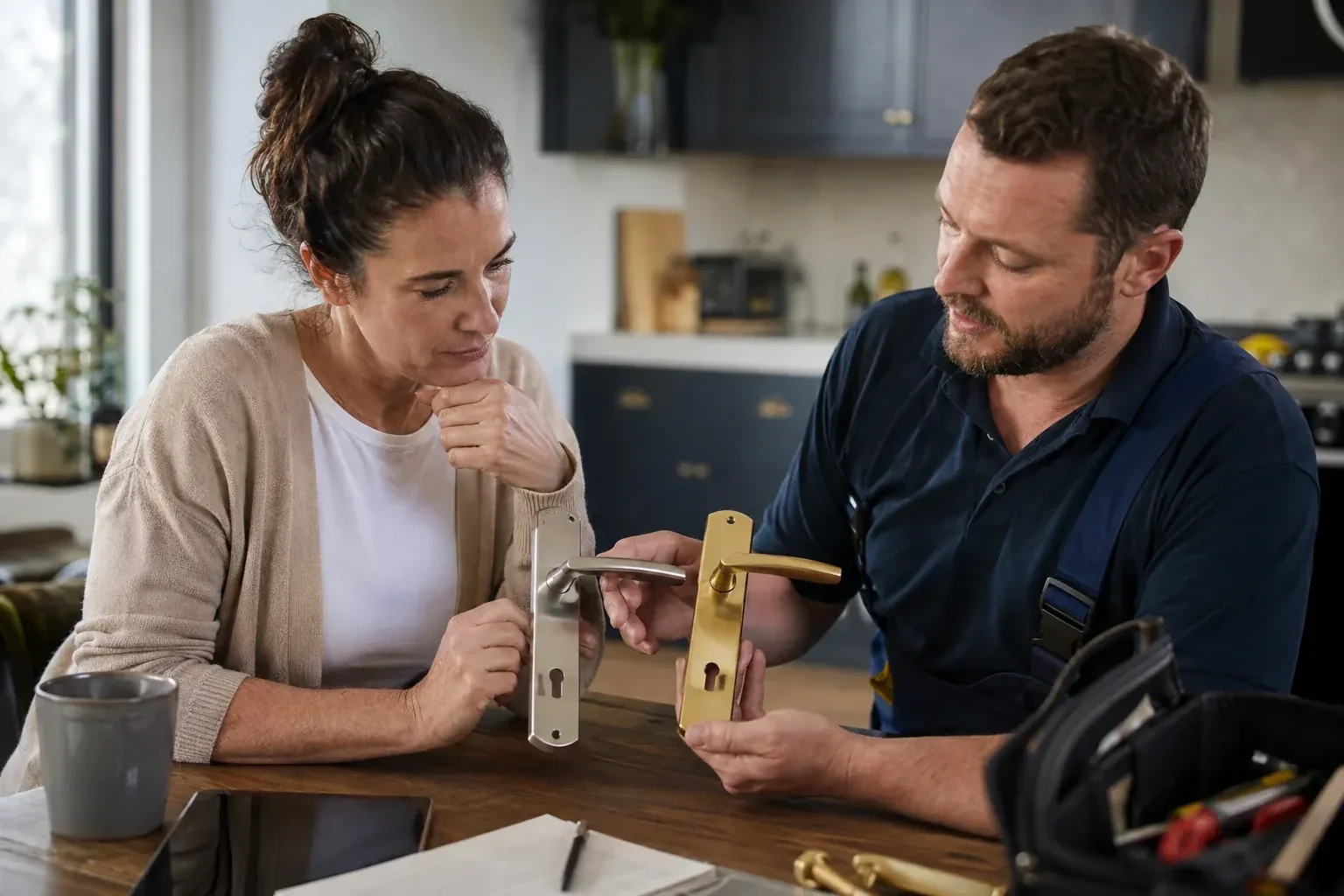
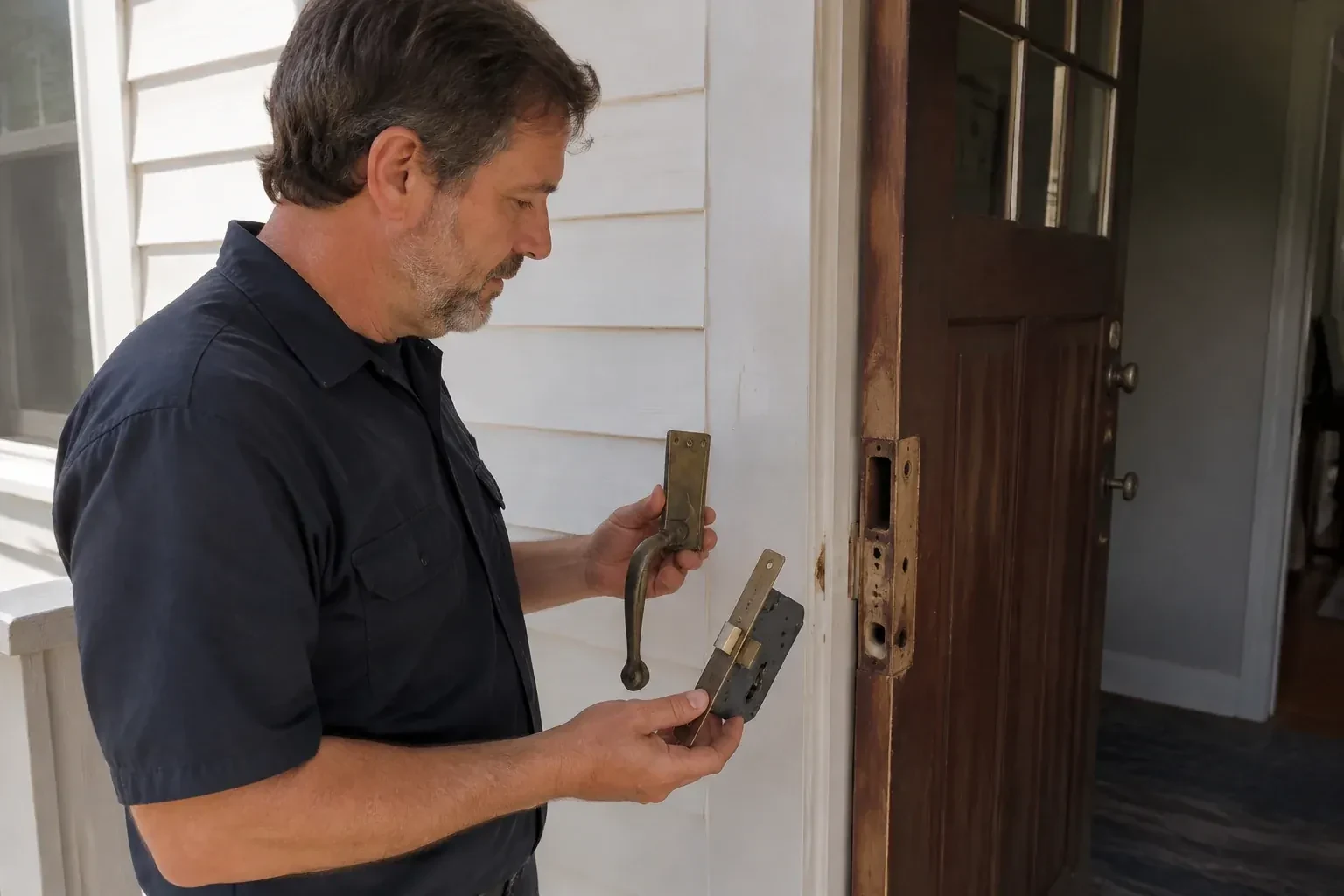
Older homes in Toronto often have mortise locks, period handles and doors that have settled over the years. We enjoy this work. It calls for judgement rather than a catalogue number: keeping the original look while making the lock behind it dependable, and getting the alignment right so the door closes without a shove. We carry the parts these houses need.
12years in business
24/7open every day
Explained before any tool comes out. You will hear what we found, what we suggest and why, before anything is changed. If you want a minute to think, take it.
Choices, not a single answer. Most problems have more than one fix. We lay out the practical options and the trade-offs, then let you choose the one that fits your home and budget.
A tidy doorstep. Shavings swept, packaging taken away, the old hardware offered to you or disposed of. The only sign we were there is a lock that works.
The pages that follow describe the lock services offered in Toronto one by one, without sales talk. Where a service has a simpler or less involved cousin, the page says so. Where a repair will do instead of a replacement, the page says that too. The aim is for you to choose well, not to choose more.
About 58% of homes in Toronto were built in 1980 or earlier, according to the 2021 Census.
Older homes
Decades of seasons move a frame, and an older house often has a front door that locks easily in summer and fights in winter. Setting the strike with the seasons in mind, and choosing a lubricant that stays fluid in the cold, keeps it working year round.
Single-detached houses make up about 23% of homes in Toronto (2021 Census).
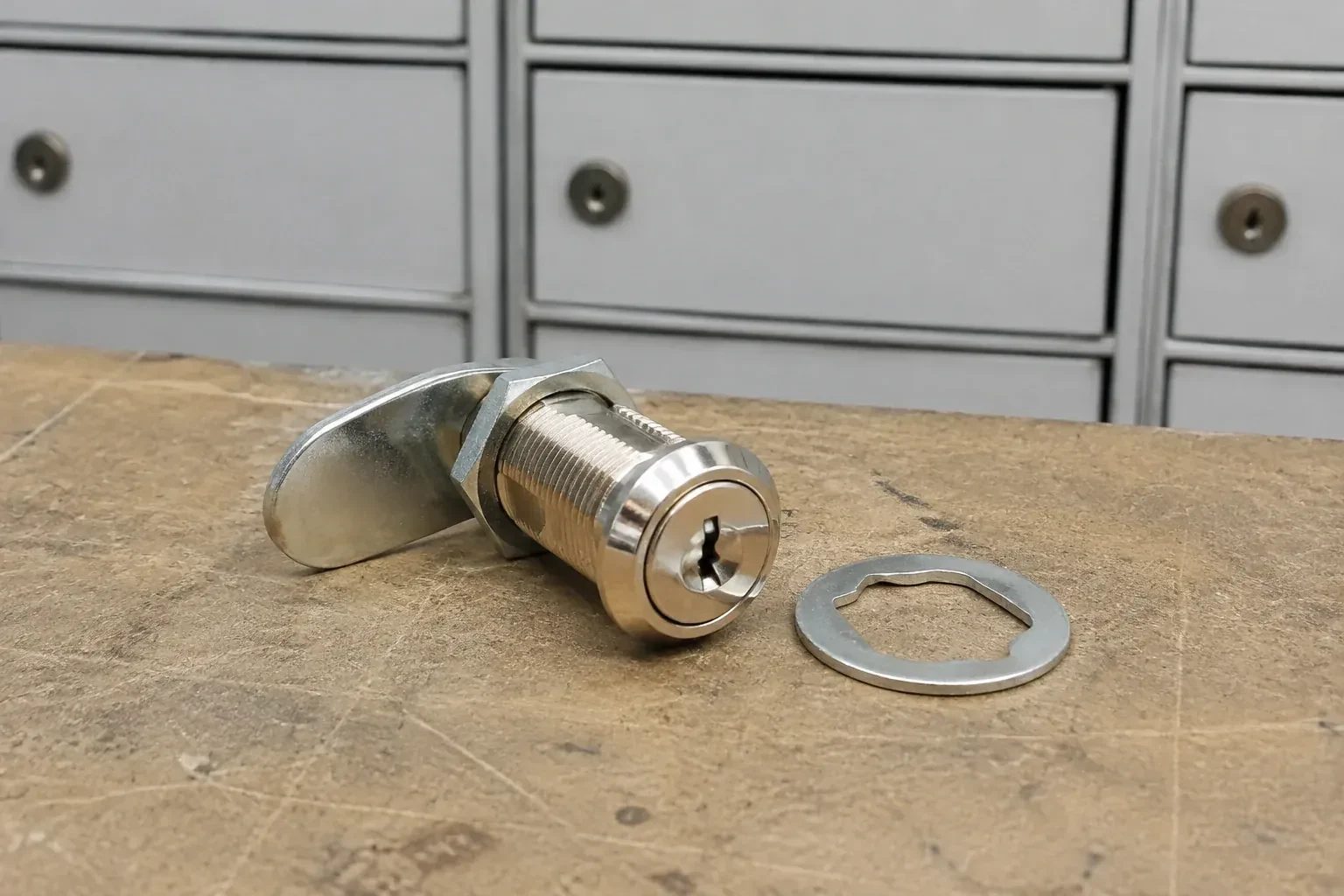
Where housing is mostly apartments and condos, mailbox locks are a regular call. A worn or lost mailbox key is a small job that a locksmith handles alongside the suite door, and the new lock comes with fresh keys cut on the spot.
Businesses with pharmacies, records, cash or controlled stock need doors that hold under attack and keys that cannot be duplicated on a whim. The high security page covers cylinders, strikes, key systems and safes for those rooms, and how they fit alongside an alarm.
A software update reset the clinic's small safe overnight, and the receptionist's usual code now does nothing on a keypad that lights up but goes no further.
The accountant's office keeps a decade of client files in cardboard boxes because the only safe in the building is a small drawer safe meant for a laptop, nowhere near large enough for binders of paper.
Which fix fits?
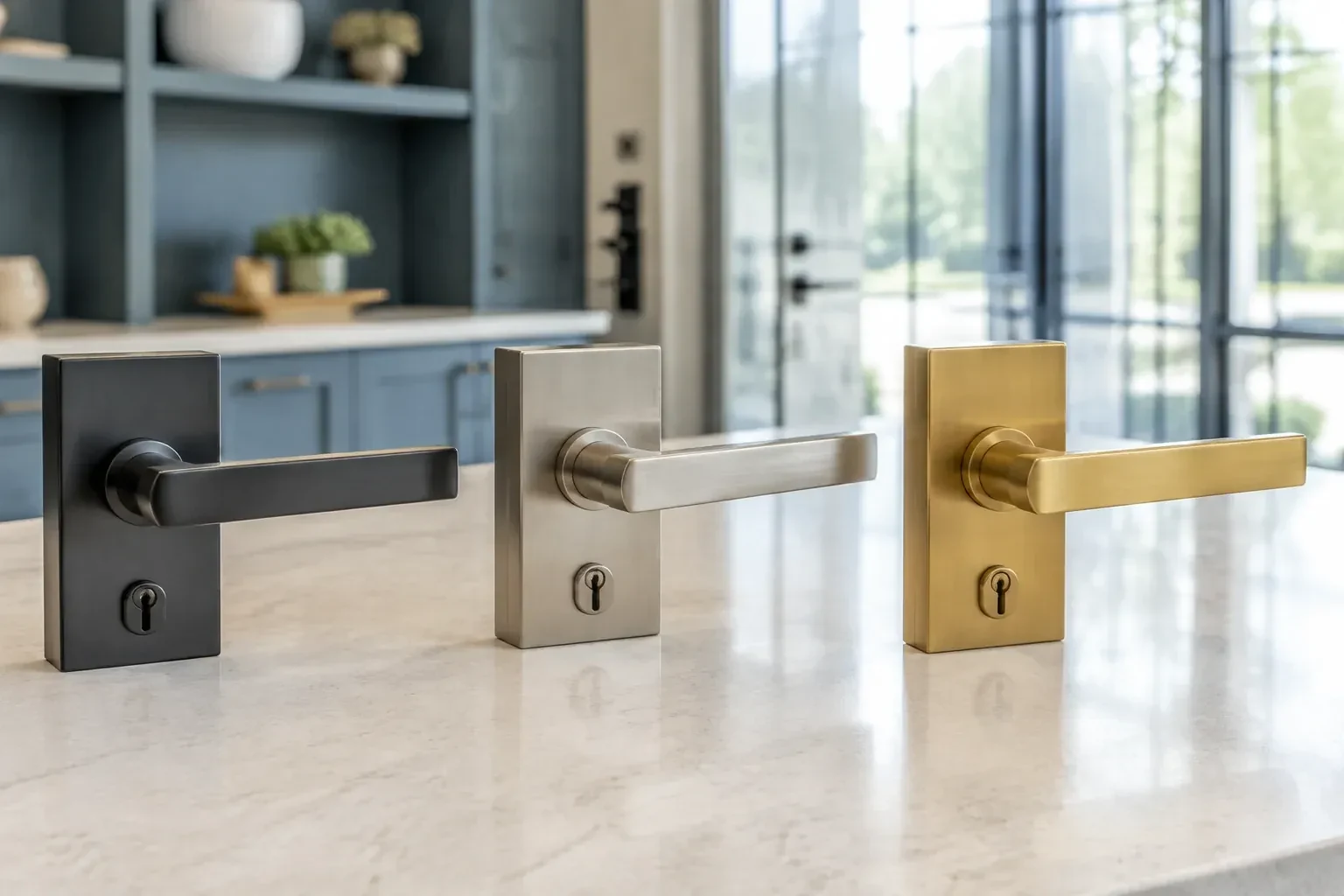
The house is fifteen years old and every exterior door still wears the light hardware the builder fitted: a short bolt, a thin strike held by two small screws, and a knob lock that never suited a street entrance.
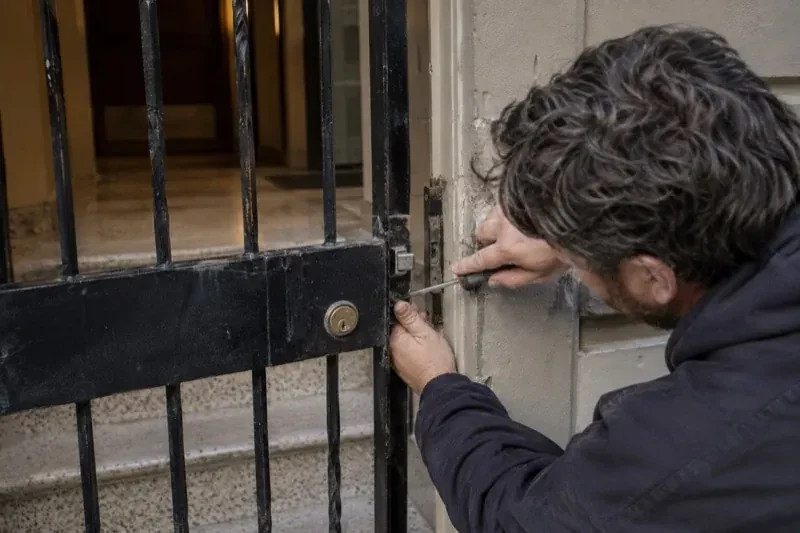
WhyHardware bolted to a gate or an exterior building door lives outside every day of the year, which is a different job from a lock tucked behind a storm door.
A customer's rifle safe at the range has a dial that simply will not respond to the combination written on the sales receipt from years ago.
WhyA safe built to protect firearms is opened with the same care as any other, but the aftermath gets one extra look: once the door is open, the storage arrangement inside is checked against what the applicable federal rules for secure firearms storage expect, since a business handling those items answers to those rules whether or not the lock itself needed attention.
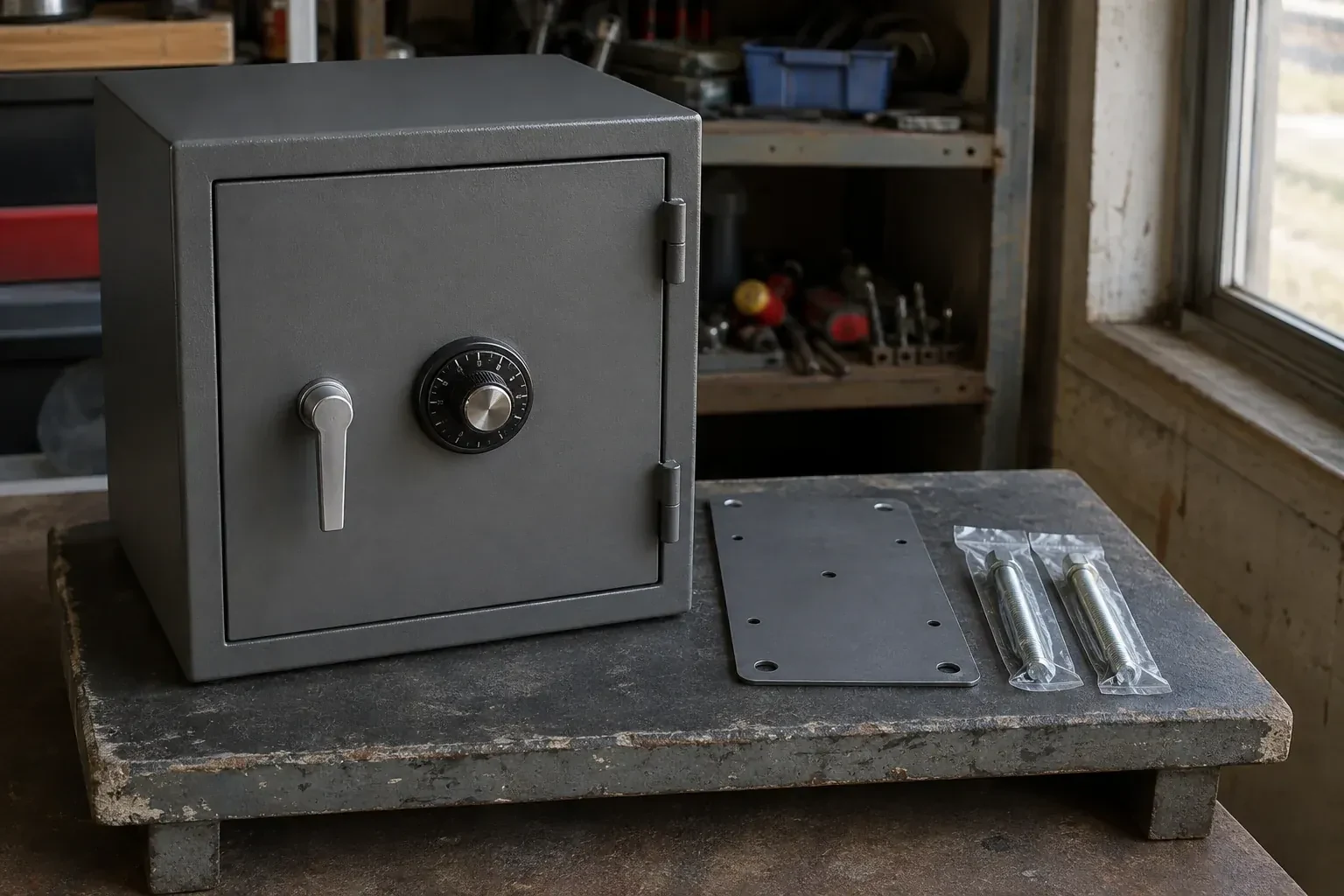
The office is moving three blocks over, and the old commercial safe that has sat bolted to the concrete for fifteen years now needs to come out, travel across town, and go back down just as solidly.
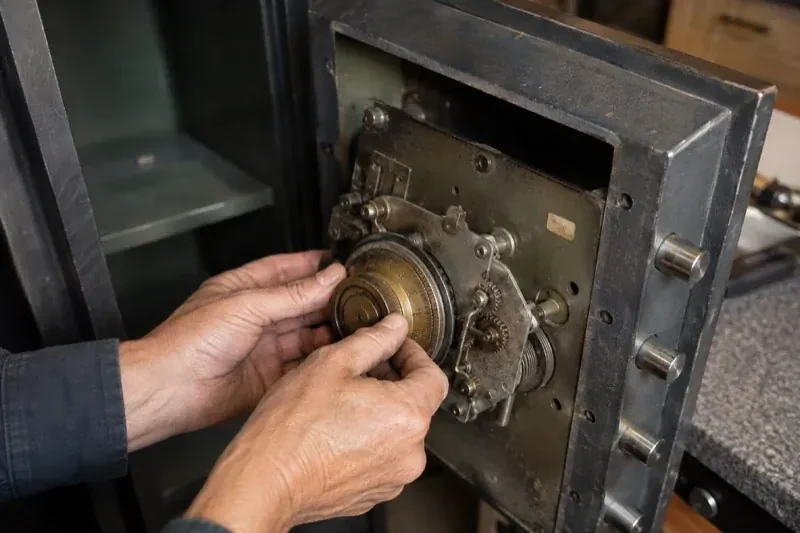
WhyThe lock on a safe is either a mechanical dial built around a wheel pack and gates, set and tested by a trained hand, or an electronic keypad running on batteries, and each has its own service needs.
You have just signed the lease on a unit the previous tenant ran for a decade.
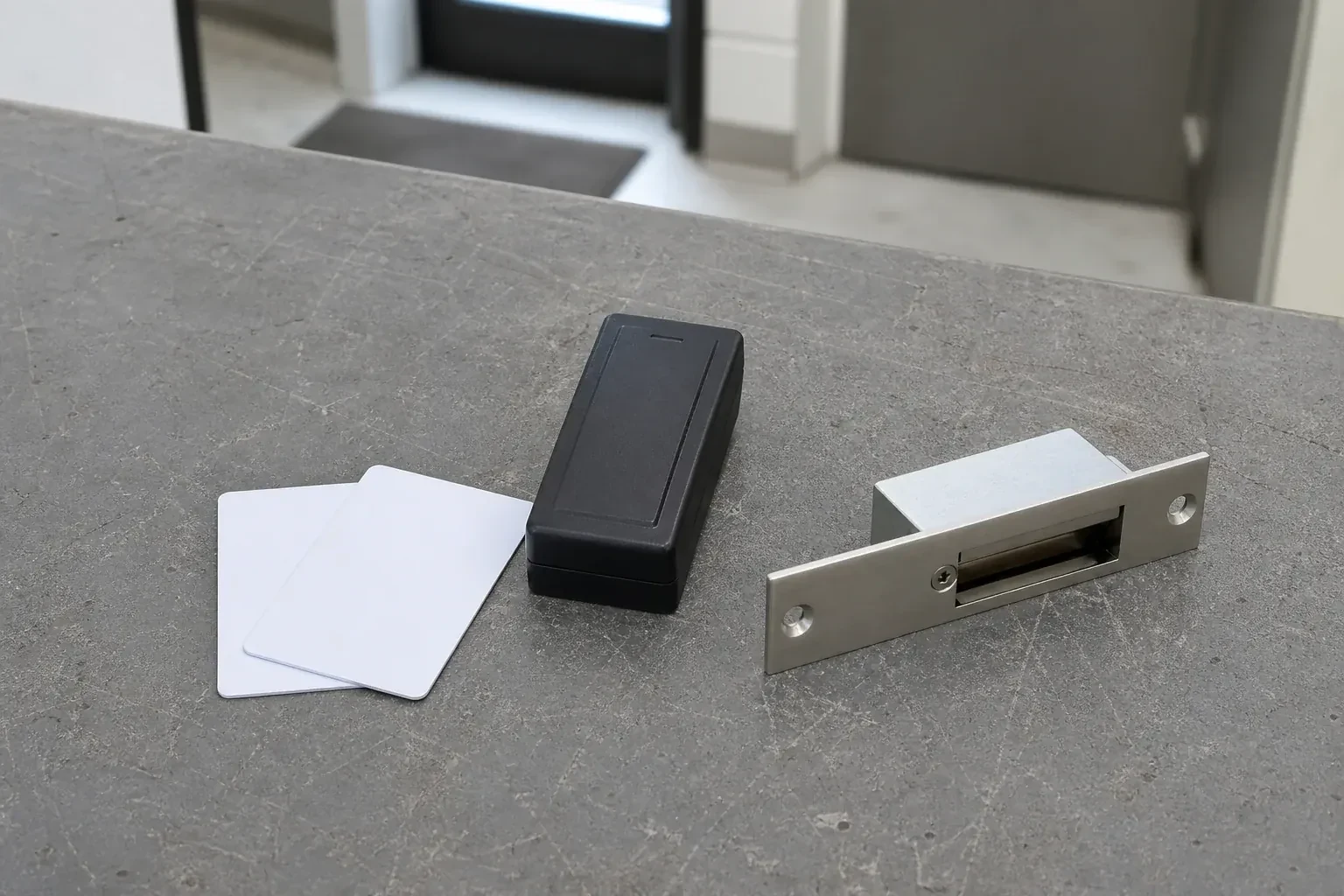
WhyA single door can run on a standalone keypad or card reader that stores its own list of who may enter, though it can still need a power or network connection to work.
The blade snapped off flush with the door lock last winter, and the shop that cut a replacement only matched the metal shape.
Describe the property, the hardware and what has changed, and the visit starts from what you have seen.
1
2
3
01
Counting the doors and keys
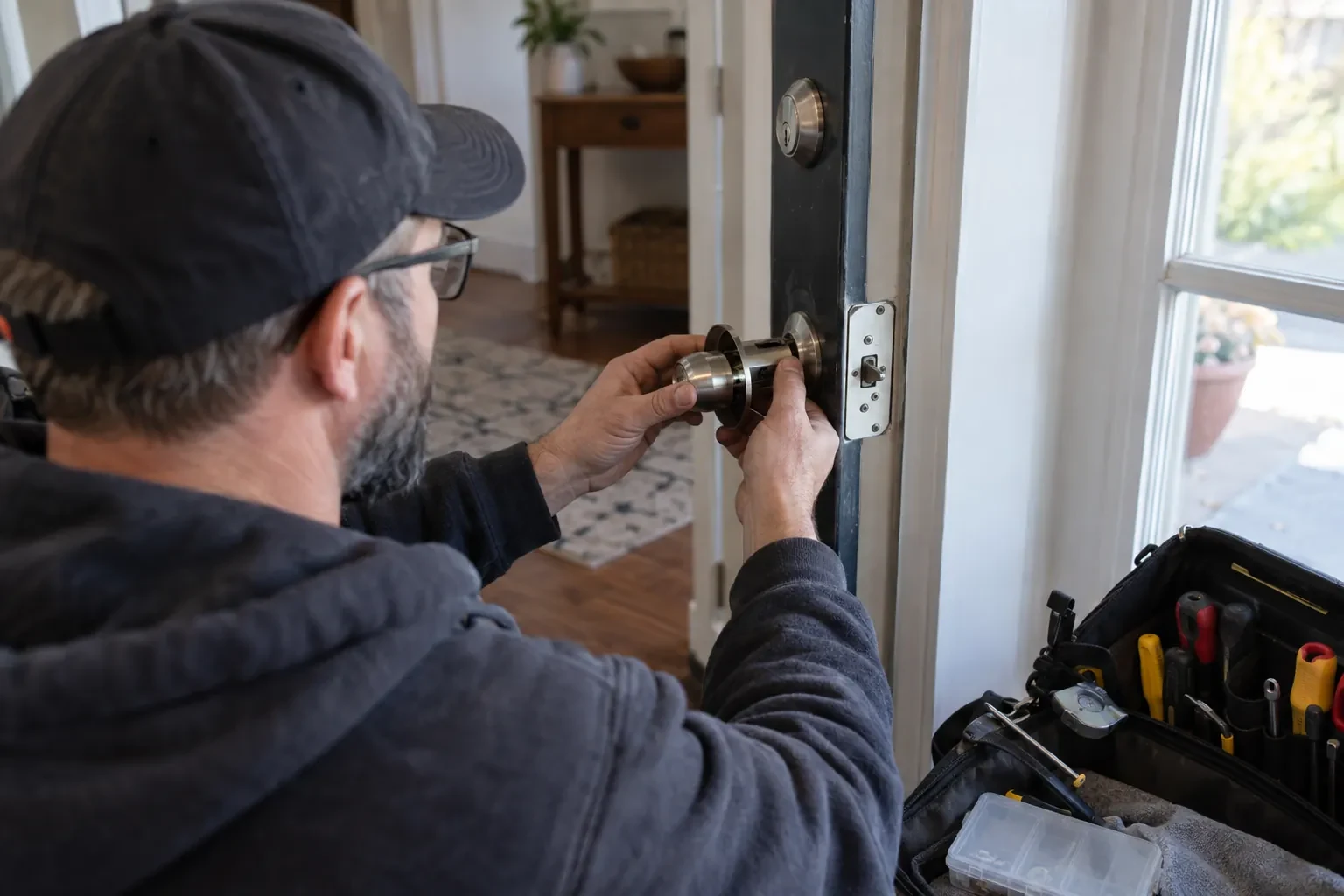
We walk the house with you, note every exterior lock and ask which doors you want on one key. That decides the pin work and the number of keys to cut.
02
Pinning the cylinders
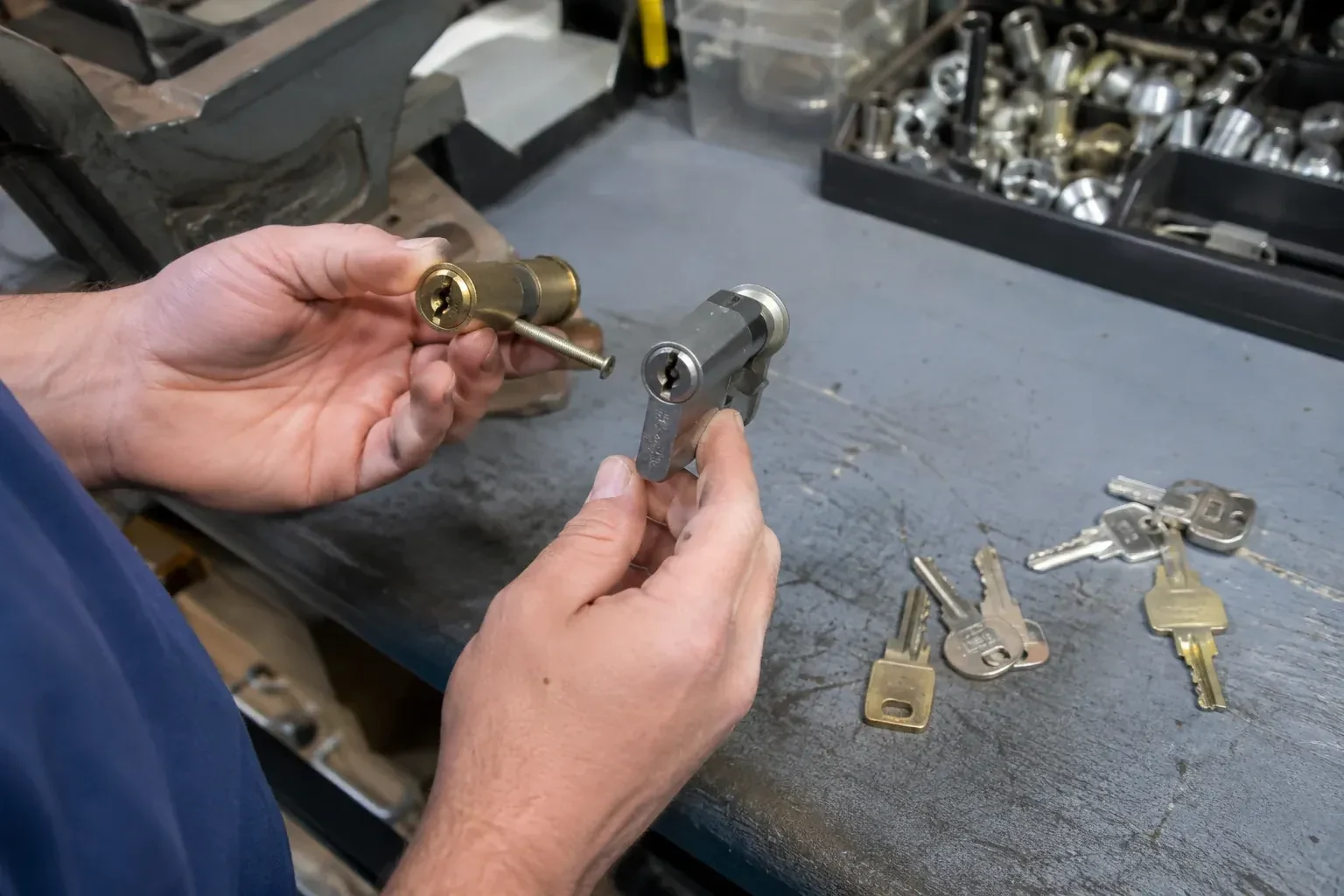
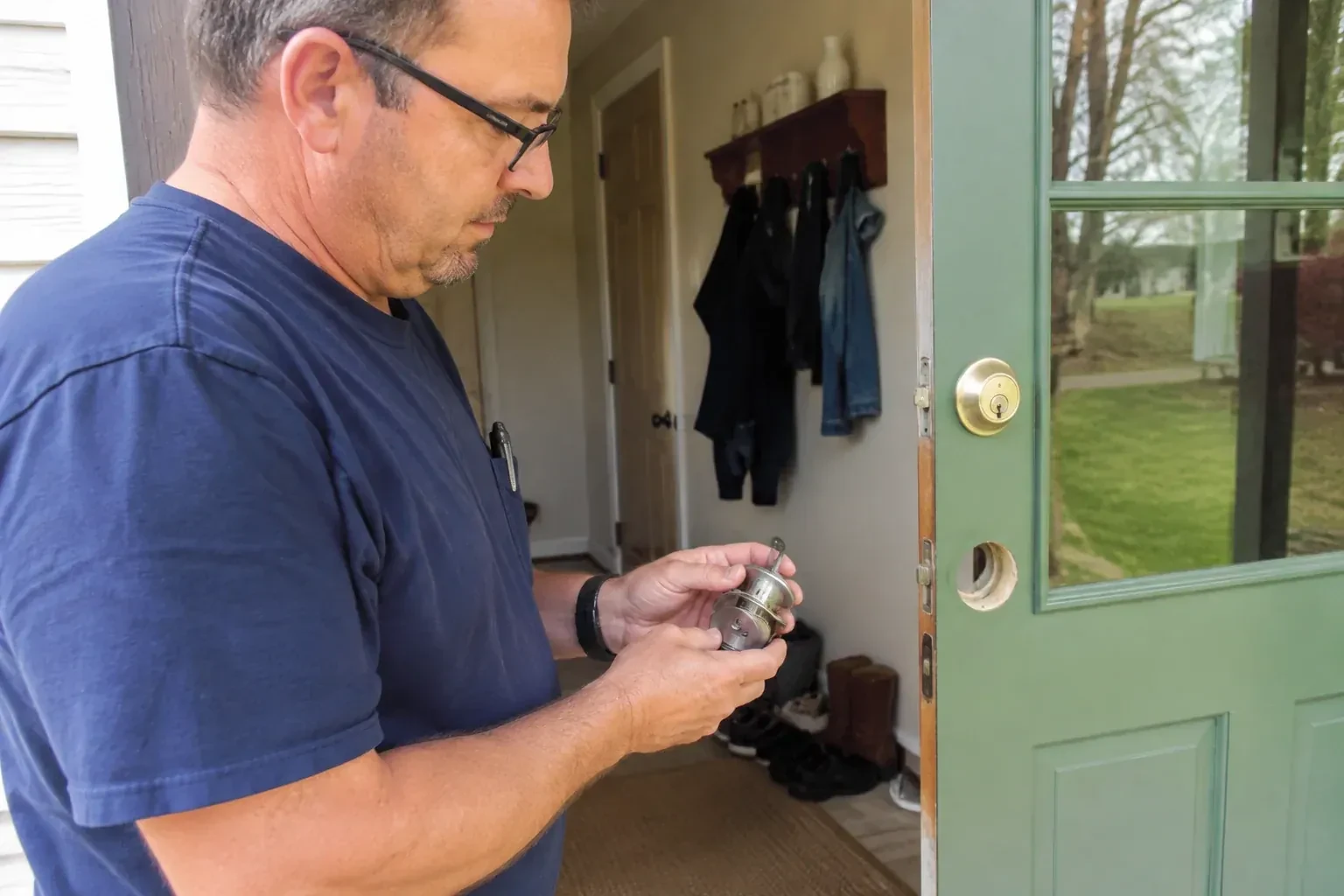
Each cylinder comes out, gets new pins to match a fresh key, and goes back in. Old keys stop working the moment the cylinder is back in place.
03
Testing every door with every key
We try each new key in each lock, from outside and inside, hand you the set and explain how many copies exist so you know exactly who can get in.
Good days. Start with a turn.
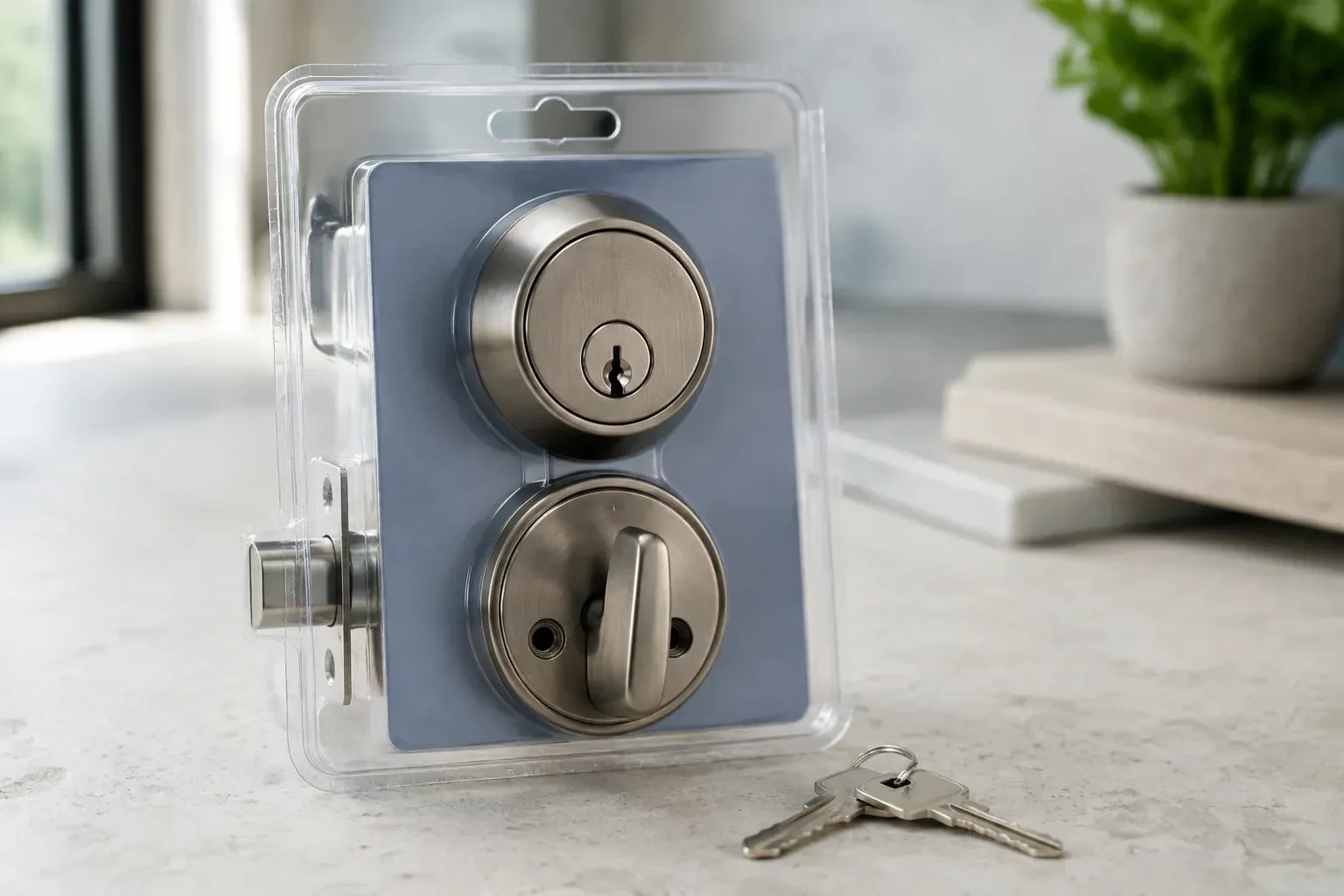
1/9Lock Replacement & Upgrade
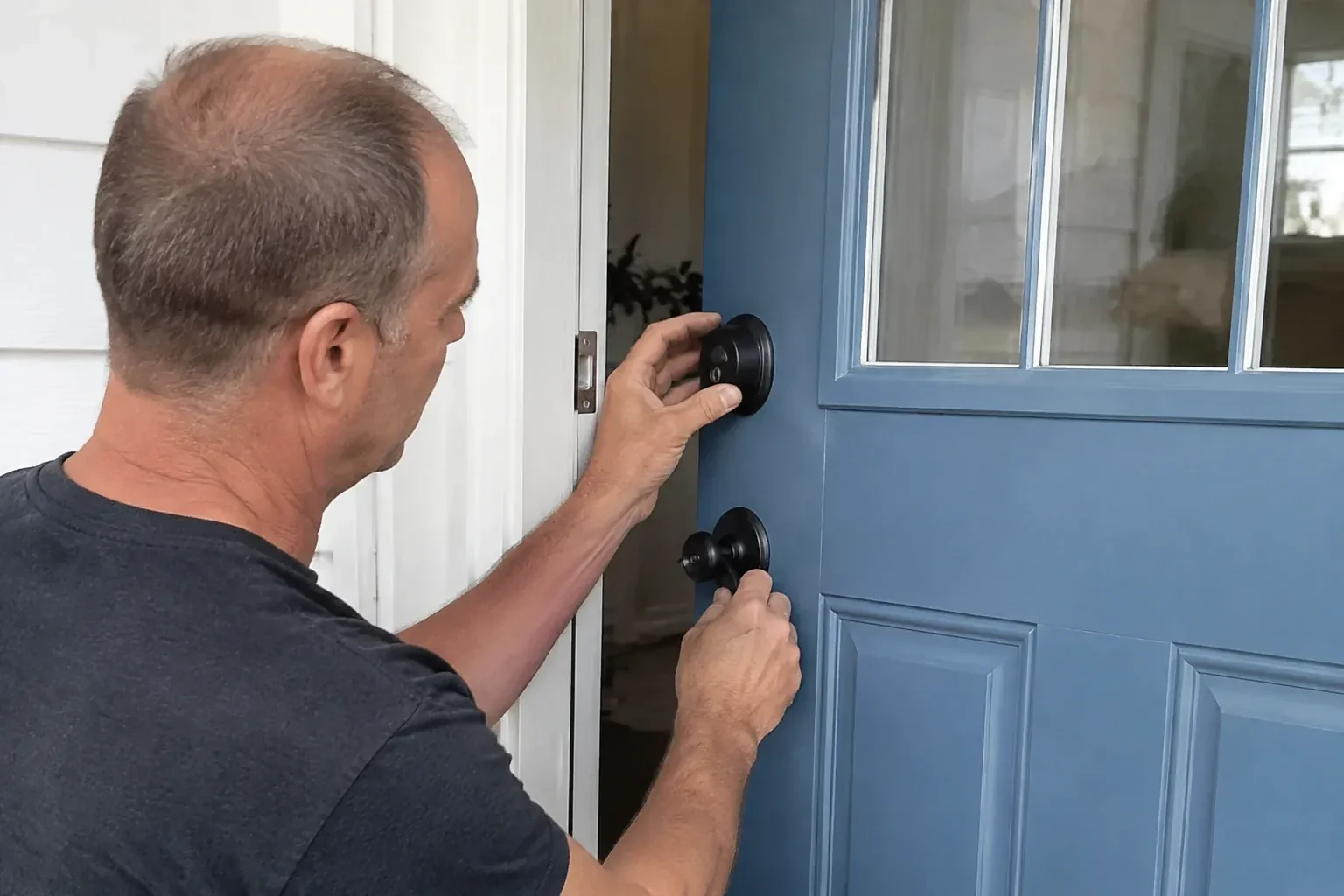
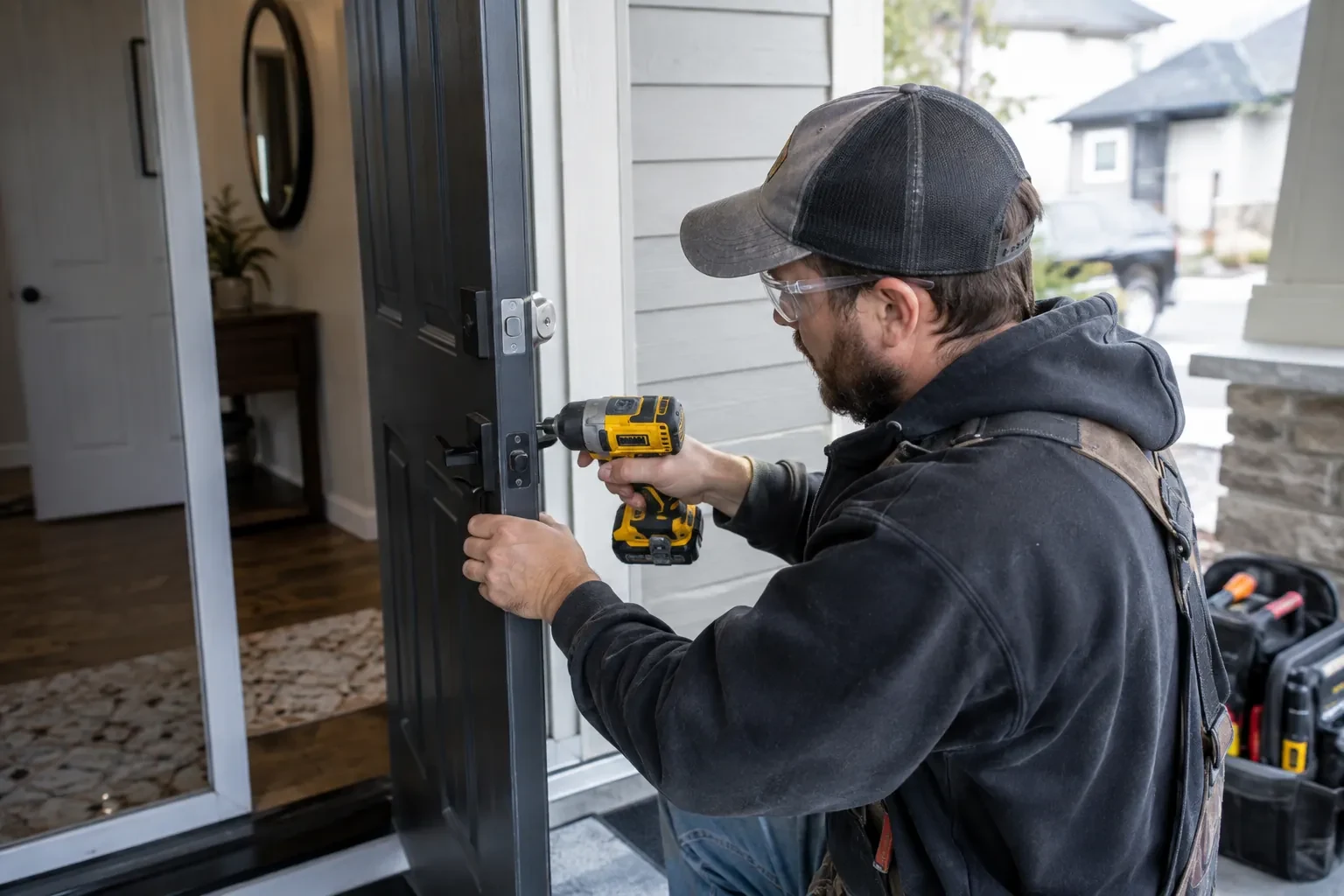
The house is fifteen years old and every exterior door still wears the light hardware the builder fitted: a short bolt, a thin strike held by two small screws, and a knob lock that never suited a street entrance.
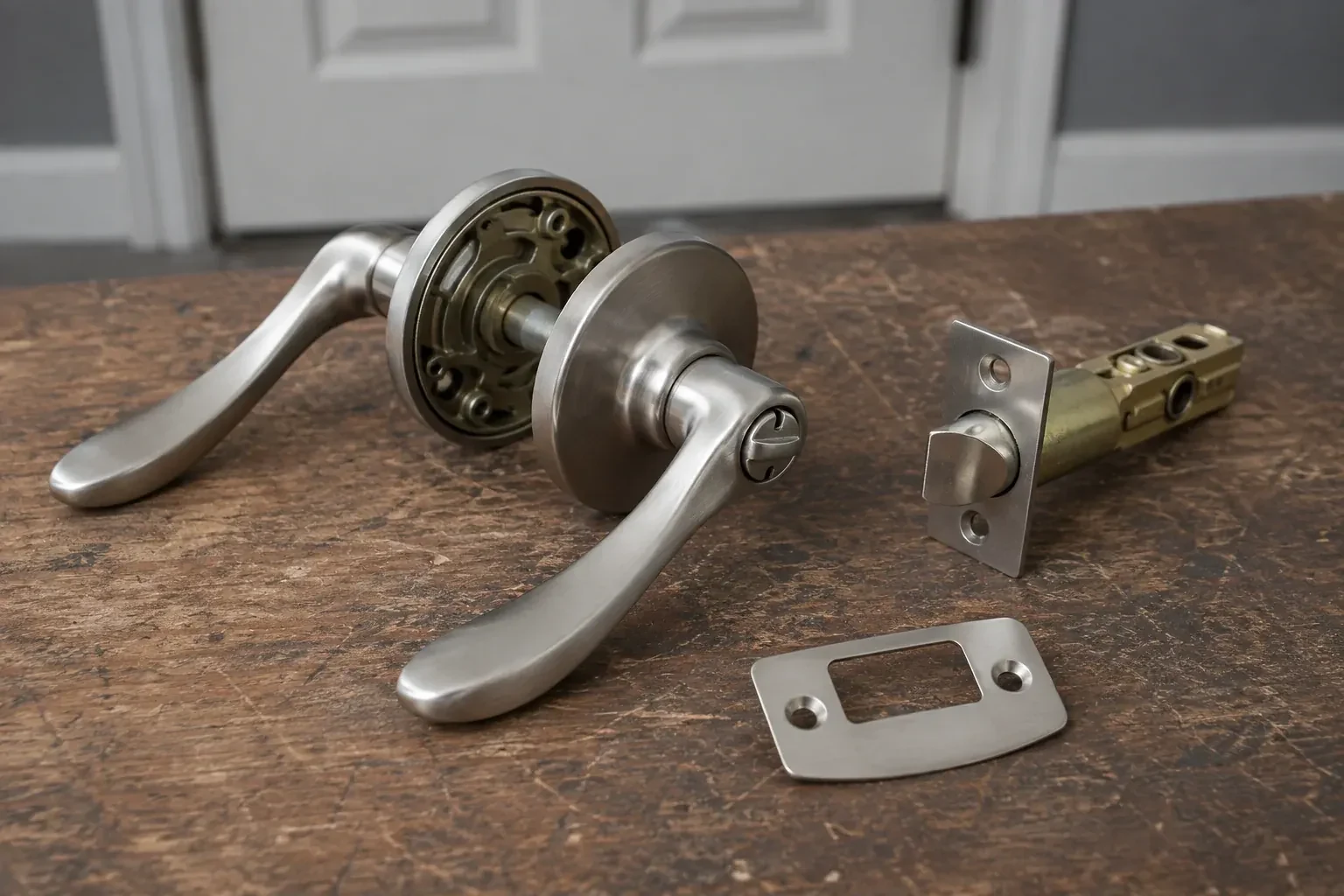
The interior bedroom doors on the second floor have the original mortise latches, and none of them close any more. The doors drift open, the small brass turn buttons do nothing, and the keyholes have been empty for as long as anyone can remember.
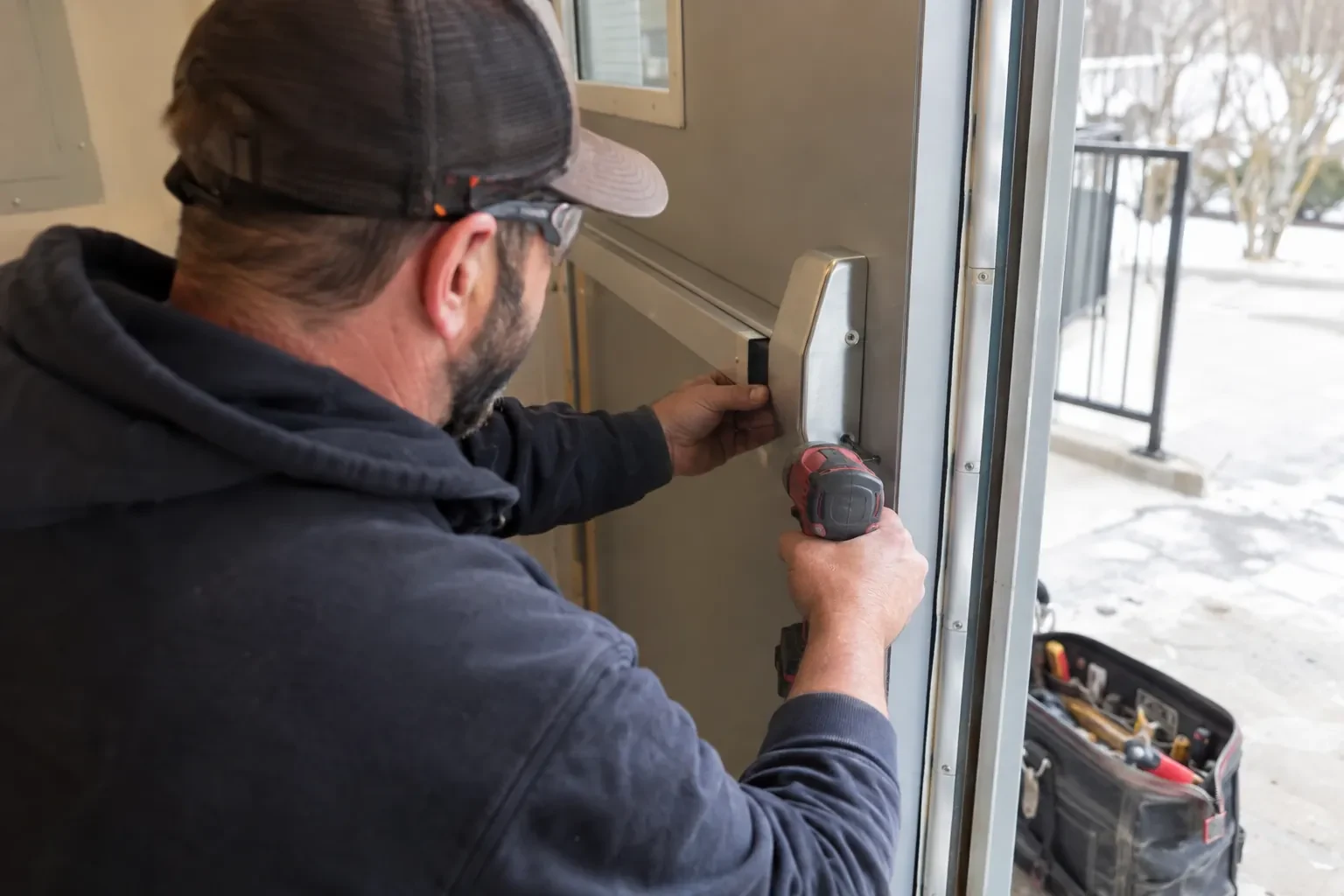
The padlock on the side gate has gone stiff every winter for three years running, and this year the key simply will not turn past the first few pins. Salt spray off the road and a season of meltwater have left the cylinder pitted and reluctant.
The office is moving three blocks over, and the old commercial safe that has sat bolted to the concrete for fifteen years now needs to come out, travel across town, and go back down just as solidly.
You have just signed the lease on a unit the previous tenant ran for a decade. The landlord handed over three keys, the back door wears a padlock nobody can open, and nobody can say how many front-door keys are still out there.
The team has grown past the point where one shared key still makes sense. New hires need a way in before a manager arrives, and the current setup cannot tell one person's entry from another's.
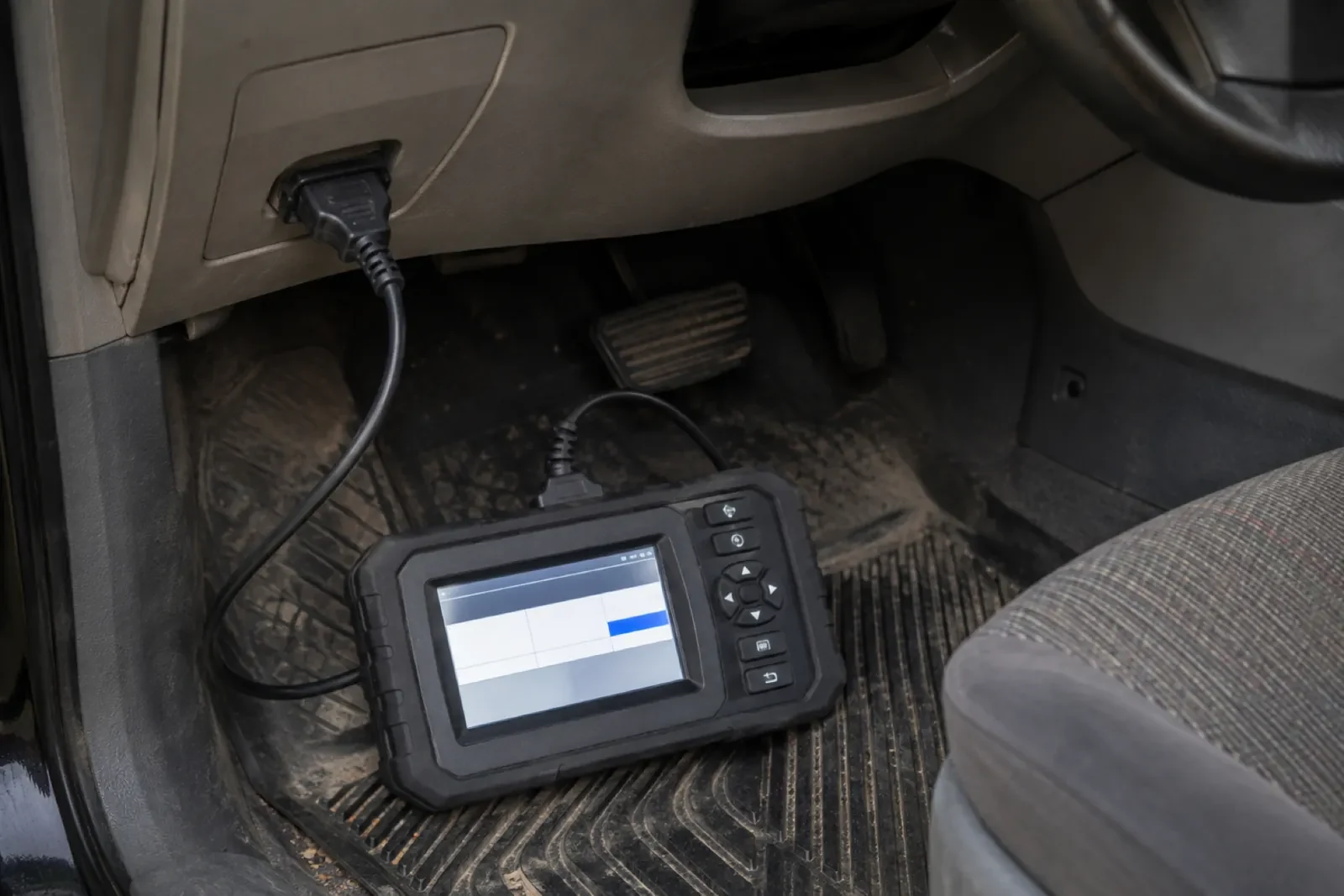
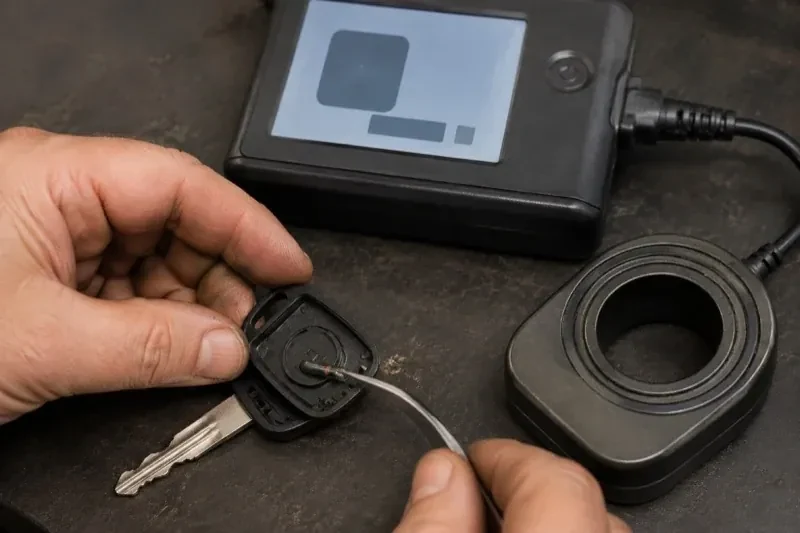
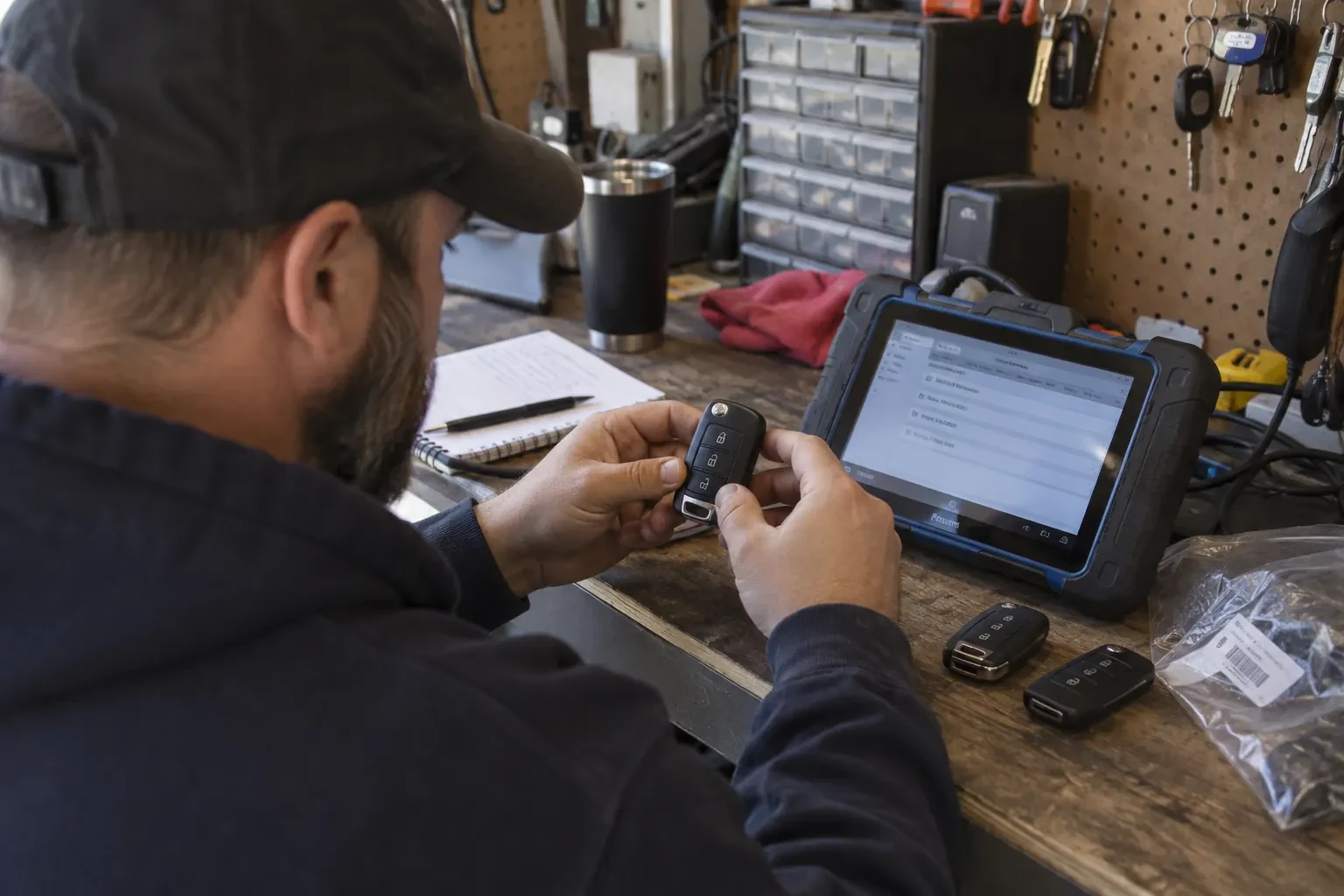
The blade snapped off flush with the door lock last winter, and the shop that cut a replacement only matched the metal shape. The fob still locks and unlocks the doors from across the driveway, but the engine cranks over and over without ever catching.
The new key from the hardware counter fits the door but stops halfway into the ignition slot, no matter how it is angled or how gently it is pushed. A worn original key opened this same slot without trouble for years.
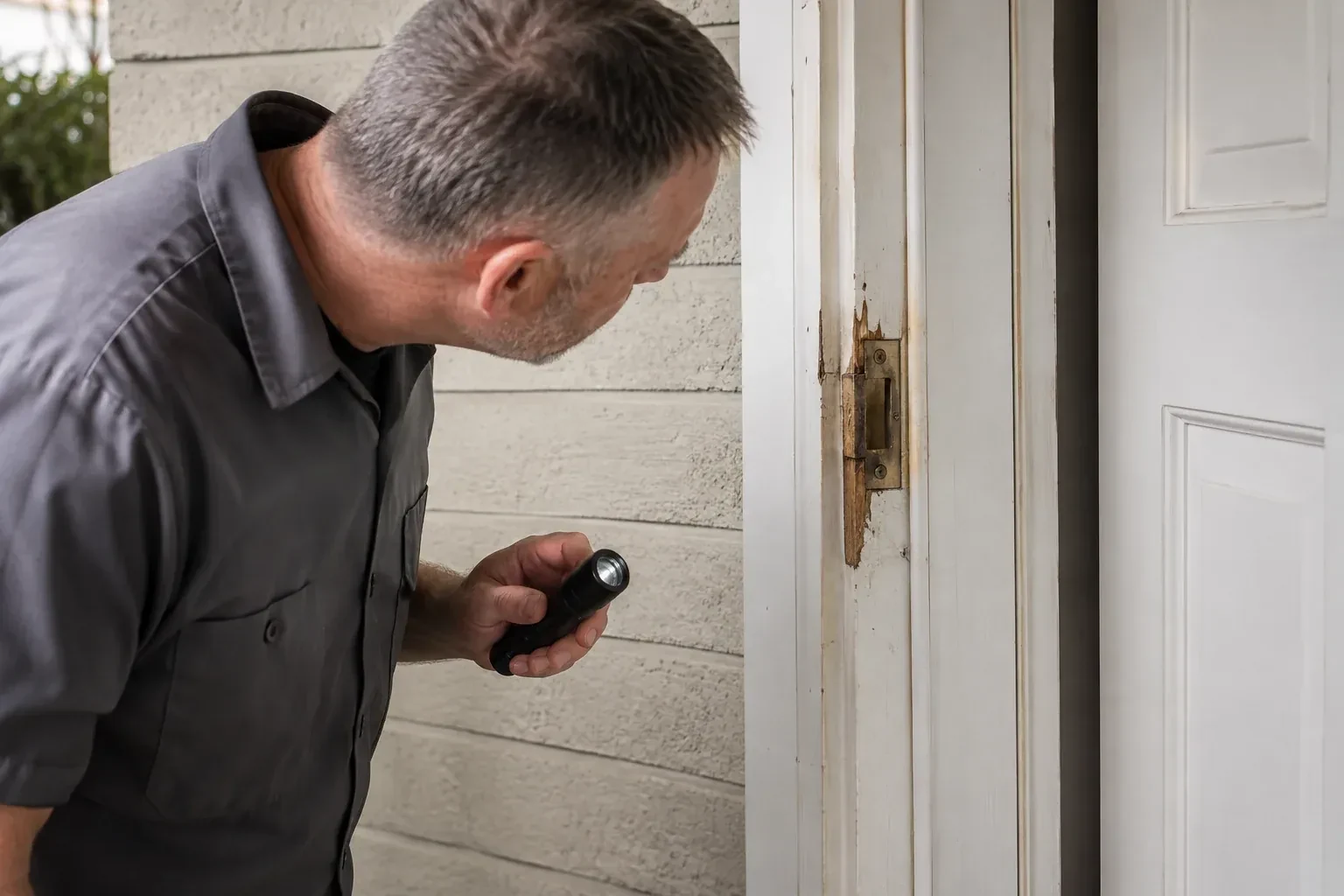
Photographs of each lock from outside and inside, plus one of the door edge showing the latch plate and one of the strike on the frame, tell the locksmith most of what they need. Add the door thickness if you can measure it, whether the door is wood, steel or fibreglass, the finish you want to match, how many doors are involved and whether you want them all on one key.
Can the lock be made more secure while keeping it original?
Yes, within reason. A later mortise case can take a modern high-security cylinder of the right thread and cam, chosen for its pick resistance; stopping casual key copying is a separate question, answered by fitting a restricted or patented key system alongside it. Longer screws into the strike and a properly seated deadbolt add more than most people expect. For a bit-key lock, the practical gains are a full-throw deadbolt and a good strike; if more is wanted, a separate modern deadbolt above it leaves the original lock untouched.
How long does a gate or building entry lock visit usually take?
It depends on what the assessment finds once the locksmith is looking at the actual hardware. A single gate lock that only needs adjusting or rekeying is a shorter visit than one where the closer, hinges and post all need attention, or where several gates on a property are being brought onto one key. Electronic hardware such as a buzzer or electric strike adds its own testing time. The locksmith can give a closer sense of the scope once the gate or door has been examined in person.
Should I change my safe's combination even if it still opens fine?
It depends on who still knows the old one. If a bookkeeper, manager or previous owner who had the combination is no longer with the business, resetting it closes that gap even though nothing about the lock itself has failed. A safe that only the current staff have ever known the code to generally does not need changing on that basis alone.
Can a safe be concealed inside a closet or behind a panel?
Yes, provided the spot chosen still allows full anchoring and enough clearance for the door to swing open completely. A closet floor, the back of a built-in cabinet, or a recessed wall cavity can all work, though each limits the size of unit that will actually fit and reach the anchor points properly. Balancing concealment against how often the safe gets opened is worth discussing before a spot is chosen.
Can all our doors be put on a single key?
Yes, if the cylinders share a keyway or can be fitted with ones that do. Keying everything alike is popular with small shops because staff carry one key and spares are simple. The trade-off is that one key then opens the cash room as readily as the front door. Many businesses choose a middle path: the doors everyone uses on one key, the sensitive rooms on another, and an owner's master that opens both.
What maintenance does the system need going forward?
Ongoing maintenance is light: checking the battery backup and the request-to-exit device periodically, keeping reader surfaces reasonably clean, and revoking credentials promptly once someone leaves. Door and frame alignment is worth a look at each change of season, since a shifted door can affect how cleanly an electric strike or a magnetic lock releases.
If I only want a spare, what happens to my current key?
Nothing changes about it. A spare is added alongside the existing key without clearing or altering anything already stored in the vehicle's memory. The only keys that get cleared are the ones you specifically identify as lost, stolen, or no longer wanted, and that is confirmed with you before any clearing happens.
Do you check the steering lock as part of this service?
Yes. The steering lock is mechanically tied to the ignition barrel on most vehicles, engaging when the key is removed and releasing as the key turns toward accessory. It is cycled several times during testing, alongside every switch position, so a fault that shows up only in how the wheel locks or releases does not go unnoticed after the visit is finished.
Request a visit
We plan visits around how people in Toronto live. A shop wants the work done before opening or after close. A family wants a time when someone is home and the dog is put away. A landlord wants the unit done between tenants. Tell us the window that suits you and we build the day around it, then call when the van is on its way.