Change or rekey · Toronto
Vintage Mortise Lock Service in Toronto
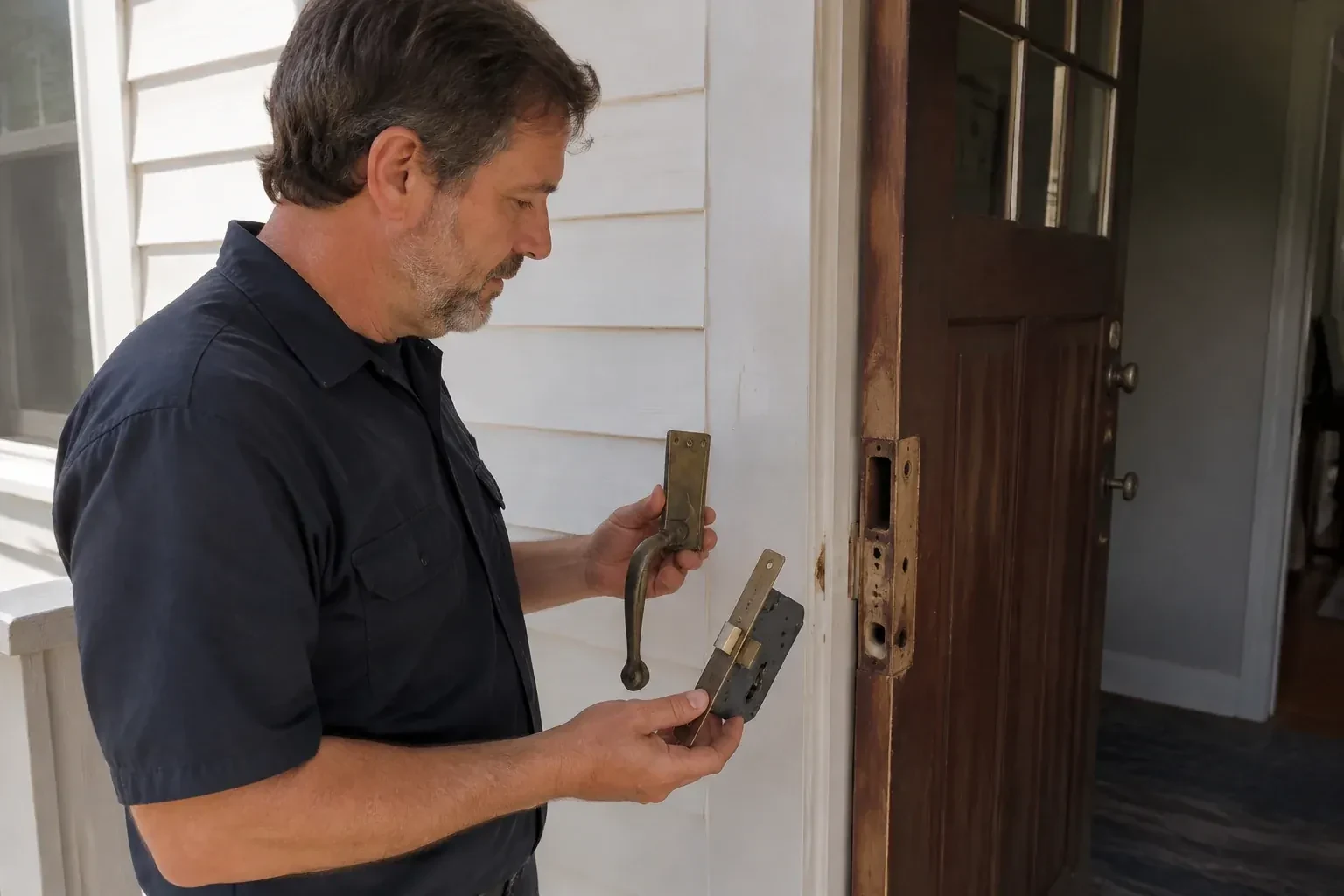
Someone painted the door years ago without removing the hardware.
In plain words
Vintage mortise lock service is the repair of the original lock in an older door rather than its removal. The lock is a rectangular steel case that lives inside a pocket in the door edge, and nearly everything that goes wrong with it, a tired spring, dried grease, a worn hub, a lost key, can be put right on the bench. The locksmith confirms you own or occupy the home, takes the case out through the door edge, rebuilds it, sorts out the keys and puts it back in the same pocket. The door keeps its knobs, escutcheons and history, and it locks as it did when new.
How the visit goesThe interior bedroom doors on the second floor have the original mortise latches, and none of them close any more. The doors drift open, the small brass turn buttons do nothing, and the keyholes have been empty for as long as anyone can remember.
Vintage Mortise Lock Service
How the visit goes
Repair, replacement cylinder or replacement case
The last step of the check is deciding what the lock needs, in plain terms, before any of it is done. Most cases need cleaning, springs and adjustment, and that is the recommendation. A cylinder lock with a worn plug may be better served by a new mortise cylinder of the same thread and cam, keeping the case. A cracked case, a bolt worn thin or a hub broken through calls for a replacement case in the same pocket, and the locksmith measures for it on the spot. You hear which of these applies and why, and if the answer is a replacement case, the choice between a reproduction and a modern case is yours to make.
Taking the lock out without marking the door
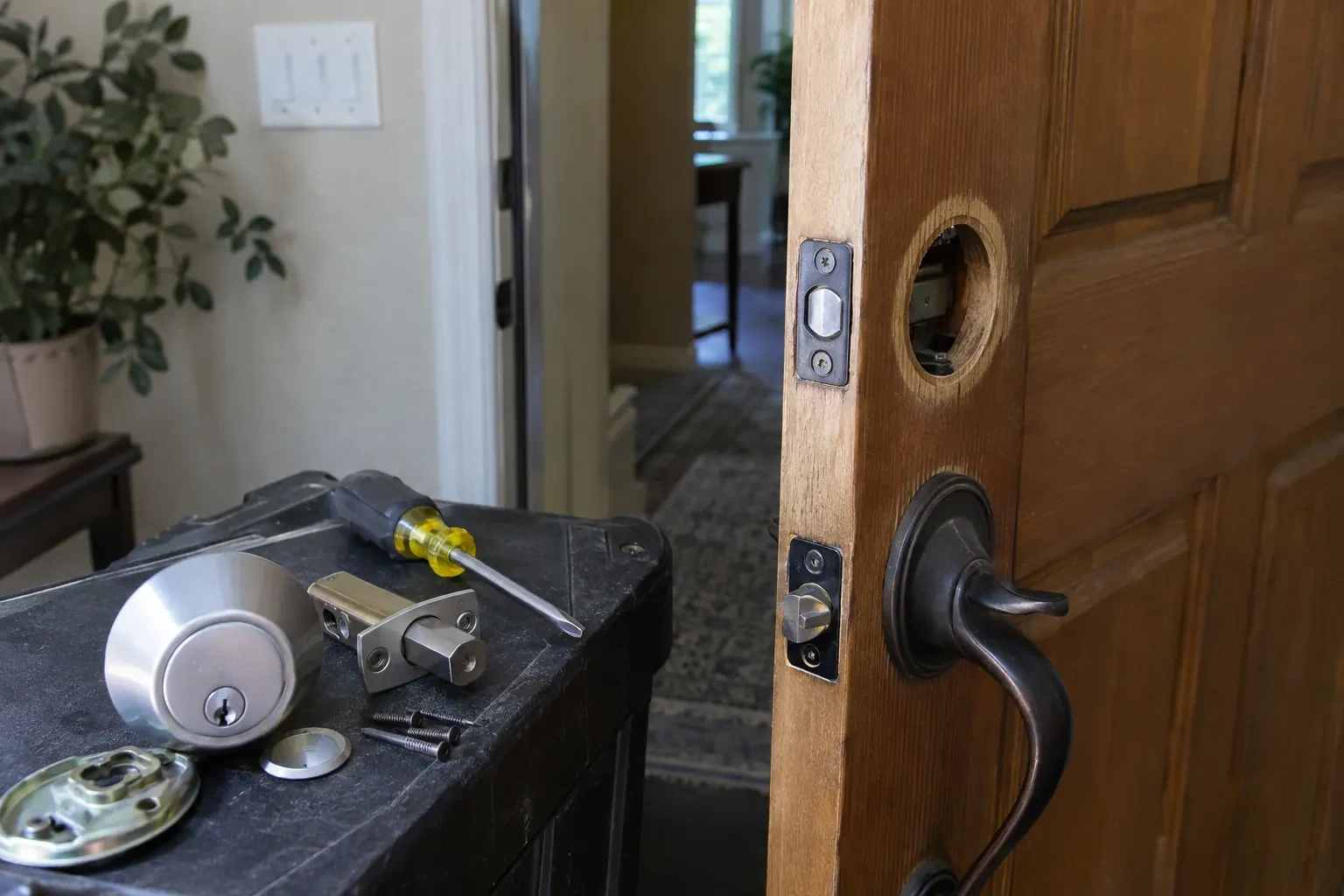
Removal is done in a set order so nothing is forced. The knob set screws are backed off and the knobs and spindle drawn out, then the escutcheons are lifted away, their screw positions photographed for reassembly. On a cylinder lock, the small set screw in the faceplate is released and the cylinder is unthreaded from the case. The faceplate screws come out, and the case is eased from its pocket with a gentle rock, never a pry bar, because the wood at the edge of an old door is thin. Everything that comes off is bagged and labelled, and the pocket is looked at while it is empty.
Looking after the finish
The brass or bronze knobs and escutcheons on an old door have earned their patina, left alone unless you ask otherwise. Paint cleaned from a faceplate or strike leaves the bare metal as found, not polished bright. If you would rather see them shine, check the finish first: unlacquered brass takes a gentle polish well, kept off the keyhole and spindle; polishing a lacquered piece can scratch through it and start tarnish underneath. Lacquered reproduction parts resist tarnishing rather than darken to match; an unlacquered reproduction is built to age and blend in over a season or two. A light wipe when dusting is all the upkeep the trim needs; wet cleaners find their way into the case.
Vintage Mortise Lock Service
In the van
Warding files
Mortise cylinder and cam
Hub followers and lever packs
Hardwood dowel and wood glue
Deadbolt lever springs
Vintage Mortise Lock Service
What affects the quote
Whether the door has to come off its hinges
Some mortise cases can be serviced with the door hanging in place, while a tight jamb or a stubborn case sometimes means lifting the door off its hinges onto a level bench. That step is identified once the case is open and the repair needs are clear.
Bit key or cylinder lock
A bit-key case has keys filed by hand on the bench, while a cylinder lock is rekeyed or fitted with a new cylinder on a key machine. The two take different time and materials, and the quote follows.
Keying doors alike
Bringing several interior locks onto one bit key, or several cylinders onto one flat key, is extra bench work per lock and is simplest to arrange while all the cases are out on the same visit.
What to have ready
- How many keys would you like to have afterwards?
- Does the door take a skeleton-style bit key or a flat key in a round cylinder?
- Is the deadbolt keyed from the inside as well as the outside?
Vintage Mortise Lock Service: questions
QuestionsWhat if the case is too worn to repair?
Then a replacement case goes into the existing pocket. Reproduction mortise cases are made in the common vintage sizes and backsets, and a modern mortise case with a cylinder fits many old pockets with minor trimming. The locksmith measures the case height, depth, backset and trim spacing before ordering, aiming for the new case to drop in with the original knobs and plates going back on, though a small pocket trim or fixing change is sometimes needed. Cutting the door for a different kind of lock is the last choice.
Can the lock be made more secure while keeping it original?
Yes, within reason. A later mortise case can take a modern high-security cylinder of the right thread and cam, chosen for its pick resistance; stopping casual key copying is a separate question, answered by fitting a restricted or patented key system alongside it. Longer screws into the strike and a properly seated deadbolt add more than most people expect. For a bit-key lock, the practical gains are a full-throw deadbolt and a good strike; if more is wanted, a separate modern deadbolt above it leaves the original lock untouched.
Can you match a missing knob, plate or thumb-turn?
Often, yes. Locksmiths who work on older hardware keep salvage and reproduction trim in the common patterns and finishes, and a knob, rosette or escutcheon can usually be found close enough that the pair on one door match. Where nothing suitable exists, the trim from a less visible door can be moved to the entry and the reproduction fitted where it is seen less. Bring or photograph the surviving piece so it can be matched.
Related services
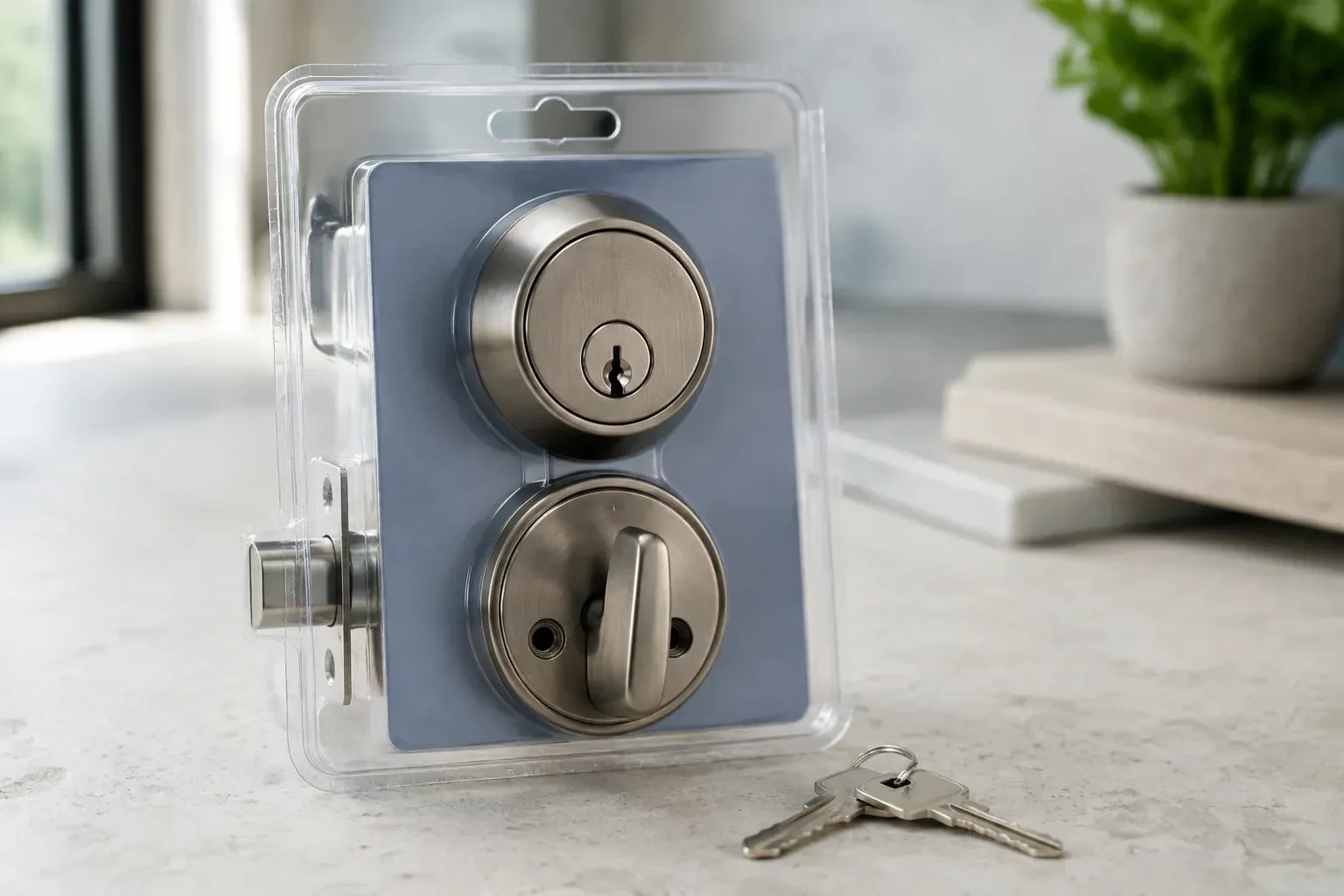
- Deadbolt InstallationThe front door has a handsome lever and a keyed knob, and that is all.
- Lock Replacement & UpgradeThe century home's original mortise lock takes a key the size of a spoon, sticks in humid weather and has worn its strike to a groove.
- Smart Lock InstallationYour mother still lives on her own, and the personal support worker, the pharmacy delivery and two siblings all need to get in on different days.