Change or rekey · Toronto
Gate & Building Entry Locks
A visitor buzzes from the panel downstairs, someone presses the button by the door, and nothing happens.
In plain words
Hardware bolted to a gate or an exterior building door lives outside every day of the year, which is a different job from a lock tucked behind a storm door. This service treats that exposure as the starting point: cylinders rated for weather, fasteners that resist road salt, and a closer set up to keep working through a freeze-thaw cycle rather than seizing at the first cold snap. The result is a gate or entry that keeps operating through the season it is most likely to struggle in.
How the visit goesA neighbour mentions, in passing, that the key from three tenants ago still lets him into the building's front door. Nobody changed it after he moved out, and now the property manager wants to know exactly how many keys are still floating around out there.
Gate & Building Entry Locks
How the visit goes
Looking for prior damage or an attempted entry
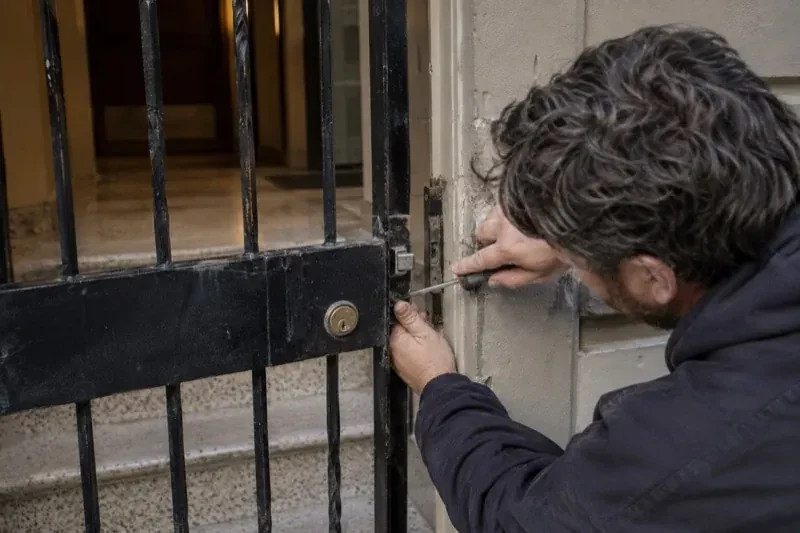
Before any work begins, the locksmith looks for signs that something has already been tried on the gate or door: pry marks near the strike, a scratched or spun cylinder, a bent hasp, or a padlock shackle that has been cut and replaced. Noting this clearly, before touching anything, means the property owner knows exactly what was there beforehand and what the visit actually changed. It also flags whether the surrounding frame or post absorbed damage that needs attention alongside the lock itself.
Coordinating keys across a shared entry
On a property with several gates or a shared building entry, the cylinders that should open on one key are brought onto a common pinning during the same visit, rather than one at a time as complaints come in. Current residents or unit holders each receive a key that matches every door they are meant to use, and a short list is kept of which key opens what. Any gate meant to stay on its own separate key, such as a utility gate the property manager alone uses, is deliberately left off the shared system.
Nothing left half-finished after a break-in attempt
Where the visit followed prying, cutting or an attempted entry, you leave with every damaged piece accounted for: what was replaced, what was straightened, and what was simply cleaned up and reused because it tested sound. The gate or door is shown closing, latching and locking normally, and any weak point the attempt revealed, such as an undersized hasp or a strike with too little bite, has been addressed rather than left as it was found.
Gate & Building Entry Locks
In the van
Gate locks and latches
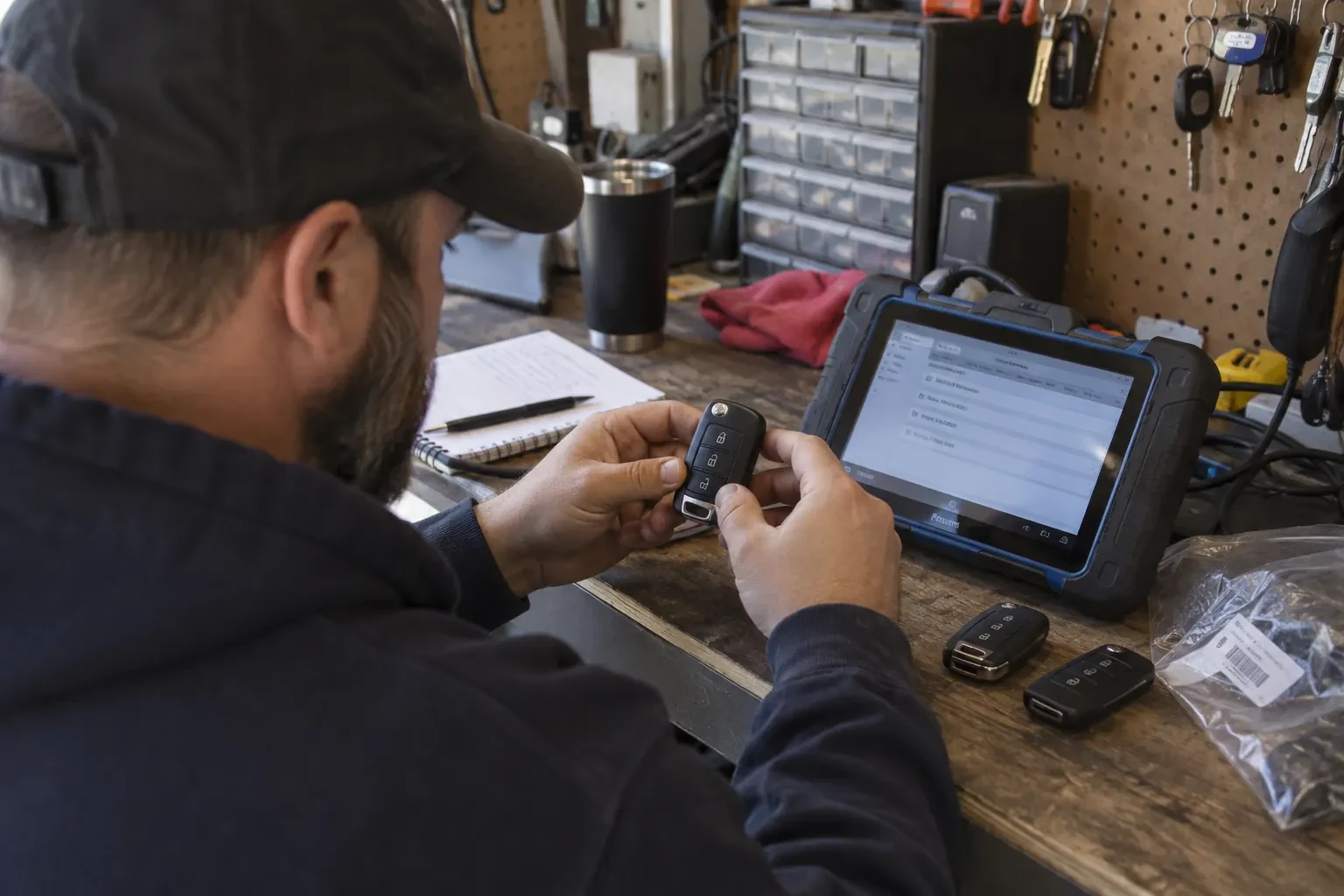
Key blanks and code cutter
Voltage tester for electric strikes
Keyed-alike cylinders
Dry graphite or PTFE lubricant
Gate & Building Entry Locks
What affects the quote
Materials the gate or frame is built from
Wood, wrought iron, aluminum and vinyl gates each take fasteners and mounting approaches suited to that material, and matching the lock and closer correctly to the gate's construction is part of what the quote covers.
Any damage from a prior forced entry
Where pry marks, a bent strike or a cut hasp are found, repairing or replacing that damaged hardware is additional to a routine lock adjustment, and the locksmith points out what was already there before quoting it.
Type and grade of the gate or door lock
A basic surface-mounted gate latch, a weather-rated cylinder, a mortise case and a panic device on a building entry each take different parts and different amounts of time to service, and that difference is reflected in the quote.
What to have ready
- Has anyone moved out or left the building recently?
- Does the entry have a buzzer, keypad or electric strike?
- Do you manage this property, or should someone else be involved in the decision?
Gate & Building Entry Locks: questions
QuestionsCan a gate that slams shut be fixed without replacing the whole closer?
Often, yes. A closer that slams is frequently just out of adjustment rather than worn out, and bringing its closing speed and final latching action back into a sensible range solves the problem on its own. Replacement becomes the answer when the arm, seals or internal fluid have genuinely failed, which the locksmith checks for directly rather than assuming from the symptom alone. Either way, the gate is tested through several full cycles before the visit is called finished.
How long does a gate or building entry lock visit usually take?
It depends on what the assessment finds once the locksmith is looking at the actual hardware. A single gate lock that only needs adjusting or rekeying is a shorter visit than one where the closer, hinges and post all need attention, or where several gates on a property are being brought onto one key. Electronic hardware such as a buzzer or electric strike adds its own testing time. The locksmith can give a closer sense of the scope once the gate or door has been examined in person.
My key snapped off in the gate lock. What now?
The broken piece is removed with extraction tools shaped to grip and draw it out, rather than forcing it further in, and the door or gate is then opened using the remaining portion or by working the cylinder directly. Afterward the locksmith checks why the key broke, since a healthy cylinder rarely snaps a key on its own; a stiff or corroded plug is a common cause outdoors. A fresh key is cut from the code or a clean original rather than a worn copy.
Related services
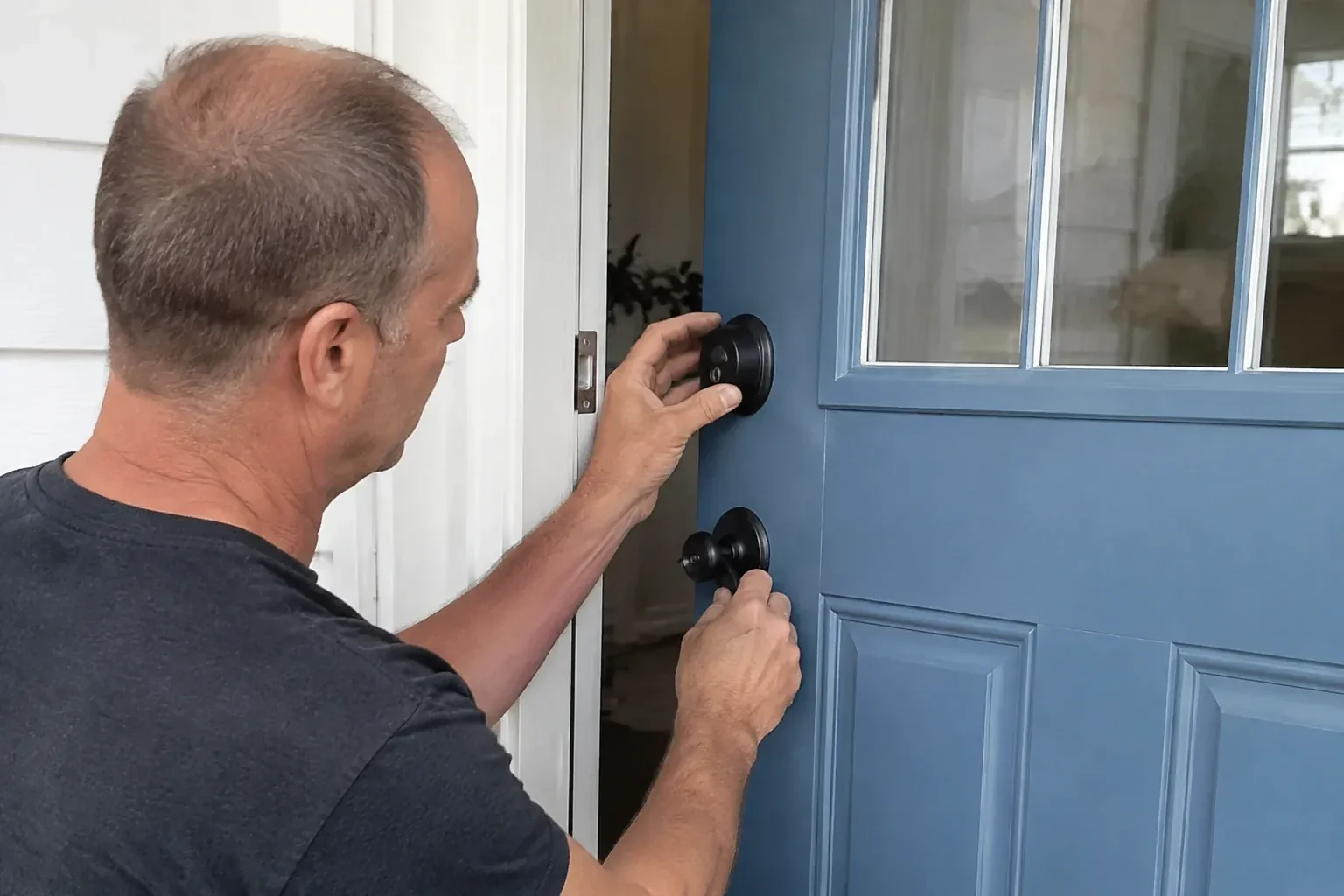
- Deadbolt InstallationThe front door has a handsome lever and a keyed knob, and that is all.
- Lock Replacement & UpgradeThe century home's original mortise lock takes a key the size of a spoon, sticks in humid weather and has worn its strike to a groove.
- Vintage Mortise Lock ServiceSomeone painted the door years ago without removing the hardware.