Car keys · Toronto
Ignition Lock Repair
The key slides in fine and turns without any resistance at all, and the dash lights flicker, but nothing catches.
In plain words
A key that has snapped off inside the ignition barrel is not the end of the key, or of the barrel. The broken piece is drawn out with hooked or spiral tools built for the job, without pushing it further in, and the cylinder is checked afterward for the wear that likely caused the break in the first place. A fresh key is then cut and tested before the visit ends.
How the visit goesAfter a slushy week the key barely reaches accessory before it stalls, gritty and reluctant, where it used to move cleanly through every position. Warming the car up in the driveway hasn't changed how the barrel feels at all.
Ignition Lock Repair
How the visit goes
Separating a worn key from a worn cylinder
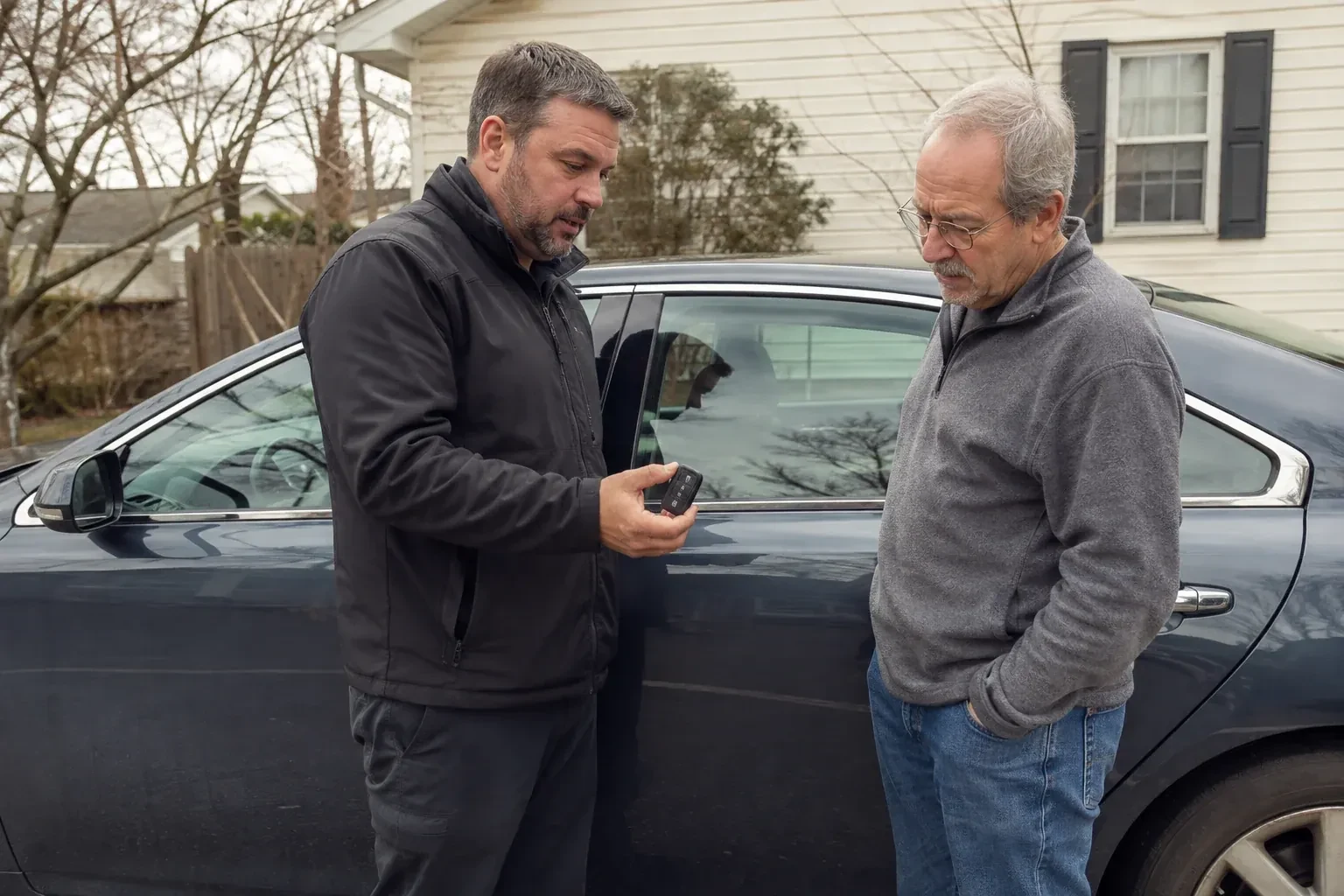
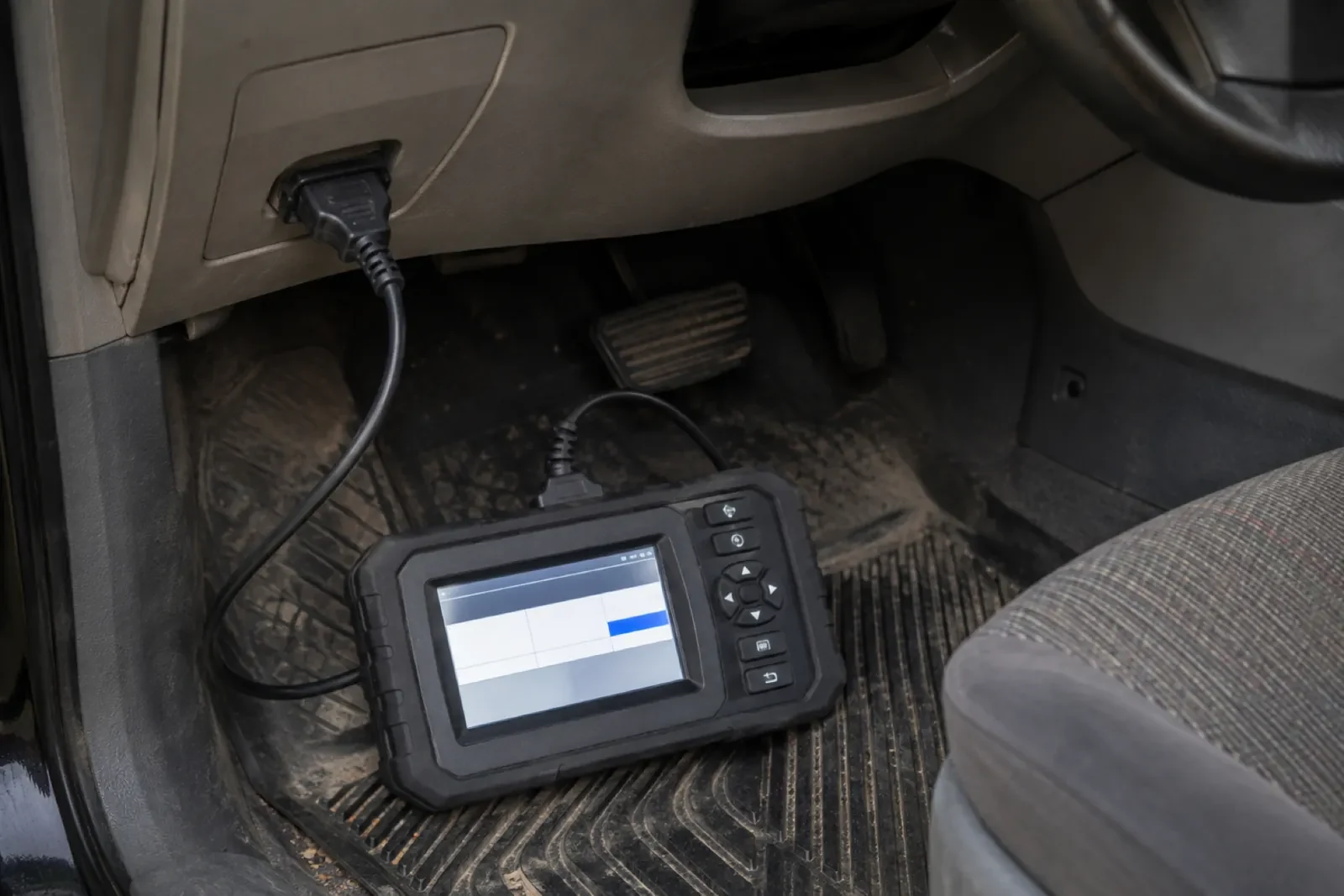
A spare key, even an old one, answers a question a single key cannot. If the spare turns the ignition smoothly while the regular key struggles, the key itself is the likely problem, rounded edges no longer lifting the internal wafers the way a crisp cut does. If both keys behave the same way in the barrel, the wear sits inside the cylinder instead. Where no spare exists, the locksmith reads the wafers directly with a decoder, which settles the question without waiting on a second key to test it.
Cutting and matching new keys
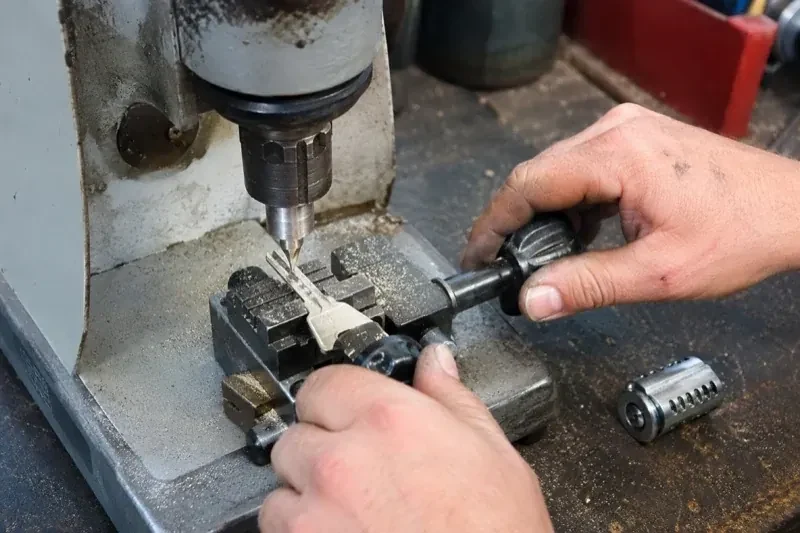
New keys are cut from the fresh pinning rather than copied from a worn original, so they engage the wafers cleanly from the first use. Where the vehicle's doors and trunk already share the ignition's key, those cylinders are brought into the same pattern so a single key continues to operate every lock on the vehicle. Each new key is tested in the ignition and in every other lock before the visit ends.
Knowing exactly what was done
You are told plainly whether the cylinder was serviced, repinned or replaced, whether anything else near the column was removed and refitted, and whether a broken key fragment came out along the way. Any part that was swapped is handed to you or set aside as you prefer, so nothing about the visit stays a mystery once the locksmith has packed up and left the driveway.
Ignition Lock Repair
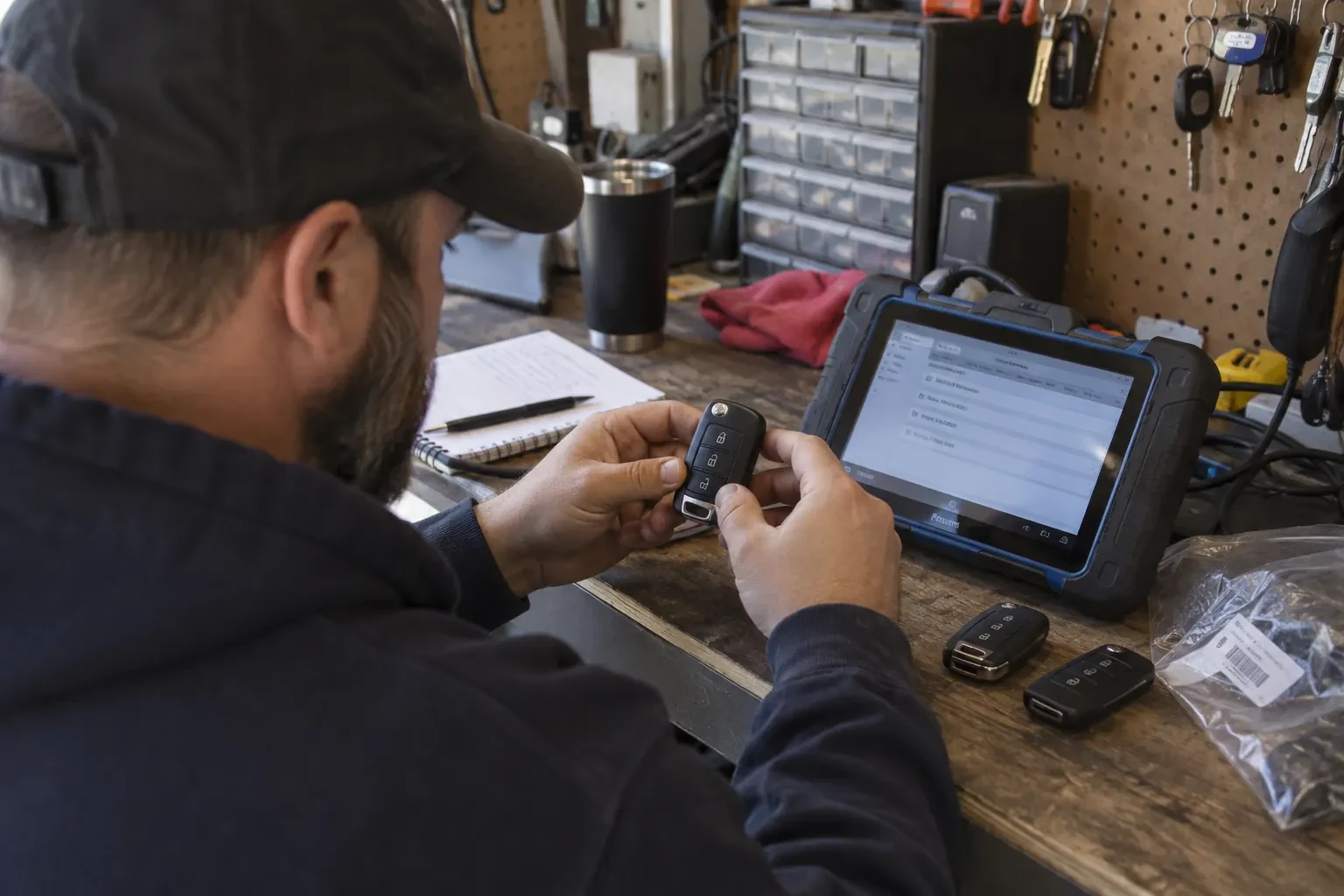
In the van
Plug follower
Pick and tension tools
Steering column trim tools
Cylinder decoder
Keyed-alike pinning kit
Ignition Lock Repair
What affects the quote
Aftermarket wiring near the ignition
A remote starter, an alarm, or other aftermarket wiring tied into the column changes what the locksmith has to work around and identify correctly before the mechanical repair can proceed safely.
Evidence of an earlier forced attempt
A lock that shows signs of having already been forced needs a full cylinder and housing replacement rather than a simple service, since the internal parts can no longer be trusted as they stand.
Availability of the replacement part
A common cylinder for a widely driven vehicle is usually straightforward to source, while an older or less common vehicle may need a part ordered in before the repair can be finished properly.
What to have ready
- What is the vehicle's year, make and model?
- Has this ignition been serviced or replaced before?
- Does the key insert, turn partway, or not turn at all?
Ignition Lock Repair: questions
QuestionsHow do I keep my ignition and keys in good shape going forward?
A little attention goes a long way: whatever lubricant the vehicle's own service information calls for worked into the keyway, keys wiped free of grit before use, and a worn or bent key retired in favour of a fresh cut from a crisp original. Catching a barrel that has started needing a wiggle early keeps it an easy fix rather than a stuck ignition later on.
Do you check the steering lock as part of this service?
Yes. The steering lock is mechanically tied to the ignition barrel on most vehicles, engaging when the key is removed and releasing as the key turns toward accessory. It is cycled several times during testing, alongside every switch position, so a fault that shows up only in how the wheel locks or releases does not go unnoticed after the visit is finished.
Will you damage my steering wheel or airbag while working on this?
Reaching an ignition cylinder sometimes means removing column trim and shrouding, and that is done with the fasteners and clips the vehicle was built with rather than force. Anything near the column connected to the airbag system is left exactly as found. The panels and trim are refitted afterward so nothing rattles, sits loose, or looks any different than it did before the visit began.