Car keys · Toronto
Vehicle Lock Repair
The button on your key fob does nothing now: no beep, no flash of the lights, no click from the doors.
In plain words
A vehicle's central locking is built to move some or all of its doors, and sometimes the trunk or fuel flap, together on one command, with the exact coverage set by the vehicle itself; a single weak link shows up as one point that lags behind or ignores the command it should answer. Vehicle Lock Repair traces that one point back through its wiring and actuator, separate from the doors that are already working, and repairs or replaces only the failed link so the set answers the remote the way it is designed to again.
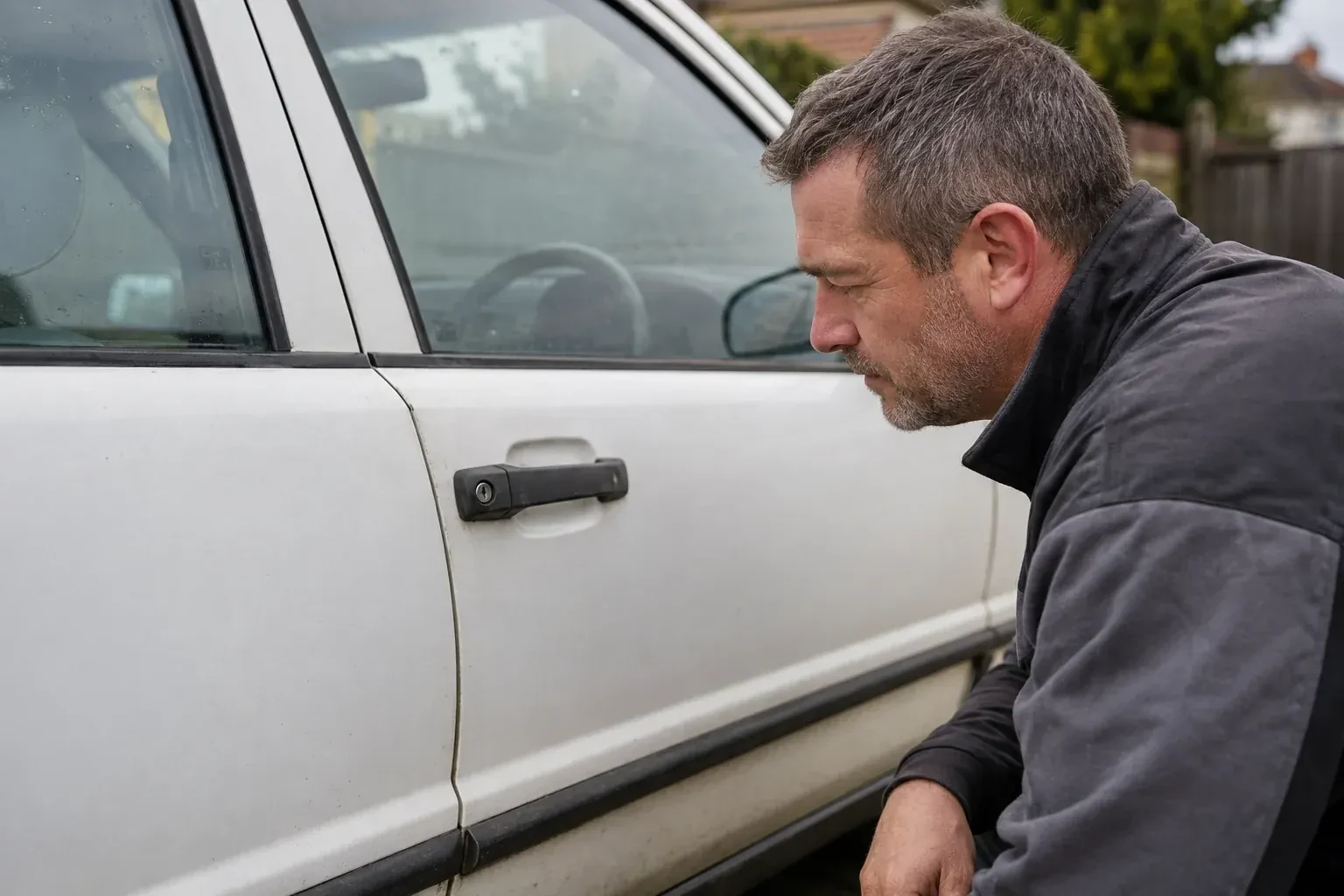
How the visit goesSince the last heavy rain, the front passenger door has needed two or three tries before the key catches, and moisture seems to sit along the seal right where the lock is mounted. Every other door still opens on the first attempt.
Vehicle Lock Repair
How the visit goes
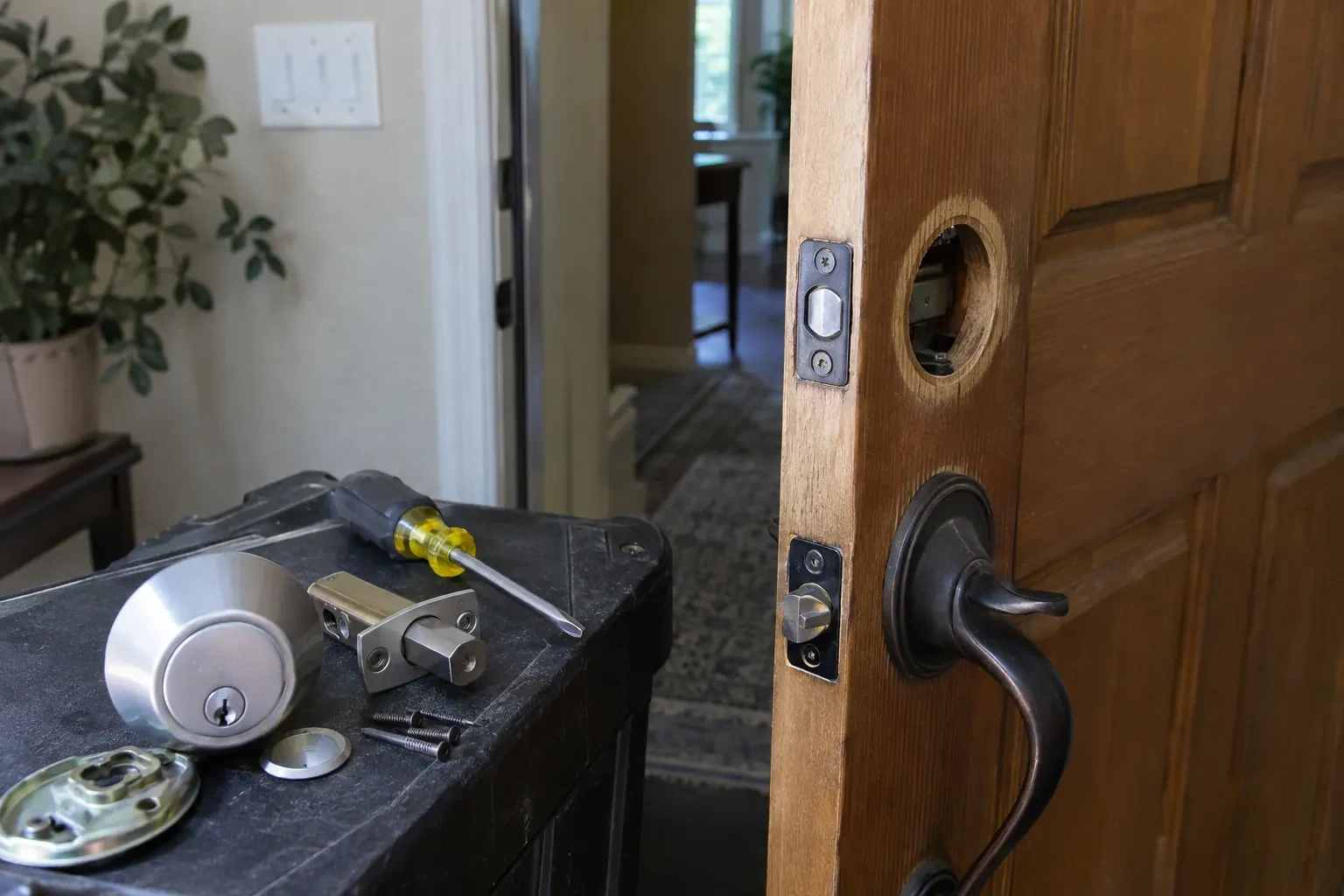
Comparing the affected point to the rest of the vehicle
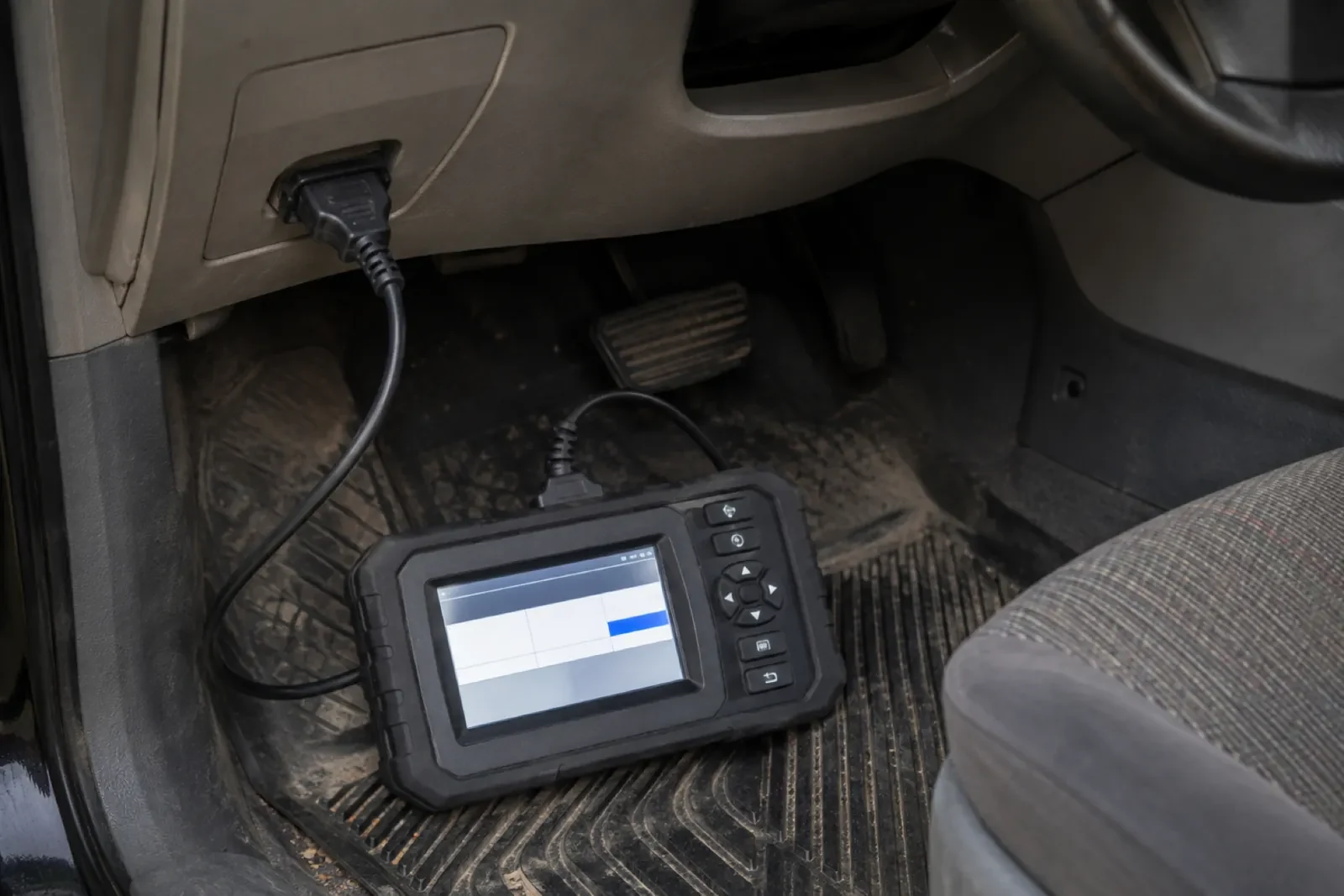
A working door, right next to the one giving trouble, is one of the most useful things on the whole vehicle during this check. The locksmith tests the good lock first to see how the cylinder, the latch and the remote are supposed to feel and sound, then repeats the same actions on the affected one. Differences that show up in that comparison, a looser turn, a missing click, a delay before the actuator responds, narrow where to look, and checks of lock position, fit, cables, connectors, wiring and actuator operation follow before the failing part is named.
Working from the least invasive point first
Once the failed part is identified, the repair starts with the simplest fix that solves it. A disconnected linkage rod is reclipped rather than replaced, a dirty cylinder is cleaned and lubricated before it is condemned, and a stiff key is tried against a freshly cut replacement before the lock itself is disturbed. Working this way keeps as much of the vehicle's original hardware in place as the fault allows.
Keeping a spare key or fob somewhere useful
A repaired lock is a good moment to think about backup. A spare key kept somewhere other than inside the vehicle, or a second fob programmed for another driver in the household, means a future battery failure or a lost primary key is an inconvenience rather than a repeat of today's visit. The locksmith can cut or pair that spare while the vehicle's details are already on hand.
Vehicle Lock Repair
In the van
Automotive pick and tension tools
Weatherstripping and seal sections
Wiring harness door boot
Dry lock lubricant
Trim panel removal tools
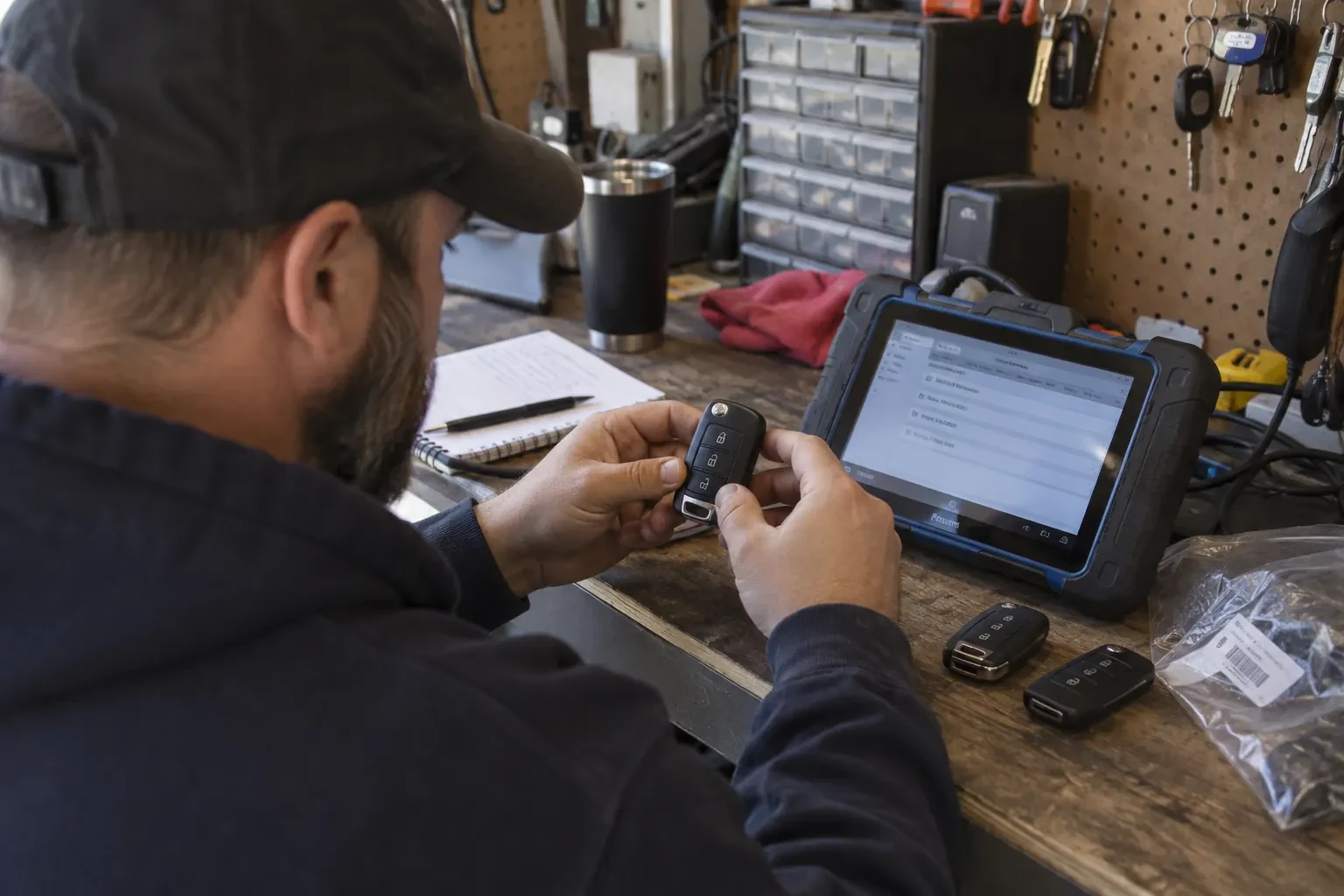
Vehicle Lock Repair
What affects the quote
Central locking versus a single door
A fault confined to one lock is more contained than one that involves the vehicle's central locking module or wiring shared across several doors, which takes longer to trace and quotes accordingly.
Any upgrade chosen during the visit
Some owners use the visit to add a spare fob, bring a household's vehicles onto matching keys, or fit a replacement key with features the original lacked. None of this is required to complete the repair; each option is priced on its own.
Which lock is affected
A front door, a rear door, the trunk or hatch, and a storage compartment each sit differently in the vehicle and take different amounts of time to reach and repair, which shows up in the quote.
What to have ready
- Is there a spare key or fob you could compare against the affected one?
- Has anyone already tried to force the key or pry at the door?
- Does the key turn without effect, resist turning, or not go in at all?
Vehicle Lock Repair: questions
QuestionsCan a locksmith work on a leased or company vehicle?
Yes, provided the person requesting the work can show a connection to the vehicle, such as a lease agreement, a fleet authorization letter, or documentation from the company that holds the registration, matched against the vehicle's identification number.
How does a locksmith reach the actuator or linkage inside my door?
The interior trim panel is removed using tools shaped to release its retaining clips without marking the panel. On many doors that exposes the cylinder, the linkage rod and the power actuator for individual testing and repair, though some doors keep a carrier plate, water shield or window guide in the way, or use an integrated latch and actuator assembly, and are worked on accordingly.
What causes a car door lock to seize up in winter?
Meltwater from a thaw can run into the keyway during the day and refreeze overnight, and road salt and brine thickens grease inside an older cylinder. Both make the key resist turning or stop partway, and both respond well to gentle warming or a lock de-icer rather than force.