Lockouts · Toronto
Home Lockout Service
Someone pushed the privacy button on the bathroom door and pulled it shut behind them, leaving the room locked and empty.
In plain words
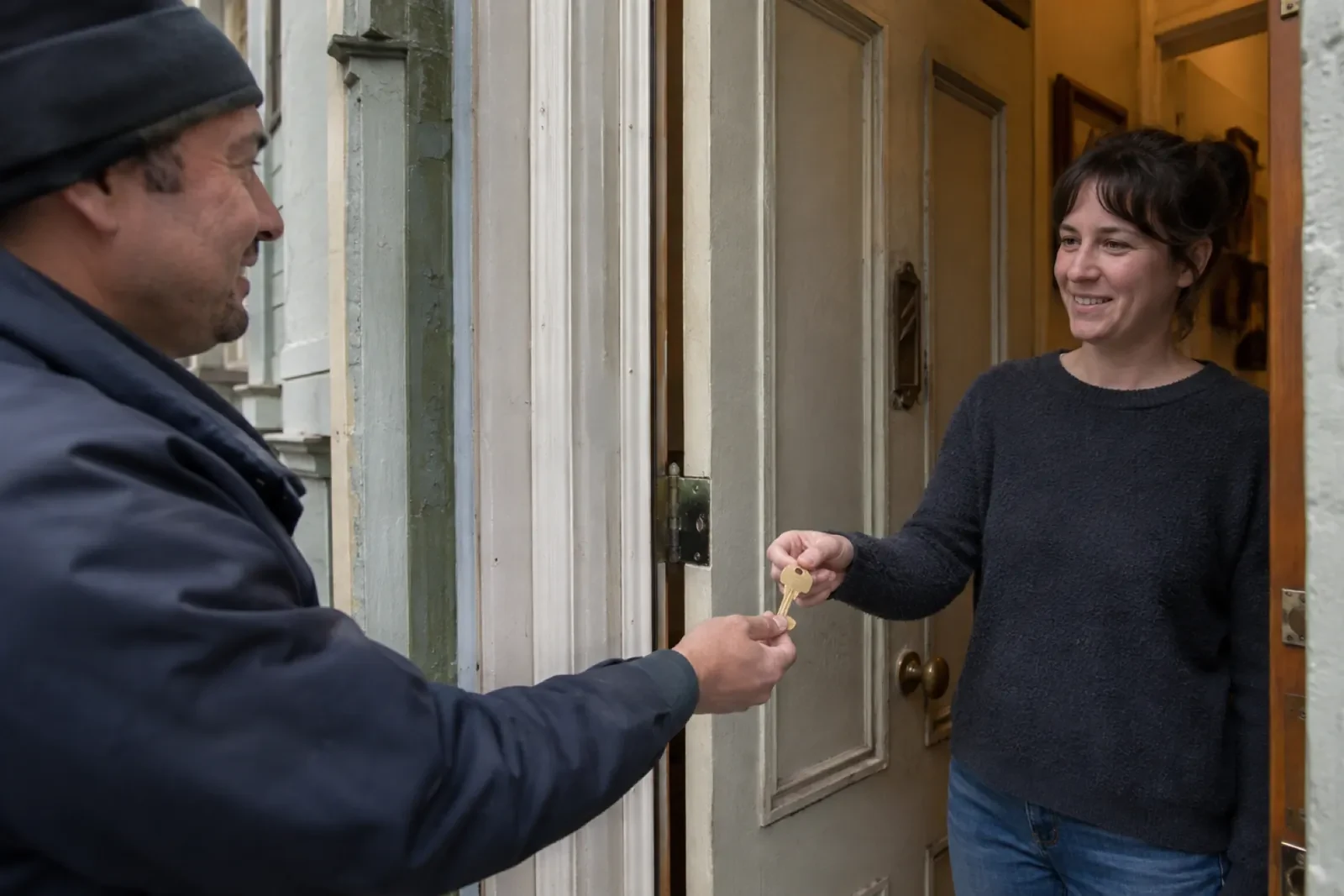
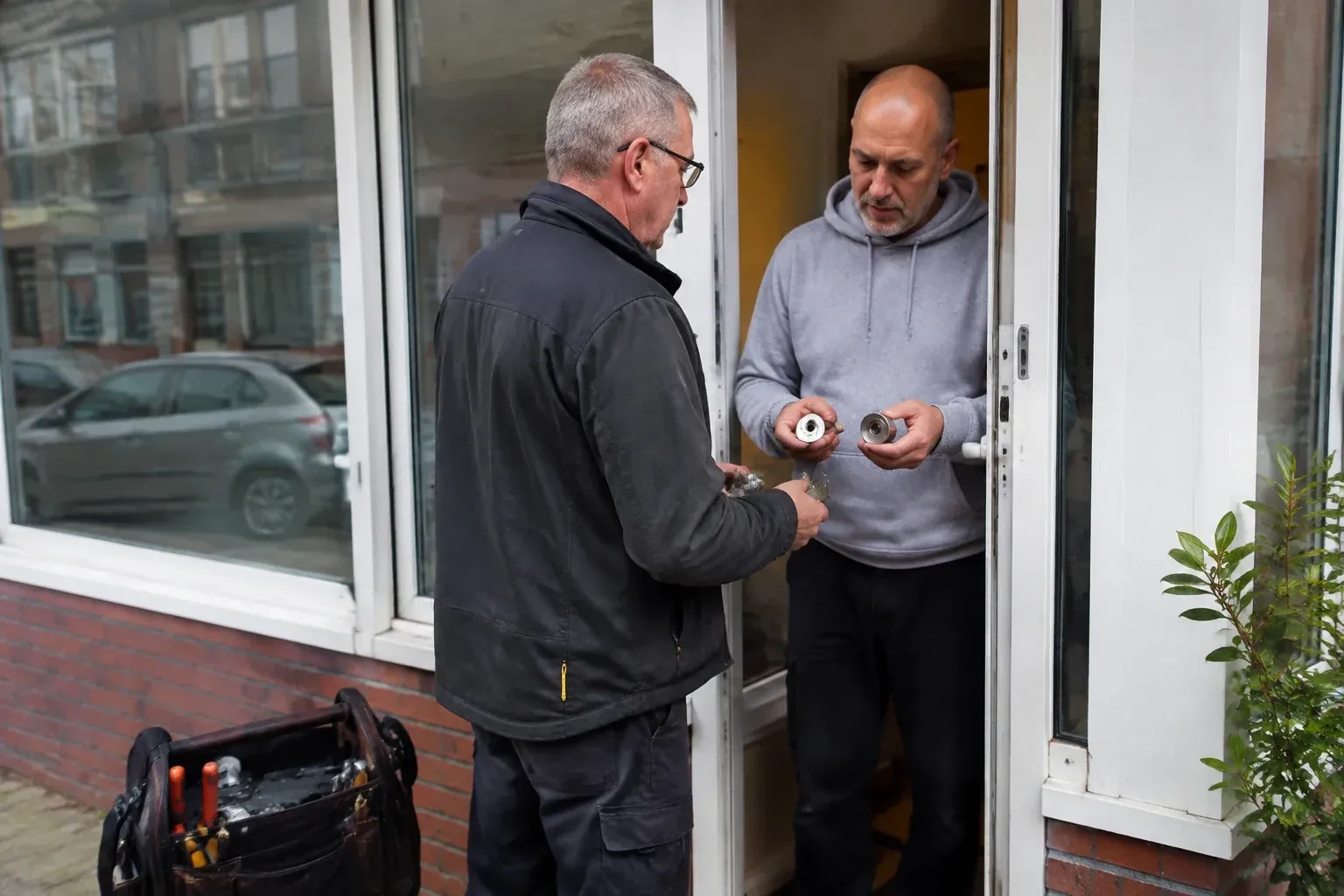
The visit follows a steady order. On the phone you describe the door, the lock and where the key went, which tells the locksmith what to bring. At the house, identification and address are checked and the lock is examined, including the door's fit in its frame. The opening itself comes next, using the least invasive technique that suits the hardware. Once inside, the lock is cycled several times to confirm it works, and you are told what was done. Any recommendation, such as rekeying because a key is missing, is explained then and carried out only if you want it.
How the visit goesThe moving truck has left, half the boxes are inside, and the single key the previous owner handed over turns the knob but not the deadbolt. Someone locked it on the way out, and nobody has a key that fits it.
Home Lockout Service
How the visit goes
Other ways in, and other locks on the same key
Before working on the front door, the locksmith asks about the rest of the house. A back door, a side entrance from the garage or a walkout basement may be on the same key or on a different one, and occasionally a family member with a spare is closer than anyone realized. Knowing whether the front and back locks are keyed alike also matters later: if one cylinder is rekeyed after a lost key, the others should follow so the household stays on a single key. A short tour of the openings takes a minute and often changes which door gets worked on and how.
Freeing a frozen cylinder
Ice is handled with patience rather than force. The locksmith applies a lock de-icer or warms the cylinder face gently so the meltwater inside turns back to liquid and drains, then works the key or a pick in small movements until the plug turns freely. Hot water is never poured on the lock, because it refreezes in the keyway and can crack a cold cylinder. Once open, the cylinder is dried and given the lubricant that model's maker approves, a dry graphite, PTFE or specified liquid product, applied sparingly since too much can gum the mechanism. If the door itself had frozen to its weatherstripping, that seal is cleared and checked too.
Looking after the cylinder afterwards
A lock that has just been opened deserves a little care so it keeps turning sweetly. Twice a year, follow your lock's own maintenance guidance: many residential cylinders take a puff of dry graphite or PTFE lubricant into the keyway, some a specified liquid product instead; general-purpose oil sprays attract dust and gum the pins. Wipe grit off your keys before using them, and retire a key that has worn thin or bent, cutting a new one from the code or from a crisp original rather than from a tired copy. If the key starts to need a wiggle to turn, that is the cylinder asking for attention early, while it is still an easy fix rather than a lockout.
Home Lockout Service
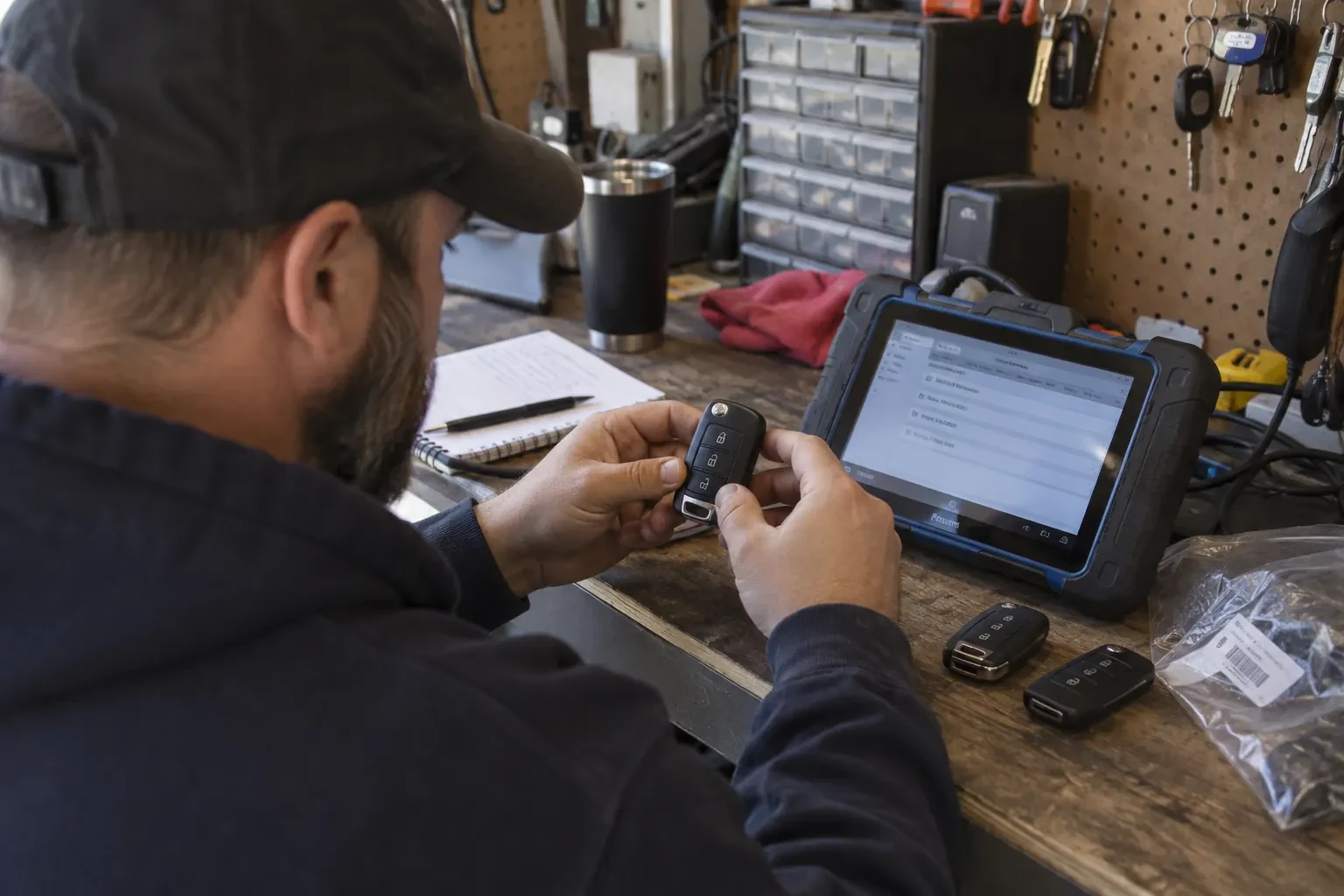
In the van
Pick and tension tools
Key blanks and key cutter
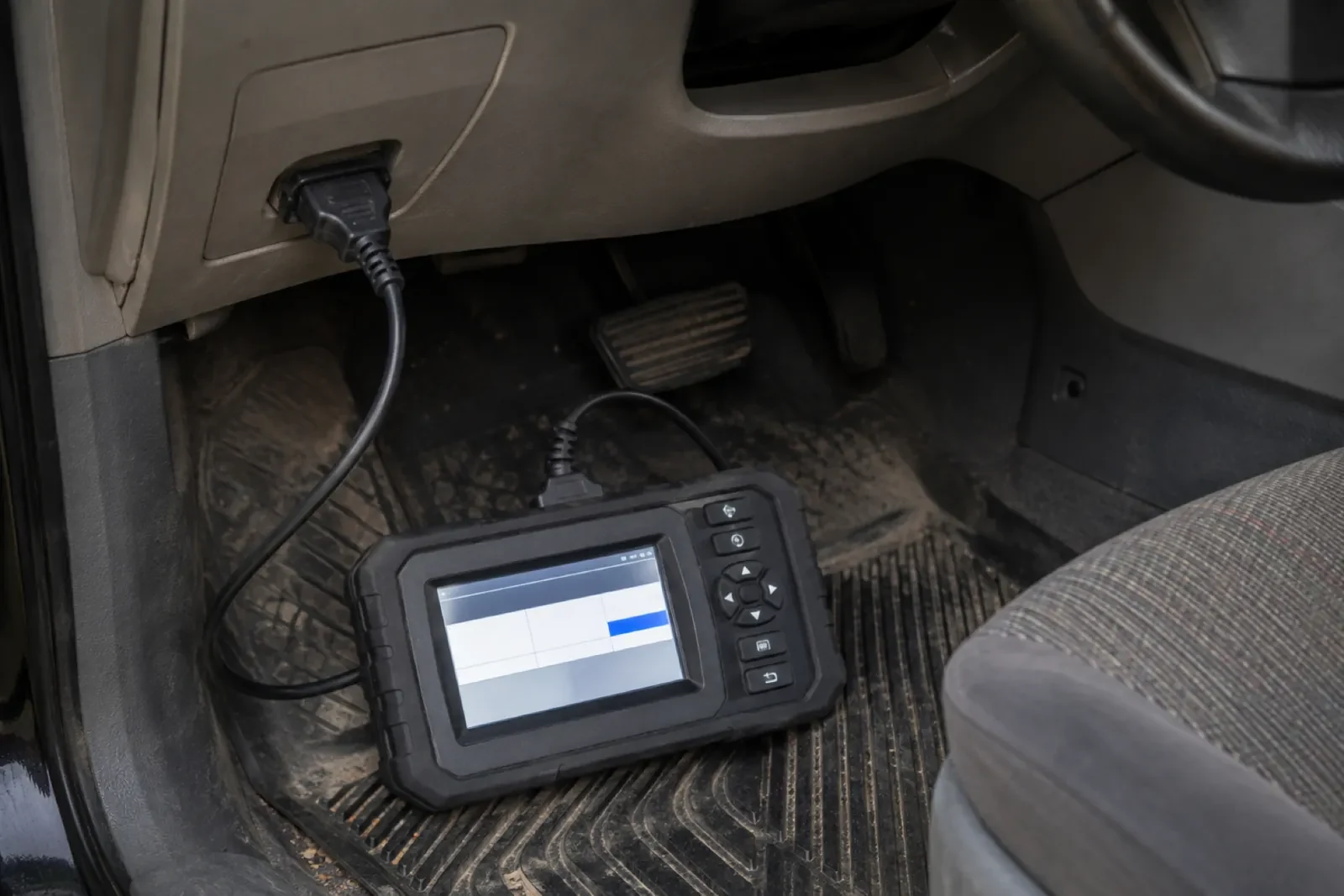
Cylinder decoder
Strike plate and long hinge screws
Dry graphite or PTFE lubricant
Home Lockout Service
What affects the quote
Type and grade of the lock
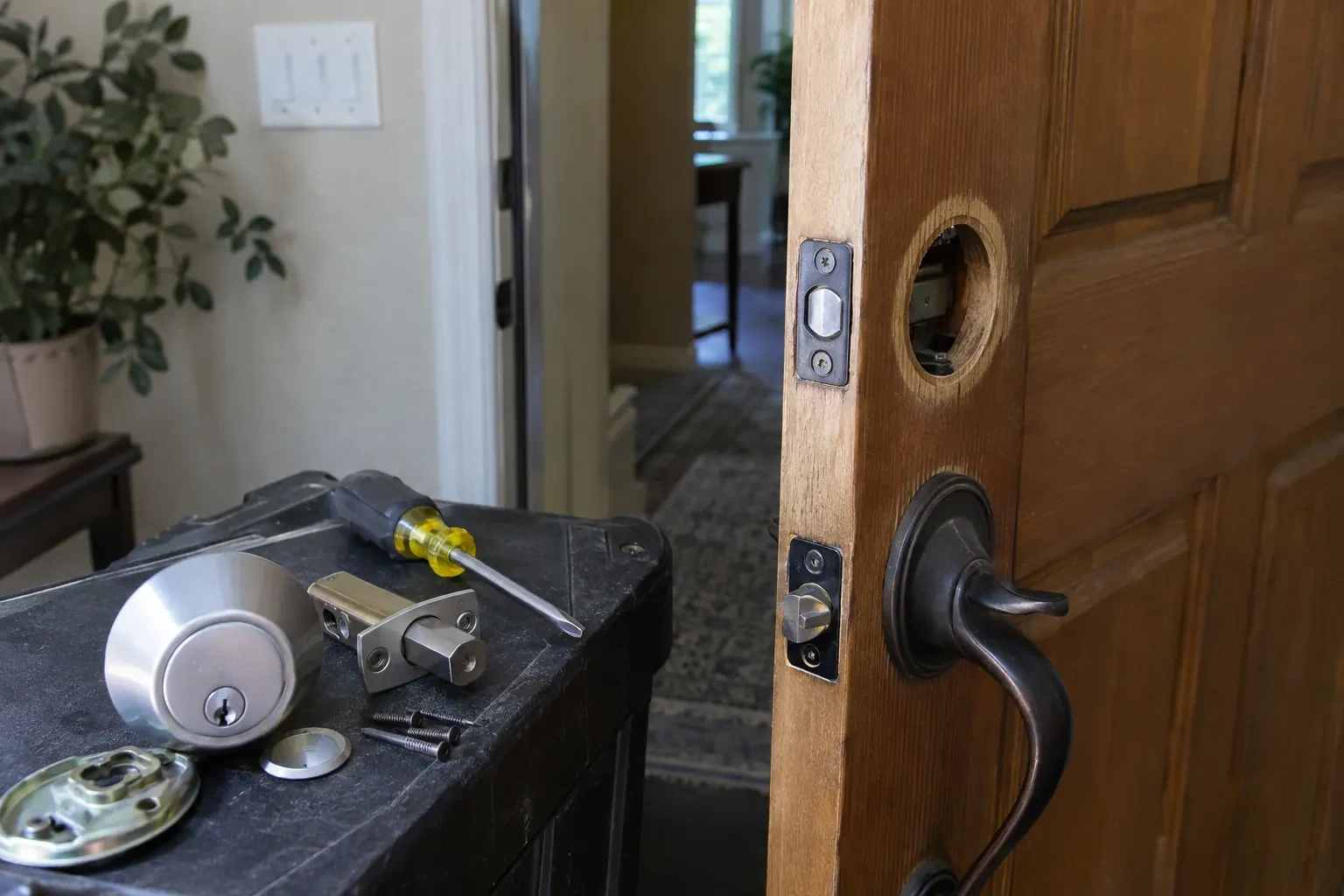
A builder-grade knob latch, a residential deadbolt, a mortise case in an older home and a high-security cylinder each take different tools and different amounts of time to open, and that difference shows in the quote.
Whether the key is inside or lost
If the key is inside, the visit ends when the door opens. If it was lost out in the world, rekeying and fresh keys usually follow, and that is separate work priced on its own.
Any upgrade you choose while the locksmith is there
Some people use the visit to move to a heavier deadbolt, a reinforced strike, a keypad or a lockbox. None of it is required to get you inside; each option is priced as a separate line.
What to have ready
- Has anyone already tried to open the door with a card or tool?
- Do you have photo identification with you, or is it inside?
- Is the door swollen, sagging or hard to close even when it is unlocked?
Home Lockout Service: questions
QuestionsIs a double-cylinder deadbolt a good idea after a lockout?
A deadbolt keyed on both sides is sometimes suggested for doors with glass beside them, but on a main escape door it means finding a key to get out. A door people use to leave the home should open from the inside without a key or special knowledge, especially in an emergency. A single-cylinder deadbolt with a thumb-turn, paired with a reinforced strike and a proper glass film if needed, keeps both security and a clear way out.
Should I try to get in myself before calling?
By all means check the easy things: another door, a family member with a spare, a neighbour holding a key. Beyond that, it pays to wait. Credit cards bend latches, screwdrivers scar cylinders, and a forced window costs far more than a lockout visit and leaves the house less secure. A locksmith arrives with tools shaped for the exact hardware on your door, and an undisturbed lock is the easiest kind to open cleanly.
I am a landlord. Can you open a unit my tenant is living in?
A locksmith will want to understand the situation first, because a tenant's right to their home is protected and a lockout of a tenant is something only a sheriff enforcing a Landlord and Tenant Board order may carry out. Legitimate reasons do come up: a tenant has asked you to let them in, a vacated unit needs securing, or an emergency requires access. Bring ownership records and be ready to explain the circumstances, and the locksmith will help you handle it properly.
Related services
- Broken Key ExtractionOvernight the deadbolt froze, and this morning the key would only turn partway.
- Break-In Damage Lock RepairThere is a hole where the cylinder used to be.
- Seized & Jammed Lock OpeningThe key slides all the way in, exactly as it has for years, and then refuses to turn in either direction.