
Car keys · Toronto
Ignition Lock Repair in Toronto
The key slides in fine and turns without any resistance at all, and the dash lights flicker, but nothing catches.
In plain words
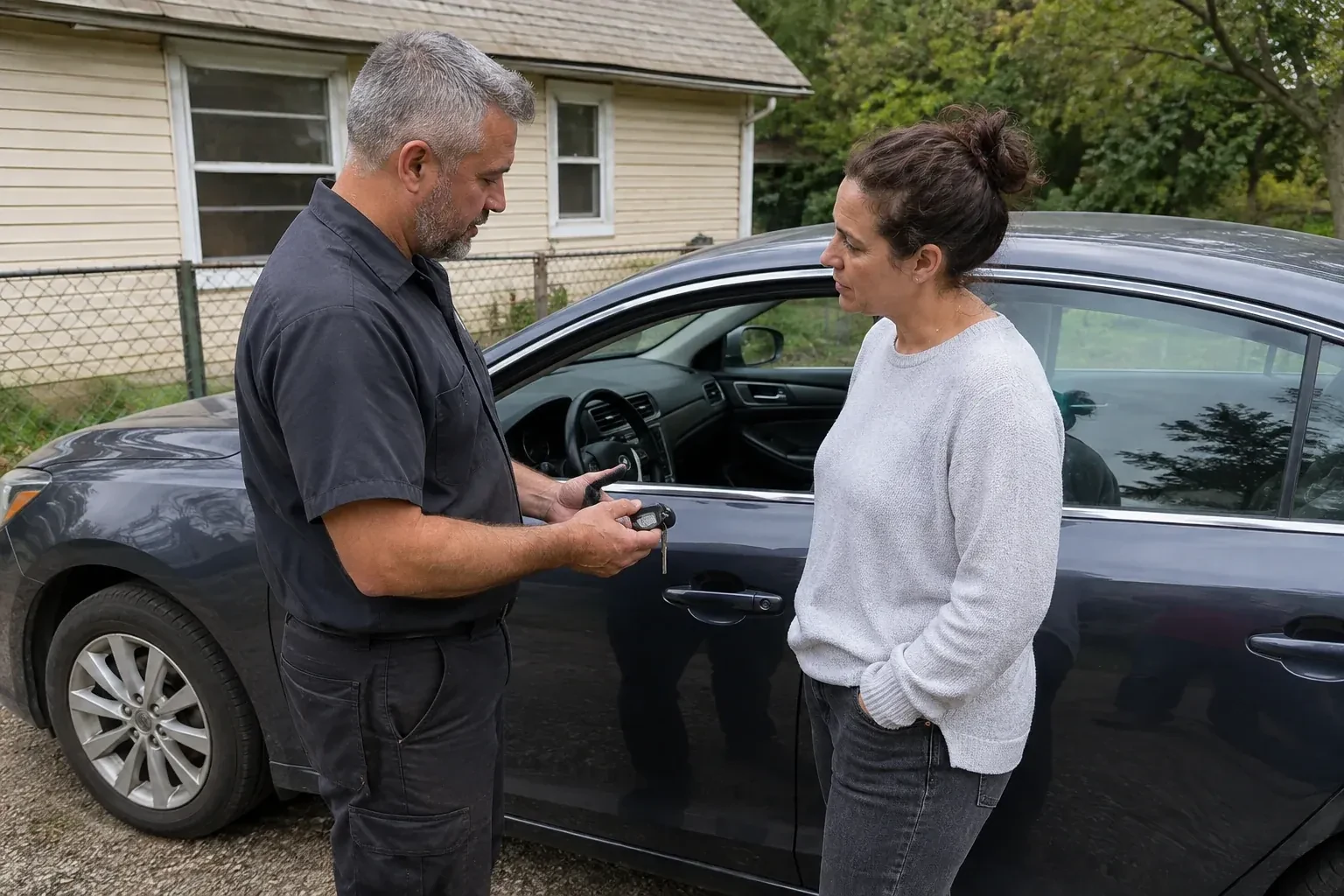
The visit follows a steady order. On the phone, the vehicle and the exact symptom are described so the right parts and tools come along for the trip. On arrival, ownership is confirmed, the mechanism is assessed, and the cylinder is serviced, repinned or replaced as the fault requires. Every switch position is tested afterward, along with the steering lock, before the visit is called finished and any remaining electronic question is named separately.
How the visit goesThe new key from the hardware counter fits the door but stops halfway into the ignition slot, no matter how it is angled or how gently it is pushed. A worn original key opened this same slot without trouble for years.
Ignition Lock Repair
How the visit goes
Mechanical fault or electronic fault
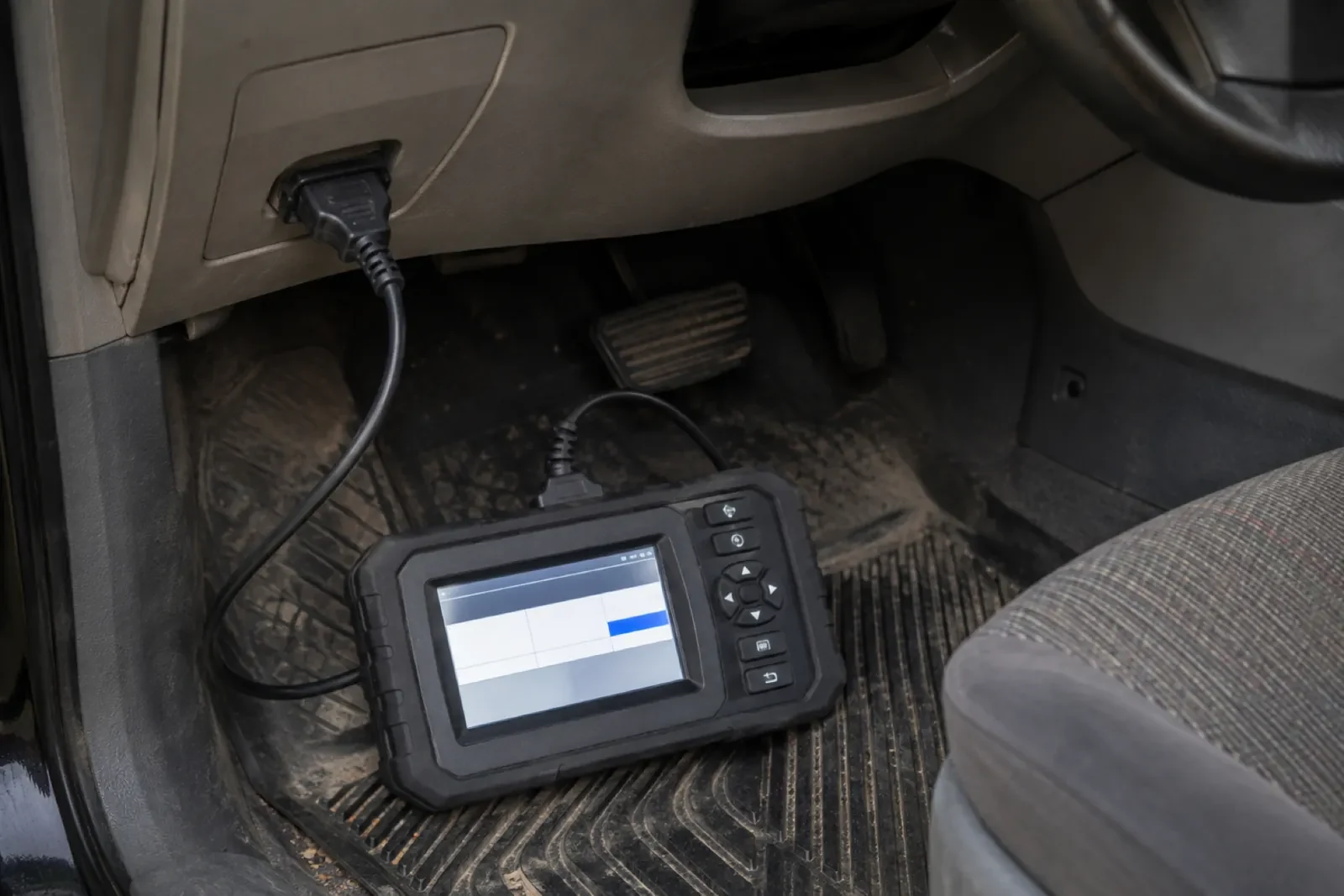
A cylinder that turns cleanly but leaves the vehicle silent makes a mechanical keyway fault less likely, though the cause can still be the immobilizer, the transponder chip, the wiring behind the switch, or an unrelated starting fault such as the battery, starter or park/neutral circuit. The locksmith checks whether the barrel physically moves through accessory, on and start, whether the steering lock disengages, and whether dash lights respond at each position. Where the mechanical side checks out cleanly, the remaining question is named and set aside as separate, dealer-level work rather than folded into the same repair.
Repinning the cylinder to the current key
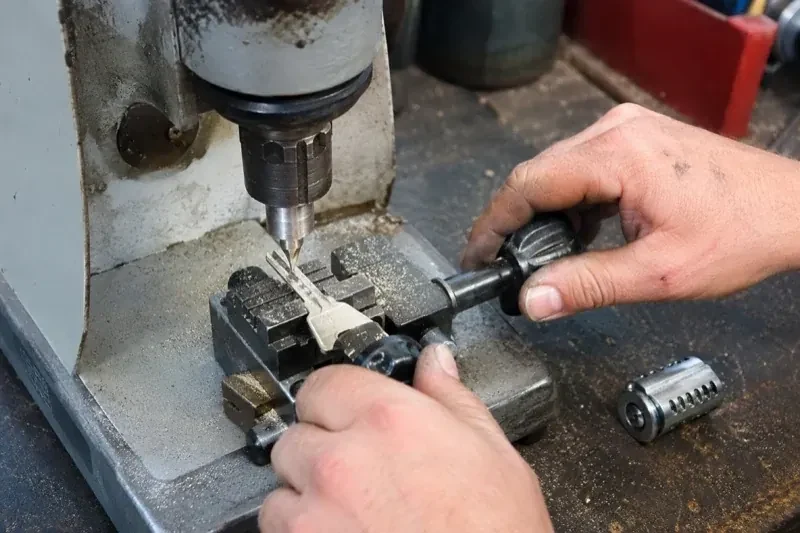
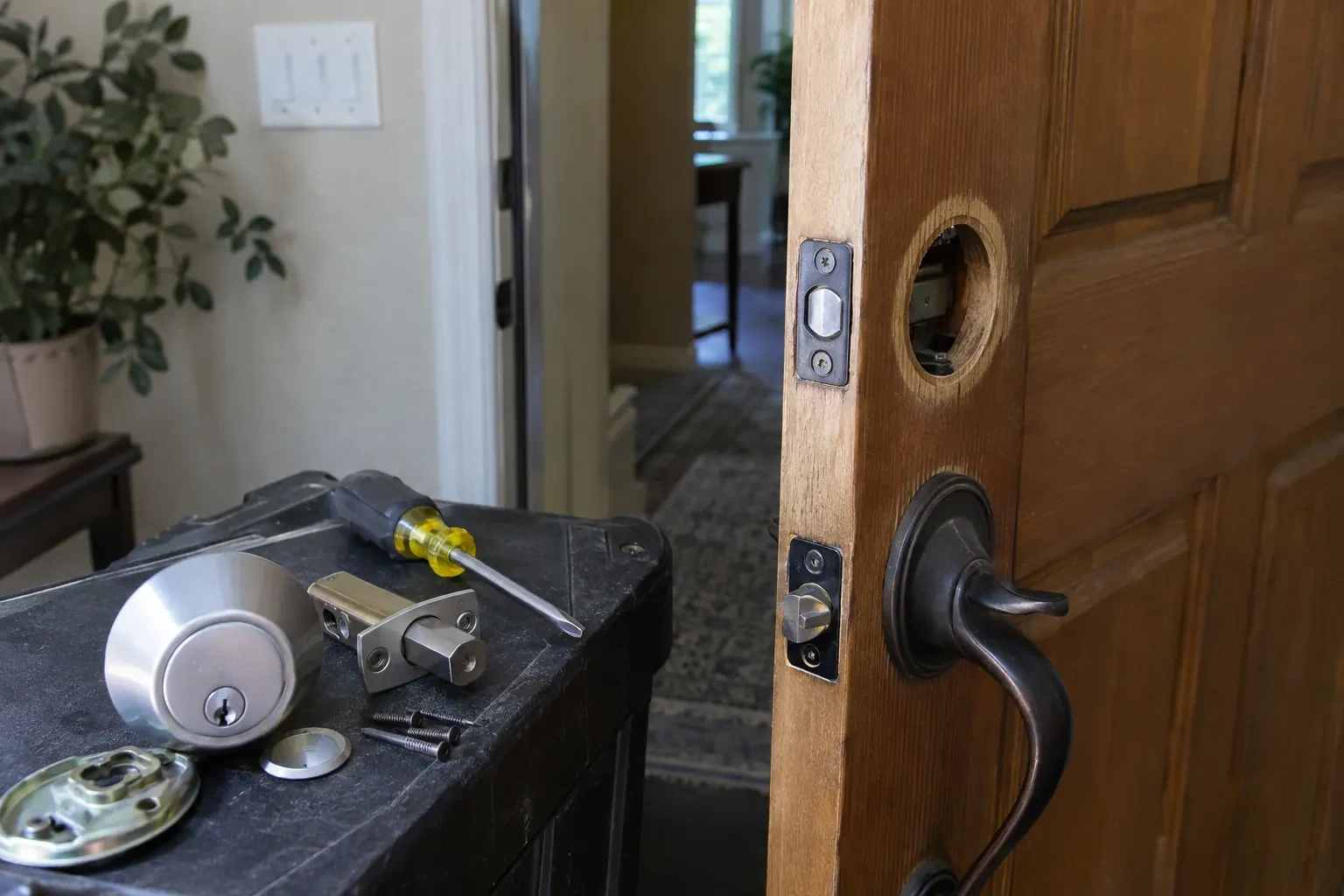
When the barrel itself needs to come out, it is removed from the housing and its wafers are reset to match the key already in use, following that vehicle's own service procedure rather than a generic pin-and-follower method. Reassembled and tested through every position, the repaired cylinder answers to the same key that opened the door on the way to the vehicle, so nothing else in the owner's pocket needs to change.
Ready for the next stretch of rough weather
After a repair prompted by grit, salt or old grease, the cylinder is dried, cleaned and freshly lubricated, which carries it through a good stretch of the next season's driving. Keeping the key itself clean and dry, and avoiding a heavy keyring that drags on the barrel every time the vehicle starts, both help the repaired mechanism hold up through the weather that caused the original problem in the first place.
Ignition Lock Repair
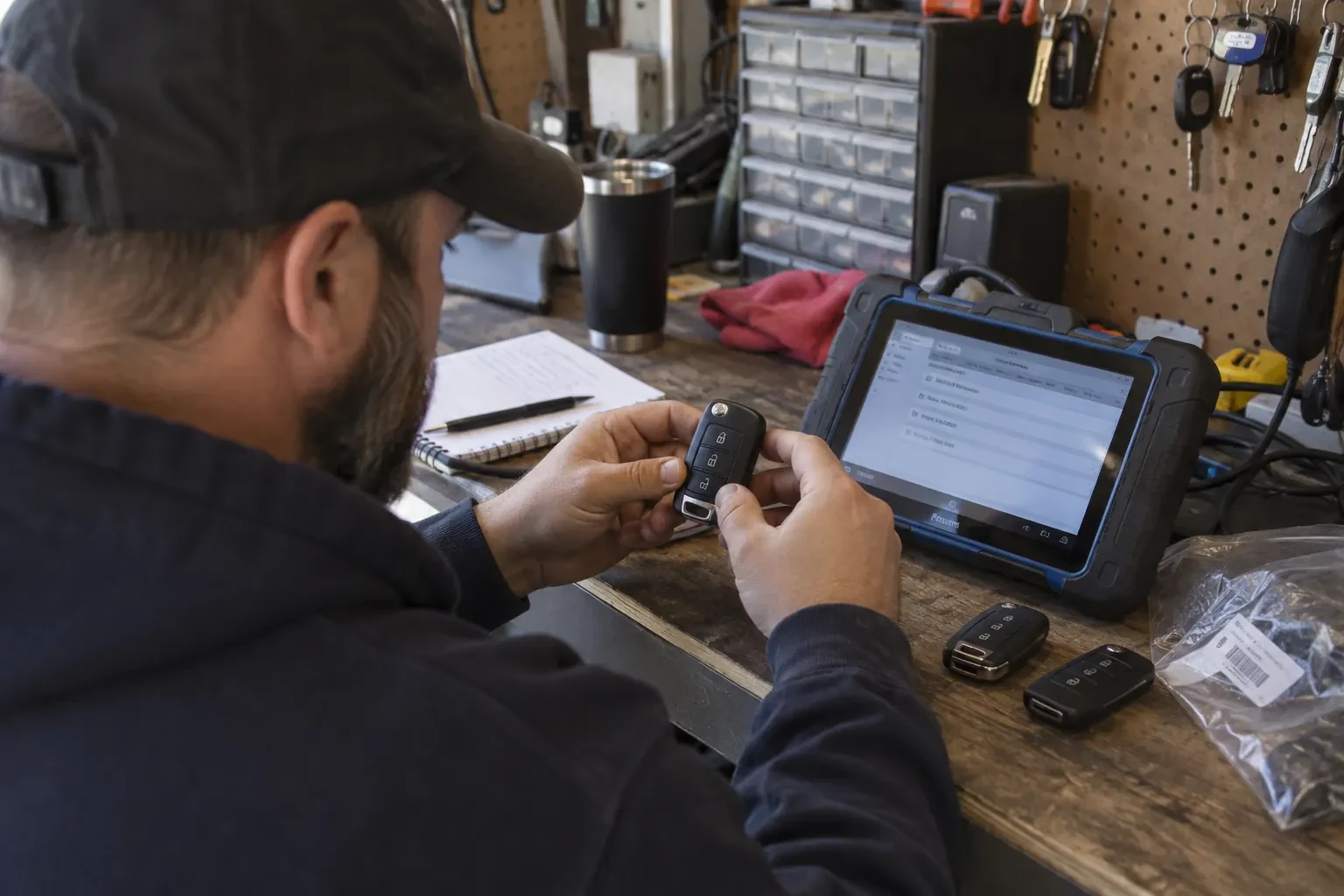
In the van
Plug follower
Pick and tension tools
Steering column trim tools
Cylinder decoder
Keyed-alike pinning kit
Ignition Lock Repair
What affects the quote
Number of new keys cut
One replacement key is the simplest case. A household or a business vehicle used by several people may want a few keys cut and tested at once, and each one is counted into the visit.
Time needed to test every position
Cycling the ignition through every switch position and the steering lock, more than once, with the engine started and stopped to confirm the repair holds, adds a small amount of time on top of the repair.
Availability of the replacement part
A common cylinder for a widely driven vehicle is usually straightforward to source, while an older or less common vehicle may need a part ordered in before the repair can be finished properly.
What to have ready
- Is the key stuck and unable to be removed?
- Has anyone already tried to force the lock?
- Does the key insert, turn partway, or not turn at all?
Ignition Lock Repair: questions
QuestionsHow do I keep my ignition and keys in good shape going forward?
A little attention goes a long way: whatever lubricant the vehicle's own service information calls for worked into the keyway, keys wiped free of grit before use, and a worn or bent key retired in favour of a fresh cut from a crisp original. Catching a barrel that has started needing a wiggle early keeps it an easy fix rather than a stuck ignition later on.
Do you check the steering lock as part of this service?
Yes. The steering lock is mechanically tied to the ignition barrel on most vehicles, engaging when the key is removed and releasing as the key turns toward accessory. It is cycled several times during testing, alongside every switch position, so a fault that shows up only in how the wheel locks or releases does not go unnoticed after the visit is finished.
Will you damage my steering wheel or airbag while working on this?
Reaching an ignition cylinder sometimes means removing column trim and shrouding, and that is done with the fasteners and clips the vehicle was built with rather than force. Anything near the column connected to the airbag system is left exactly as found. The panels and trim are refitted afterward so nothing rattles, sits loose, or looks any different than it did before the visit began.