Car keys · Humber Summit
Car Key Replacement in Humber Summit
The only key to the car went into the lake with the kayak.
In plain words
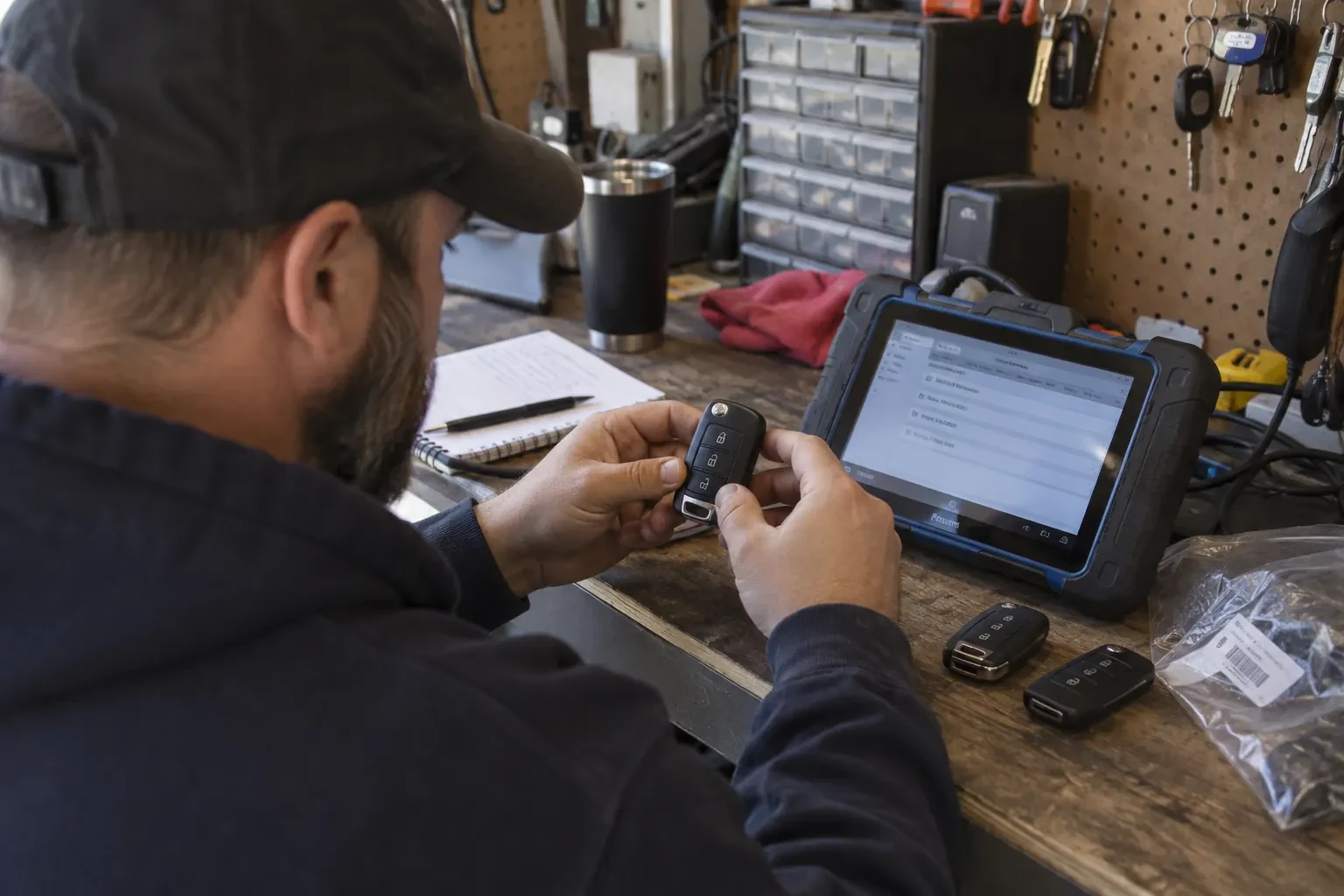
It helps to think of a car key as several parts sharing one case. The metal blade is the mechanical part; it opens the doors and, on older cars, turns the ignition. The transponder is a small chip with no battery that answers the immobilizer when the key is near the ignition; without the right answer the engine refuses to run. The remote is a separate radio circuit with its own battery that works the lock, unlock, trunk and panic buttons. A proximity fob adds hands-free entry and push-button start. Replacement can involve any or all of these, and a good visit begins by working out which ones you need.
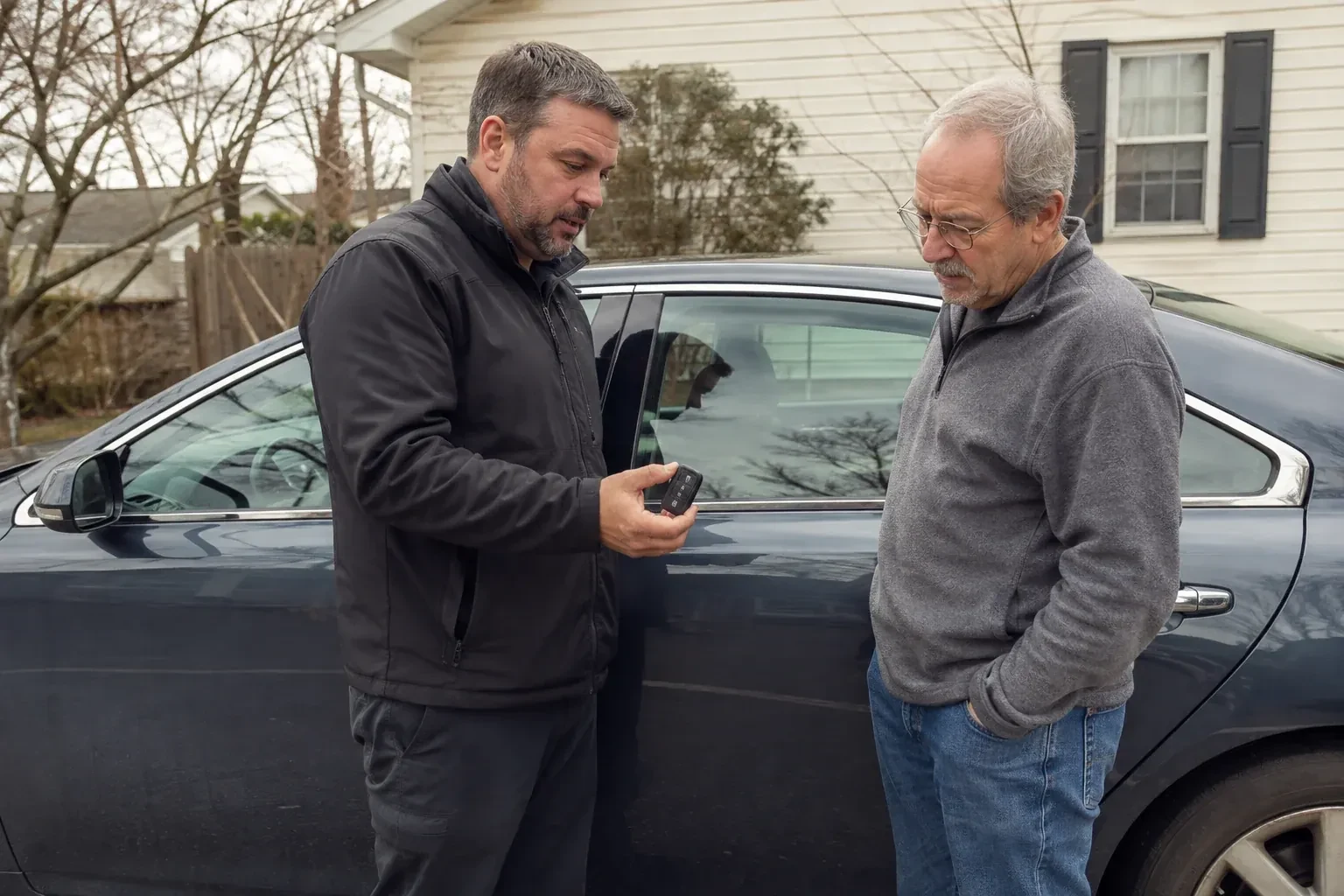
How the visit goesThe fob went through the washing machine in a jacket pocket. It came out clean and completely silent. Nothing unlocks, the push-button start ignores it, and the little metal blade hidden inside only opens the driver's door.
Car Key Replacement
How the visit goes
Proof that the car is yours to key
Before a blank leaves the van, the locksmith confirms that the person asking for a key is entitled to one. Government photo identification is the first piece. The second is a document tying that person to this vehicle: the vehicle permit with the VIN on it, an insurance slip, a lease, or fleet paperwork for a company car. The VIN on the paper is compared with the one stamped on the dash and printed on the door label. A car bought last week and still in the seller's name, an estate vehicle or a family member's car each has its own paper trail, and mentioning it on the phone means the right document is at hand.
Cutting a blade to the factory code
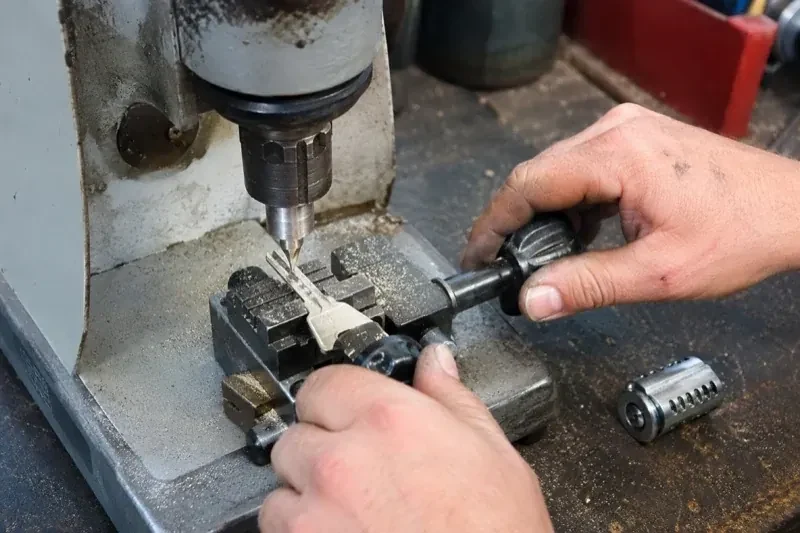
Vehicles equipped with a coded mechanical key leave the factory with a key code that describes the exact depths of its blade. When that code can be retrieved for your VIN, the locksmith enters it into a code-cutting machine, which mills a blank to the original specification rather than tracing a worn key. The result is a blade that matches the locks as they were built, seats fully in the ignition and lifts each wafer to the correct height. Cutting to code is the preferred route for any replacement, and it is the only sensible route when the existing key has worn thin or been copied several times over.
The missing key is now just metal
If a key was lost or stolen and you chose to have it erased, the car no longer answers to its chip. Whoever finds it holds a blade that may open a door and a fob that can no longer start the engine or, once unpaired, work the locks. The locksmith tells you how many keys the vehicle now recognizes, which should equal the number in your hand. If a stranger holding a working blade still bothers you, the door and ignition locks can be swapped to a new cut, and that is a separate decision you can take with a clear head rather than on the day.
Car Key Replacement
In the van
Laser-style milling cutter
Fob coin-cell battery
Transponder key blank
Vehicle battery maintainer
Remote frequency tester
Car Key Replacement
What affects the quote
Transponder, remote or proximity
A key with only a chip, a remote-head key with buttons and a full proximity fob are three tiers of hardware and three programming procedures. The quote names which one your car uses.
Year, make and model
The vehicle decides the blank, the chip and the programming route. A twenty-year-old sedan with a plain transponder key and a recent proximity-start model are different jobs, and the quote follows the VIN rather than a flat figure.
One working key or none
A spare added beside a working key is a shorter routine. Starting from nothing means working through whatever that vehicle's own all-keys-lost procedure calls for, commonly opening the car, decoding the lock and resetting the immobilizer, and the quote reflects those extra stages.
What to have ready
- What buttons did the old key have: lock, unlock, trunk, panic, remote start?
- How many keys would you like to leave with?
- What is the year, make and model, and can you read the VIN from the windshield or the permit?
Car Key Replacement: questions
QuestionsWhat is the difference between adding a spare and replacing all keys?
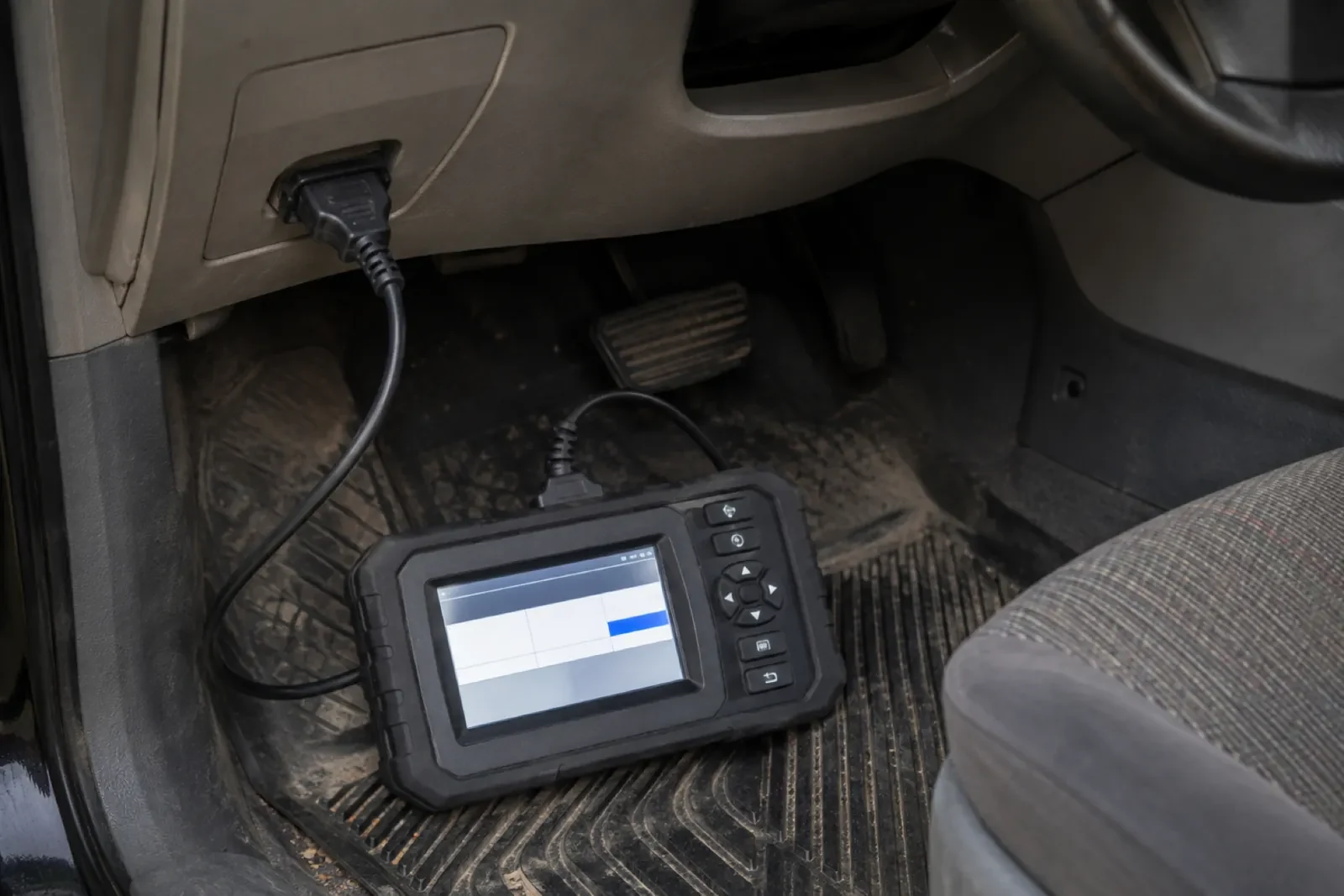
Adding a spare uses an existing working key as the reference: the new blade is cut and checked against it, and the immobilizer is asked to accept one more key alongside the old. Replacing all keys starts with nothing: the lock is decoded for a blade, and the immobilizer is reset to forget every previous key before new ones are stored. The second job is longer and sometimes needs manufacturer data, one more reason to keep a spare.
Does programming a new key affect the keys I already have?
Adding a key leaves the existing keys in place; the car simply learns one more. The exception is a deliberate all-keys-lost reset or an erase you ask for, which clears every stored key and then registers only the ones you present. For that reason the locksmith asks you to bring every key you own to the visit, so each one can be re-registered and tested rather than left behind and forgotten by the car.
After a break-in the doors and ignition are on different keys. Can that be fixed?
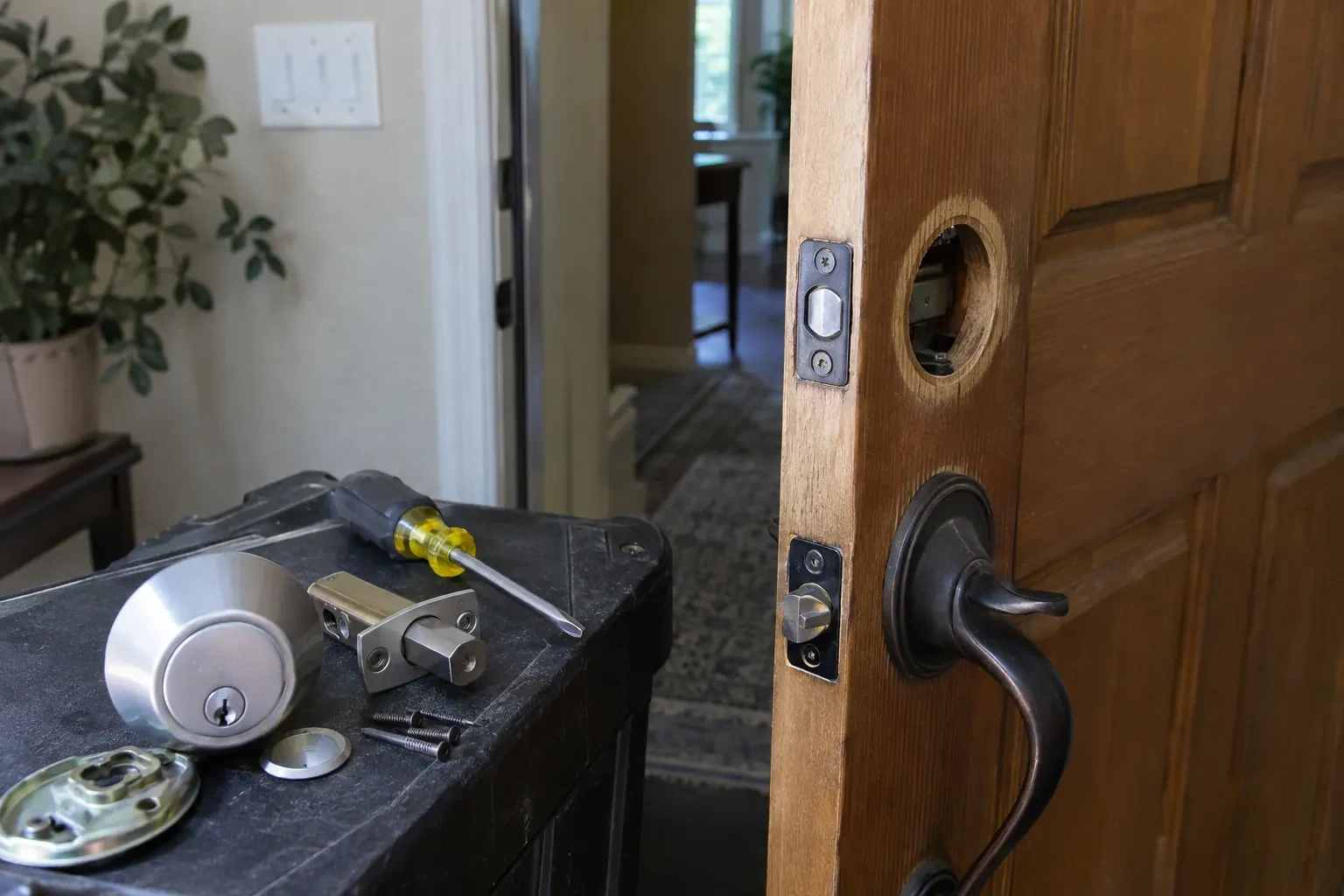
Yes. When a door lock is forced and replaced, or an ignition is swapped, the car can end up needing two blades. A locksmith can rekey the replacement cylinder to match the surviving one, so a single key operates every lock again, and cut new keys to that combination. The transponder side is unchanged by the lock work, so your existing programmed keys carry on starting the car once the blades match.
Related services
- Spare Car Key DuplicationA car sits at the cottage all season, and the only key to it lives on a ring three hours away in the city.
- Key Fob ProgrammingA replacement fob just arrived in its box, shiny and untouched.
- Transponder Key ProgrammingA second driver has joined the household, and the one existing key gets handed back and forth between two schedules that rarely line up.